Electricity five times as expensive as gas
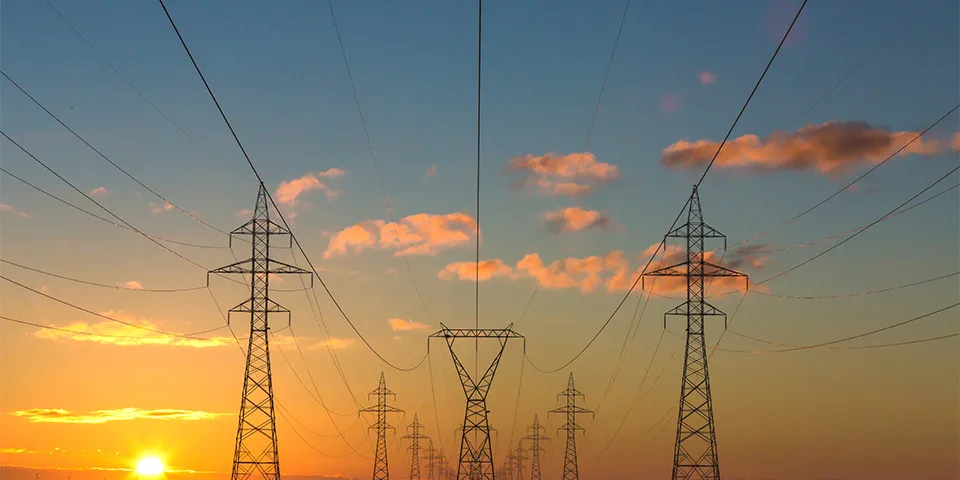
‘Electricity is expensive’: in Belgium, this seems to be as immutable a law as the assertion that ‘water is wet’. The high price of electricity is the result of political choices, such as the above-average tax burden on electricity, as well as uncertainty over the nuclear phase-out. Meanwhile, the high price of electricity continues to hold back the adoption of technologies such as heat pumps.
When several newspapers reported last summer that ‘electricity is more expensive in Belgium than anywhere else’, they were merely confirming what many people had long suspected. Electricity prices have been a subject of debate for years, and Eurostat’s figures seemed to confirm this. The facts: a Belgian household pays 0.28 euros per kilowatt hour of electricity. Based on an average annual consumption of 3,500 kilowatt hours, this amounts to 996 euros a year: 80 per cent more than the average household in other European countries pays. Electricity is more expensive in no other country included in the study, although it should be noted that Germany, Italy and Spain were not included in the analysis. In the Netherlands and France, however, the annual bill is more than 400 euros lower.
25 per cent above the European average

A Belgian household pays 0.28 euros per kilowatt hour of electricity. Based on an average annual consumption of 3,500 kilowatt hours, this amounts to
996 euros a year: 80 per cent more than the average household in other European countries pays.
In Belgium, suppliers’ basic rates are already among the highest in Europe. At 7 cents per kW, these basic rates are 25 per cent above the European average. But at least as important a factor is the high cost of the grid, the highest of all the countries surveyed: 25 per cent of what Belgians pay goes to the producer or supplier. The government’s levies and taxes on electricity also play a role. Only Denmark and Portugal have a higher tax burden on electricity.
In Knack, Marc Van den Bosch of the Federation of Belgian Electricity and Gas Companies (FEBEG) noted that prices are rising not only in Belgium, but also in other European countries. Moreover, Van den Bosch says, “prices fell almost continuously between 2006 and 2016. Even after the recent rise, we are only back at 2011 levels. Consumers barely noticed the drop, however, because other parts of the bill, such as taxes and distribution and transmission costs, have increased.”
The decision to tax energy heavily is, of course, a political one, as Ronnie Belmans of research centre EnergyVille explained to De Standaard: “In Belgium, green power certificates, public service obligations and social obligations, such as providing electricity to low-income households, are included in the electricity bill. In other countries, these costs are covered by general taxation.”
There is no end in sight: in January, Het Nieuwsblad reported that electricity is likely to become even more expensive in the future. This is because ‘price-cutters’, the smaller suppliers that market themselves with low rates, are finding it increasingly difficult to maintain their position. Rising prices on the energy markets are making it harder for them to keep offering low rates to consumers. According to Christophe Degrez of Eneco, high electricity prices are unavoidable because of the massive investment Belgium needs to make in further developing offshore wind power, strengthening the electricity grids and building new electricity generation capacity to replace the nuclear power stations.
Uncertainty
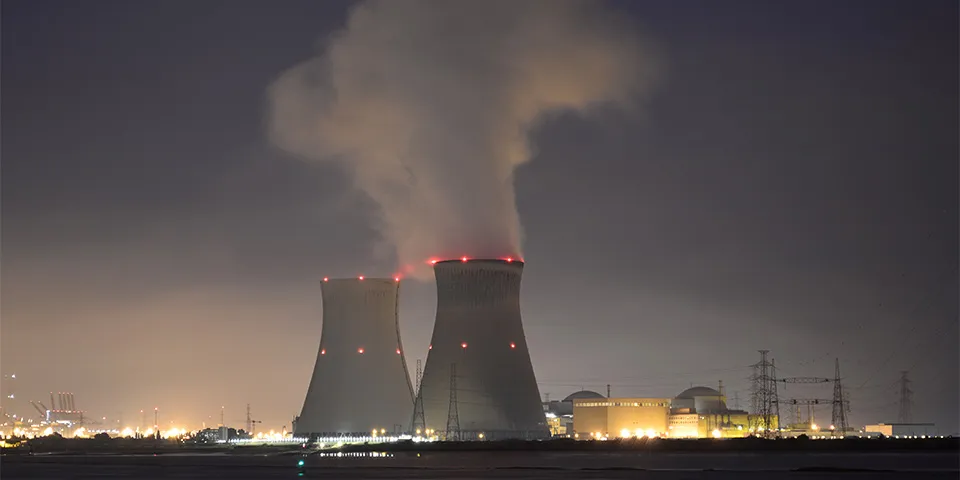
And there it is: nuclear power stations. Probably the most divisive topic in the energy debate. Should Belgium rely more or less on nuclear power? More, say its supporters, because it is a clean technology that enables the country to meet its climate targets. After all, a nuclear power station emits no CO2. Opponents, meanwhile, criticise the high costs, the risks posed by nuclear power stations and radioactive waste. They believe in a model based on renewable energy, with conventional natural gas used during the transition.
Officially, Belgium’s seven nuclear power stations are due to close in 2025. Seven new gas-fired power stations will need to be built to guarantee security of supply. In January, the outgoing Michel-II government approved a draft bill intended to give construction a boost. Yet the nuclear phase-out is far from a done deal, and this issue is likely to become one of the points of contention in the upcoming federal and regional elections. N-VA is a strong supporter of nuclear power. The presence of American lobbyist Michael Shellenberger at a campaign event for the party was telling in this respect. Shellenberger is a so-called ecomodernist who emphasises nuclear power as a solution to the climate challenge.
Market forces disrupted
The uncertainty surrounding the future of our energy model is one of the factors keeping electricity prices high. “Until there is clarity on the nuclear phase-out, investment will not happen. This disrupts the market,” says Belmans. “As long as policymakers continue to question the deadline for closing the nuclear power stations, companies and consumers will be hesitant to invest in sustainable alternatives,” the Association for Thermal Techniques in Belgium (ATTB) said last month. A definitive decision on the nuclear phase-out and a long-term vision for the energy transition that does not distort the market are essential for ATTB.
Innovative technologies that run on electricity are struggling because of high electricity prices. First and foremost, of course, this means heat pumps, which are struggling to gain ground because gas is considerably cheaper than electricity. Consumers are therefore quick to opt for a (condensing) gas boiler. “In 2017, our government proposed a green tax shift: by levying more tax on fossil fuels and less on electricity, it aimed to make the latter more attractive to use. But what did we see in 2018? Electricity cost 5.7 times more than gas! This makes us the most expensive country in Europe for electricity,” says ATTB.
Question about this story? Ask your question
Keep following this
Get an email when a new story is published. No account needed.
- ThemeElectrical infrastructure under pressure
- SubjectElectrical