











Smart charging event puts installers centre stage
Text TechlinkImage Techlink en Pixabay

The electrification of mobility is accelerating rapidly, putting conventional charging infrastructure under pressure. By 2029, all new cars and vans in Flanders must be emission-free. Public transport and freight transport are also increasingly switching to electricity. This development raises a fundamental question: how can growing charging demand be matched to an energy grid that was not designed for it? On 4 June, Techlink and Volta are organising a free study day at Technoopolis in Mechelen, focusing on precisely this tension. The approach is clearly practical: the focus is not on the technology itself, but on the concrete implications for installers working with charging solutions today.
The study day is part of the COOCK project SE-MoRE, which investigates how smart charging can be applied in a range of situations. This covers not only passenger cars, but also vans, trucks and buses. Nor is the focus limited to individual charging points: charging hubs, energy contracts and grid conditions are also part of the analysis.
One thing is clear: smart charging is evolving from an interesting option into an essential component of the energy system. Without intelligent control, peak loads on the electricity grid will continue to rise, further exacerbating grid congestion. Consumers also risk picking up the bill: when energy is not managed intelligently, this inevitably leads to higher costs and less efficient use of available renewable energy.
Full programme
The event at Technopolis will explain how smart control works and explore in greater depth why it is becoming essential to expanding electric mobility without destabilising the grid.
The event will also consider market dynamics. Frank Van Gool of FEBIAC will outline how quickly the Belgian car market is moving towards electrification and the strategies vehicle manufacturers are adopting. This context makes clear that demand for charging infrastructure will only increase in the coming years, putting further pressure on installers.
The practical implications will be addressed explicitly in several sessions. Dominique Ectors (VITO) and Tim Goossens (Volta) will discuss exactly how to make a charging point smart, and the role played by energy contracts and grid conditions. Dirk De Wolf (Techlink) will also present the findings of a recent survey of installers, providing insight into the sector’s expectations and needs.
The study day will also look beyond conventional control strategies. Wout Lagae (pleevi.ai) will show how artificial intelligence can be used to coordinate charging parks, batteries and energy generation, with the aim of reducing costs, smoothing peaks and making optimal use of local energy.
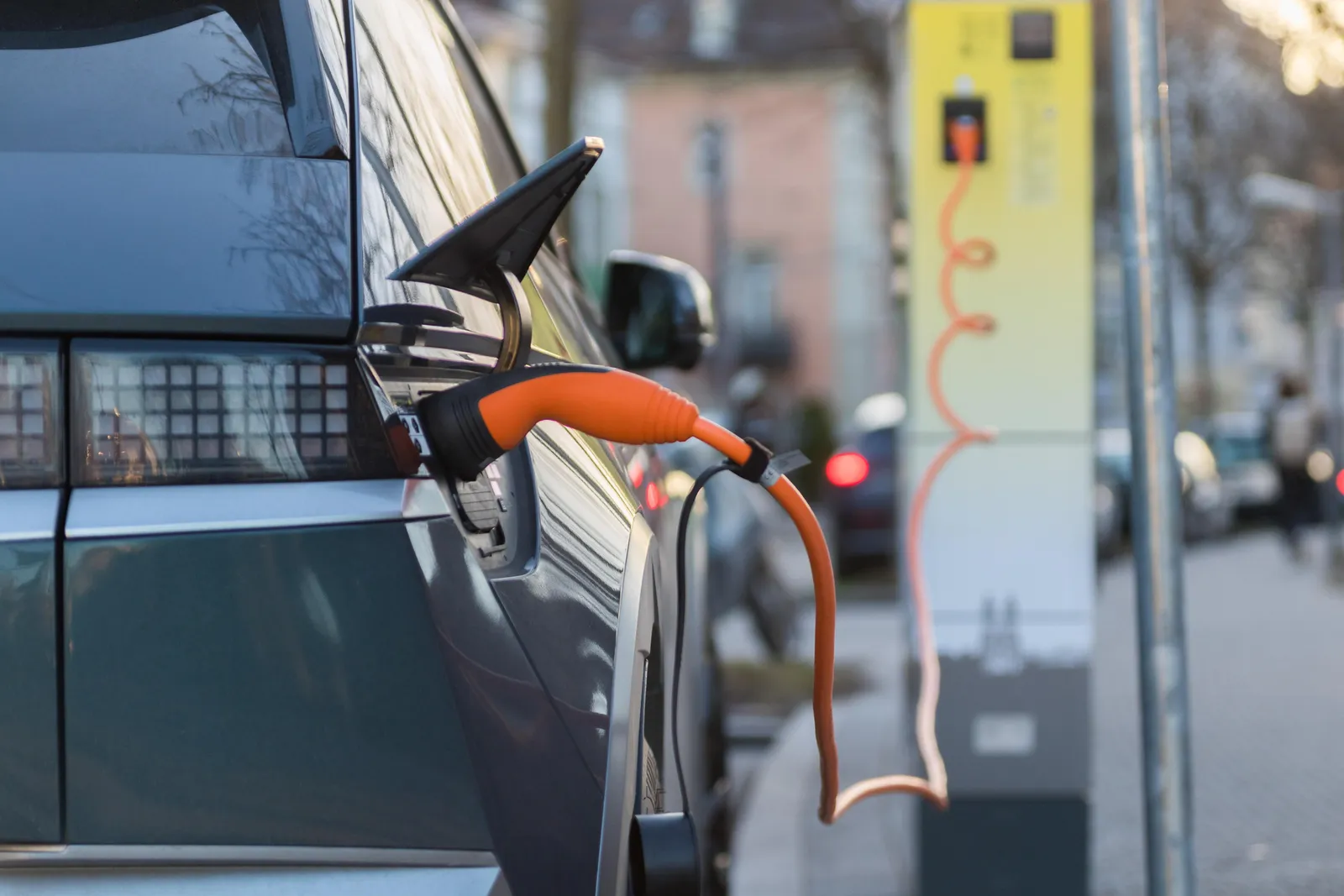
V2G charging hub in Bonheiden under the spotlight
The V2G charging hub in Bonheiden provides a concrete example from practice. Tim Briers (Watt’s Next) and Thomas Pluymers (municipality of Bonheiden) will explain how electric vehicles there not only charge, but also feed energy back into the grid, and how the project fits into a broader local energy strategy. Bonheiden is investing in bidirectional shared cars for both the municipality and residents, which exchange energy with municipal buildings and solar panels via a smart energy management system.
The programme also addresses several practical factors that can prove decisive. Jan Lein (Claeys & Engels) will discuss the tax treatment of electric vehicles and home charging, while Carlo Mol (EnergyVille/VITO) will highlight the specific challenges around battery and car park fire safety.
The programme concludes with a panel discussion bringing together various market players. Representatives of Alfen, ABB, Cebeo, Rexel, EnergyKing and Go Watts, among others, will exchange views on the challenges and opportunities surrounding smart charging infrastructure. The panel will also test insights from the earlier sessions against the realities of the market.
Free of charge
The event’s central message is clear. The sessions show how the installer’s role is shifting from installing hardware to integrating, controlling and optimising charging infrastructure. “This event is important for Techlink because it directly supports three of our trade association’s core missions: representing our members’ interests, sharing knowledge and strengthening the installation sector as part of the energy transition,” says Dirk De Wolf of Techlink. “It gives Belgian installers, wholesalers and manufacturers concrete insights and practical tools to actively contribute to the roll-out of sustainable, future-proof charging infrastructure. It also provides a valuable platform for sharing knowledge and networking with other stakeholders in the sector.”
The study day runs from 12.50 to 16.30. Participants are welcome from 12 for a sandwich lunch. Afterwards, from 16.30, there will be a reception and networking opportunity.
Attendance is free, but registration is compulsory.
Een zakelijke vraag aan Cebeo? Get in touch
Companies in this story
Keep following this
Get an email when a new story is published. No account needed.
- ThemeElectrical infrastructure under pressure
- SubjectNews
- CompanyCebeo
- CompanyRexel Belgium







