Fire-rated service penetrations do not always get the attention they deserve
Text Wouter PolspoelImage Buildwise en AI
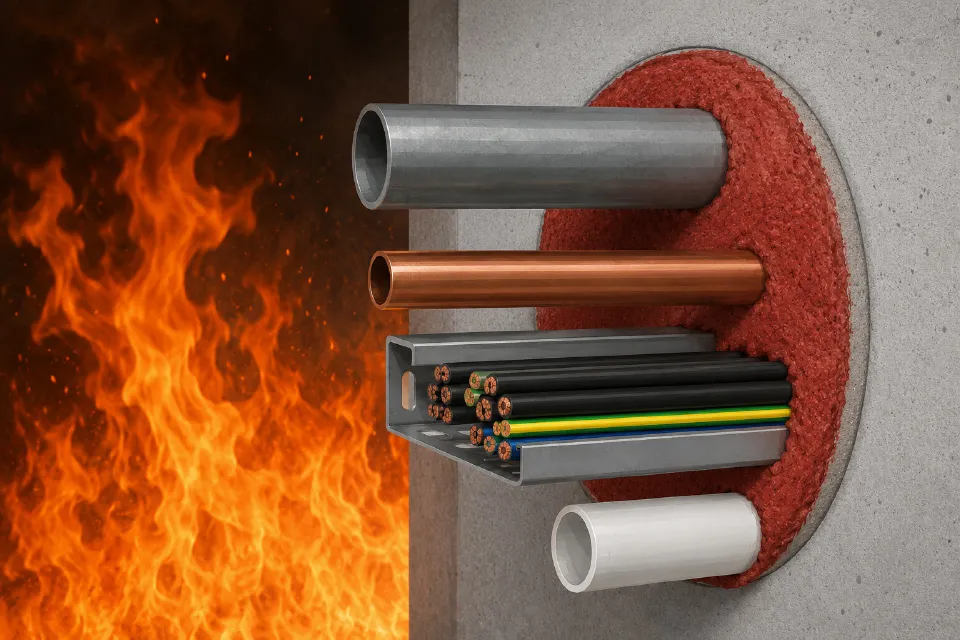
Fire safety is about more than escape routes, the fire resistance of structural elements and active fire protection systems. In modern buildings, one of the biggest risks often lies in something far more mundane: the dozens, sometimes hundreds, of pipes, cables and air ducts passing through fire-resistant walls and floors. That is precisely why Buildwise published Technical Information Note 293 (TV 293) in 2024. The publication not only brings together practical guidance on fire-stopping service penetrations in fire-resistant walls and floors, but also explains why the subject deserves far more attention than it gets today.
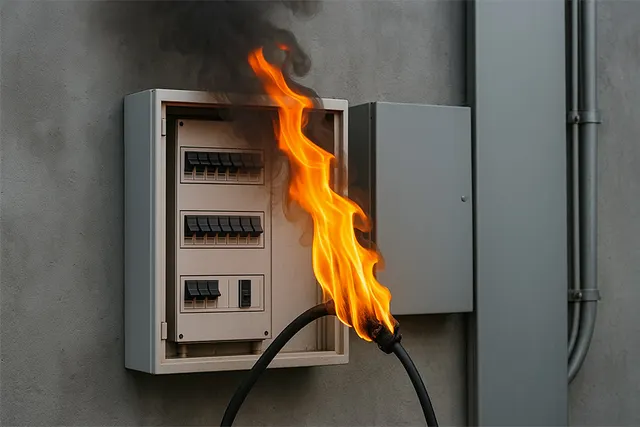
Compartmentation remains one of the key principles of fire-safe construction. The idea is simple: divide a building into separate compartments so that fire, smoke and heat cannot spread unchecked. But compartmentation is only as strong as its smallest details. A wall with a 60-minute fire resistance rating retains its function only as long as every service penetration through it delivers the same performance. As soon as an installer makes an opening for a cable bundle, ventilation duct or drainpipe, a potential weak point is created. If that opening is not properly sealed, fire compartments lose their effectiveness and fire can spread rapidly to adjacent areas.
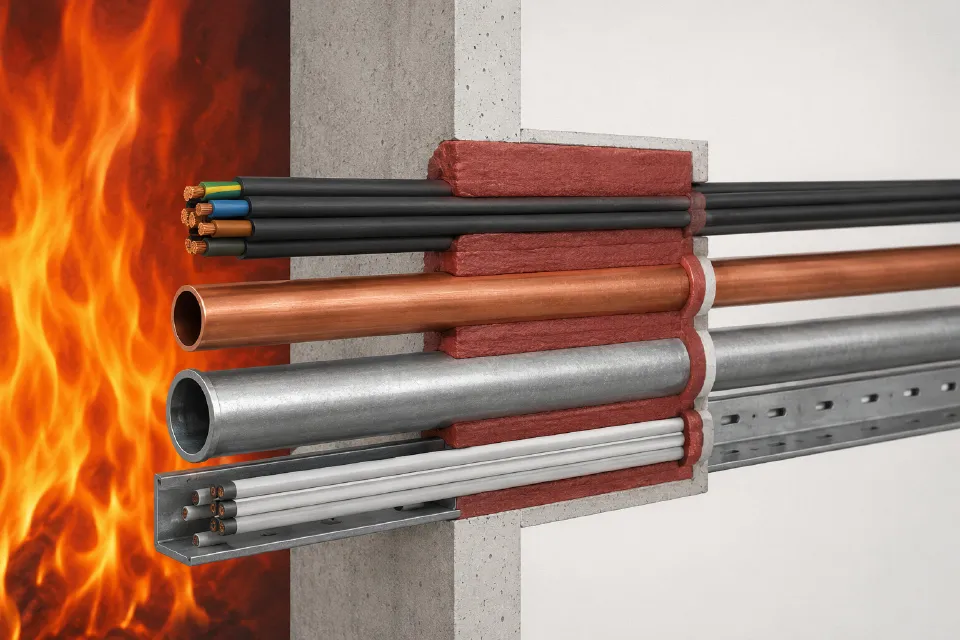
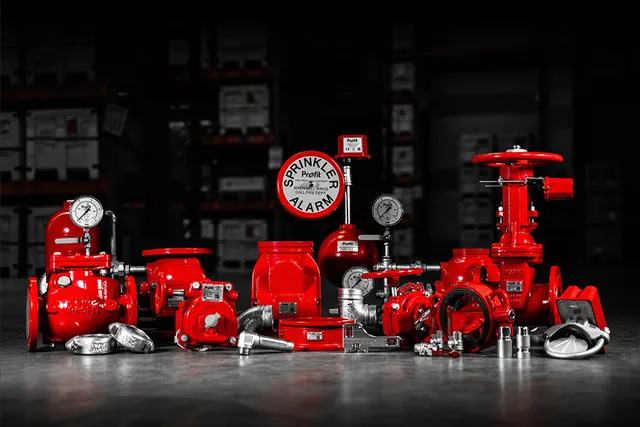
The risk is also increasing as buildings become more technically complex. Heat pumps, ventilation systems, EV charging infrastructure, data networks, sprinkler systems and flue gas extraction mean that today’s buildings contain far more service penetrations than in the past. Where technical services were once often routed through a limited number of risers, different systems now cross through the same walls and floors. Renovation projects in particular frequently end up with a tangle of additional openings, temporary solutions and on-site improvisation.
Fragmented responsibility
More technical systems also mean more parties involved. As a result, fire-stopping service penetrations become a shared and fragmented responsibility on many projects: architects design the compartmentation, engineering consultancies size the building services, contractors build the structure, installers carry out the penetrations, and a specialist company often comes in afterwards to install the fire-resistant seals. In theory, this division of responsibilities seems logical, but in practice it often leaves grey areas. Who checks during construction that an additional cable penetration has been properly sealed? Who makes sure an installer does not use standard PU foam where a specific fire-stopping system is required? And who ultimately records exactly which solution was installed?
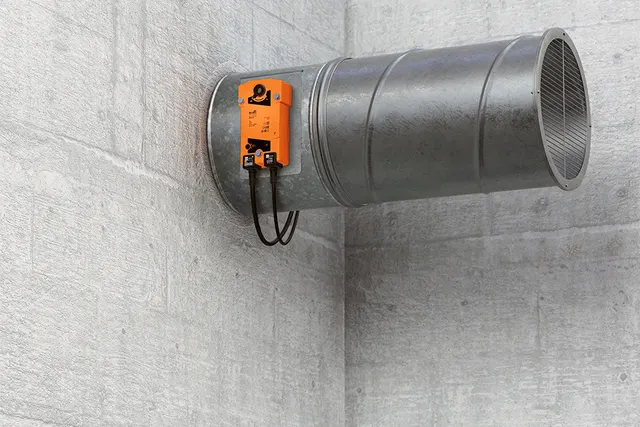
According to TV 293, these grey areas often lead to mistakes, disputes on site and costly remedial work later on. Many problems also remain hidden for a long time. An incorrectly sealed penetration is usually not noticed during construction. The problem often comes to light only during an audit, an inspection at handover or, in the worst case, during a fire. In §9 of TV 293, Buildwise gives several examples of errors that remain common in practice. Fire-resistant products are regularly used outside their certified field of application, for example when foams are used for penetrations for which they have never been tested. Other common problems identified by Buildwise include openings that have been filled carelessly, fire dampers installed incorrectly, and extra cables added later without adapting the fire-resistant seal.

No Swiss Army knife
It is hardly surprising that these mistakes keep recurring. In practice, fire-stopping service penetrations is much more complex than is often assumed. There is no Swiss Army knife, no single universal solution that can be used everywhere. That is one of the points TV 293 sets out to make. It stresses that the performance of a penetration depends on a combination of factors: the type of wall or floor, the pipe material, the diameter of the opening, the presence of insulation and the sealing system selected. A solution that works perfectly in a solid concrete wall will not necessarily perform as well in a lightweight partition or timber structure.
Important warning
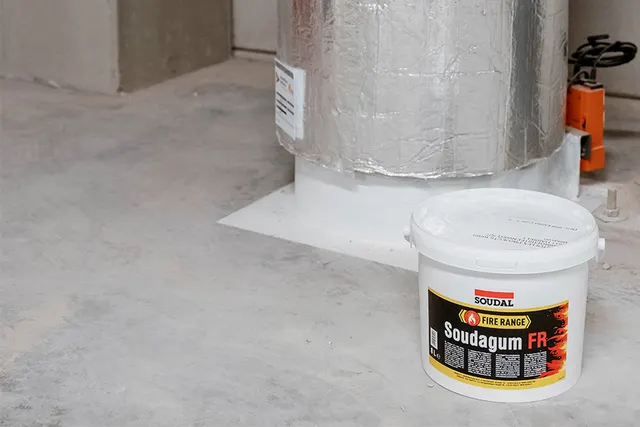
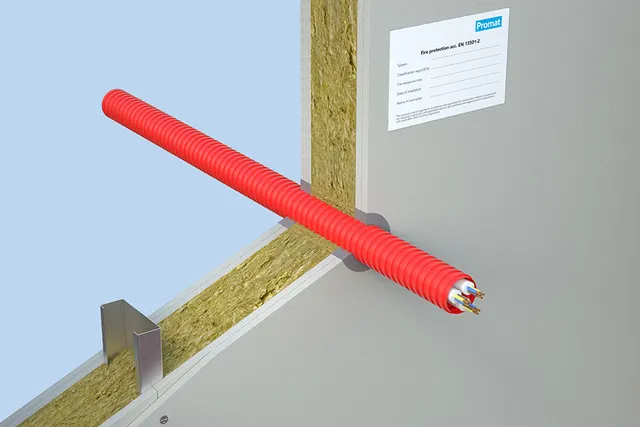
There are many different ways to fire-stop service penetrations: collars, insulation wraps, fire-resistant sealants and foams, fire dampers, coatings or fire-resistant pillows … One striking point is that Buildwise explicitly warns against using products incorrectly. The fact that a product is marketed as fire-resistant does not automatically mean that it is suitable for every application. Foam and sealant applications in particular still often go wrong on site. The performance of fire-resistant service penetrations is now classified according to European standards in the NBN EN 13501 series. Two criteria are especially important: integrity and thermal insulation. In other words, a penetration must not only prevent fire and hot gases from spreading, but also stop the temperature on the other side from rising too quickly. In Belgium, the Royal Decree on Basic Standards requires a penetration to achieve at least the same fire resistance as the building element it passes through in almost all cases.
Accurate product documentation and test reports are essential
Even so, finding a solution that fits every situation perfectly is not always straightforward in practice. Designers often come up against limitations, particularly in complex renovation projects or where large bundles of services are involved. This makes accurate product documentation and test reports all the more important. Manufacturers now provide increasingly specific conditions of use, and any deviation from them can invalidate the entire classification.
Fire safety does not end at handover. Later changes to building services, from additional data cabling to extra HVAC controls or charging points, create new potential weaknesses in the compartmentation every time. TV 293 therefore emphasises the importance of proper monitoring throughout a building’s entire life cycle. Fire dampers must be tested periodically to ensure they work properly, while other seals must also be checked for damage, wear or subsequent changes to technical installations. Clear divisions of responsibility, strict compliance with installation instructions, on-site training and thorough documentation in the post-intervention file are also crucial. The last of these is particularly important. Without accurate documentation, it becomes virtually impossible years later to find out what solution lies behind a finished wall, or whether subsequent changes have compromised the compartmentation.
This is perhaps the most important message of TV 293: fire-stopping service penetrations must not be treated as a detail to be “sorted out quickly” at the end of a project. On the contrary, in a construction sector where building services are becoming increasingly dominant, fire-resistant service penetrations are gradually moving from a technical niche to a fully fledged safety discipline. That is precisely why the 2024 edition of TV 293 is more relevant than ever. By following its guidance, construction professionals can help make buildings safer from fire.
Question about this story? Ask your question
Keep following this
Get an email when a new story is published. No account needed.
- ThemeHealthy air and summer comfort
- SubjectFire protection