











Artes Group and Van Marcke pioneer Flanders’ largest aquathermal energy project
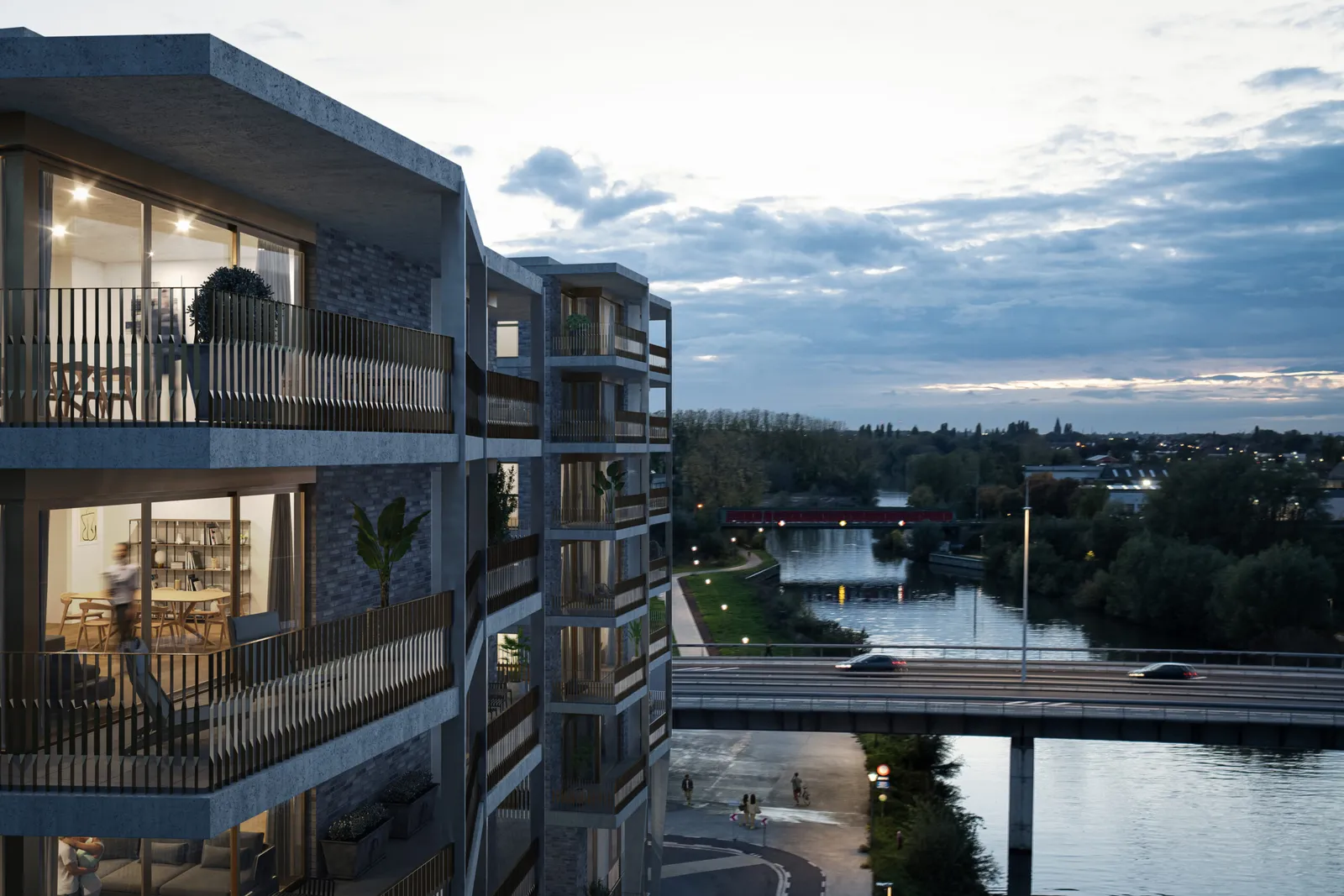
“Kortrijk’s Kaai City is the first district to use fossil-free heating and cooling from the ground and river water”
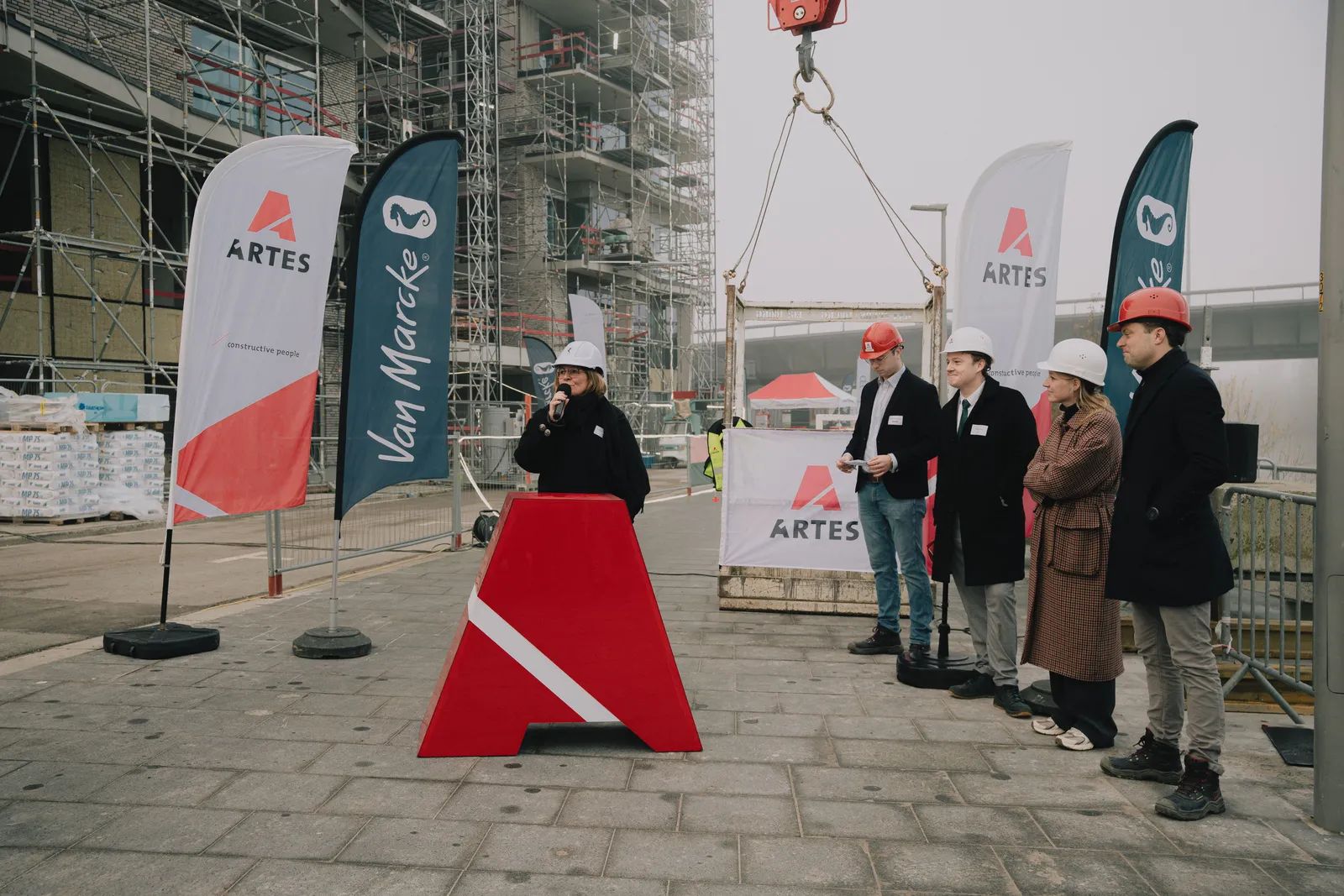
Flanders’ first large-scale aquathermal energy project is nearing completion in Kortrijk: the new Kaai City district, developed by CAAAP, is equipped with sustainable heating using water from the Leie. The project is being completed in the presence of Flemish Minister Melissa Depraetere. It is being delivered by Energiehaeven, the joint venture between Artes Group and Van Marcke, with support from Flanders. More than 300 homes, a new HOWEST campus and around ten retail units will be heated and cooled entirely without fossil fuels. The use of aquathermal and geothermal heat pumps on this scale is new to Flanders and also reflects growing attention to fossil-free heating as an affordable pillar of the energy transition.
By creating a direct connection between the Leie and the Kaai City urban development project, the river will become a sustainable heat source for this part of Kortrijk city centre. The new district is expected to use around 1 GWh of heat a year. If produced using conventional gas boilers, this would equate to around 100,000 m³ of natural gas and more than 180 tonnes of CO₂ a year. That is equivalent to the absorption capacity of around 6,000 trees, or the emissions produced by driving a diesel car around the earth more than 25 times. The site’s central plant room houses several heat pumps, with a combined heating capacity of 900 kW, comparable to the simultaneous output of 900 microwave ovens. The heat pumps make it possible to optimise heating and cooling both in terms of energy use and cost, as the system can switch between ground heat from the underlying BEO field and heat from the water of the Leie.
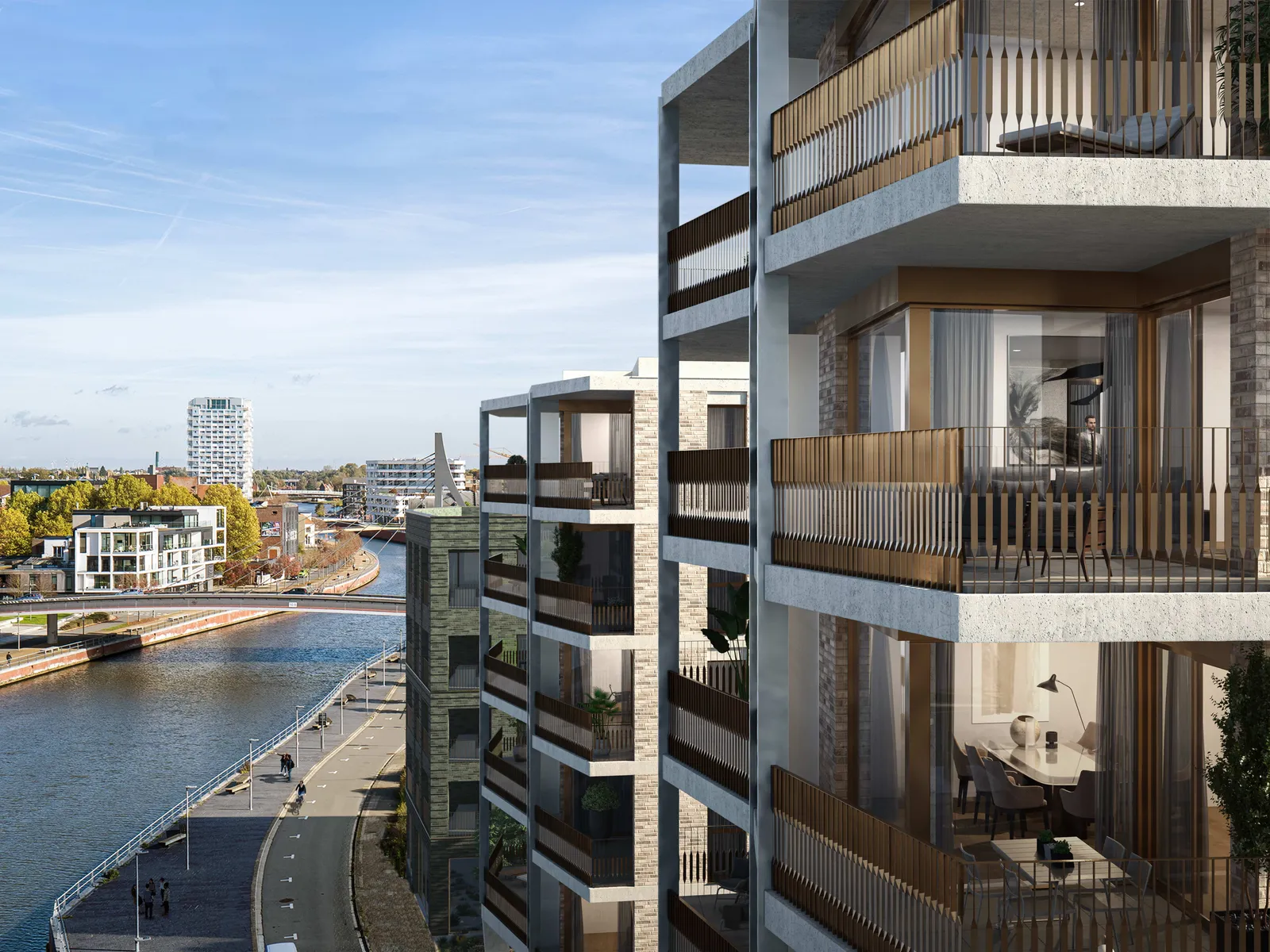
A gamechanger for Flanders’ energy transition
Using river heat on this scale is a first for Flanders. The river water also reduces the strain on the ground and allows it to be actively recharged with heat during the summer. Over the longer term, the average ground temperature falls year on year when a conventional BEO field is used. This can leave the ground ‘depleted’. Adding aquathermal energy helps keep the ground in balance for each winter ahead. This pioneering project therefore makes the use of aquathermal energy structurally future-proof and scalable.
“Kaai City proves that fossil-free heating at district level is technically viable as a technology of the future. Thanks to support from the Flemish Government through the Call Groene Warmte, it has also become economically viable. Combining aquathermal and geothermal energy on this scale is among the most environmentally friendly and energy-efficient ways to heat and cool buildings. These mini-district heating networks are a better alternative to individual heat pumps, particularly in urban areas. Collective systems offer economies of scale and greater stability, while removing some practical obstacles, such as noise. The project in Kortrijk sets a benchmark for other district projects in Flanders located alongside a waterway”, says Matthias Hoornaert, co-CEO of Artes Group and CEO of CAAAP.
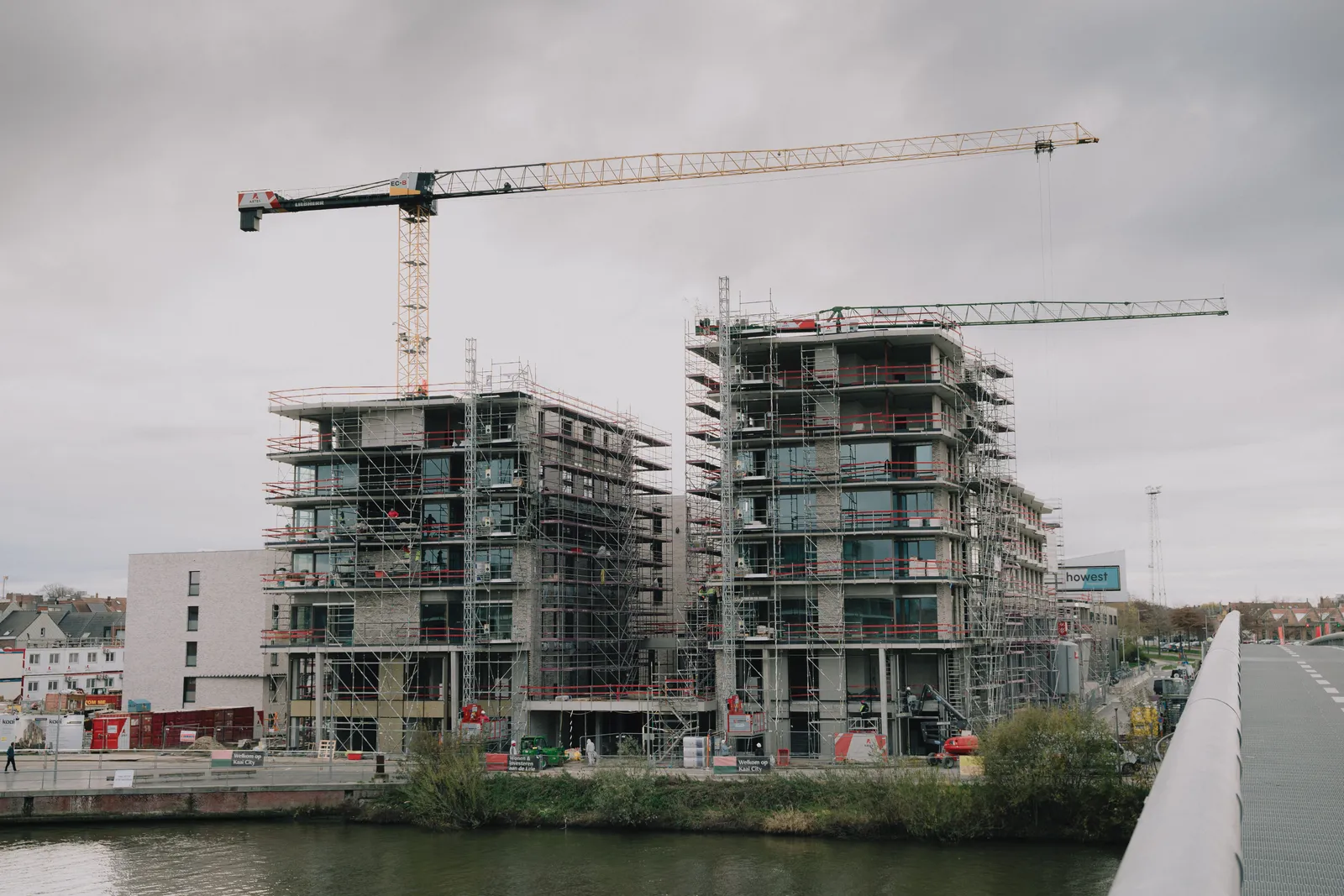
Improving financial viability
Work on the riverbank, the final phase of the project’s development, began in the presence of Melissa Depraetere, Vice-Minister-President of the Flemish Government and Flemish Minister for Housing, Energy and Climate, among other areas. She promotes heating and cooling districts using aquathermal energy from river water, including by awarding support through the Call Groene Warmte competition. The Kortrijk project also received support in this way. One financial barrier to aquathermal energy projects is, unfortunately, the so-called water abstraction fee: a charge payable to the Flemish Government for abstracting water from navigable waterways. The purpose of this levy is to recover the costs of maintaining water levels at a suitable level during periods of drought. However, aquathermal systems extract only heat (or cold) from the water, which has no impact on the flow rate. The levy therefore misses its intended purpose in this case. Installers and operators of aquathermal systems have long called for the fee to be abolished, so that the rollout of aquathermal energy projects is not unnecessarily hindered.
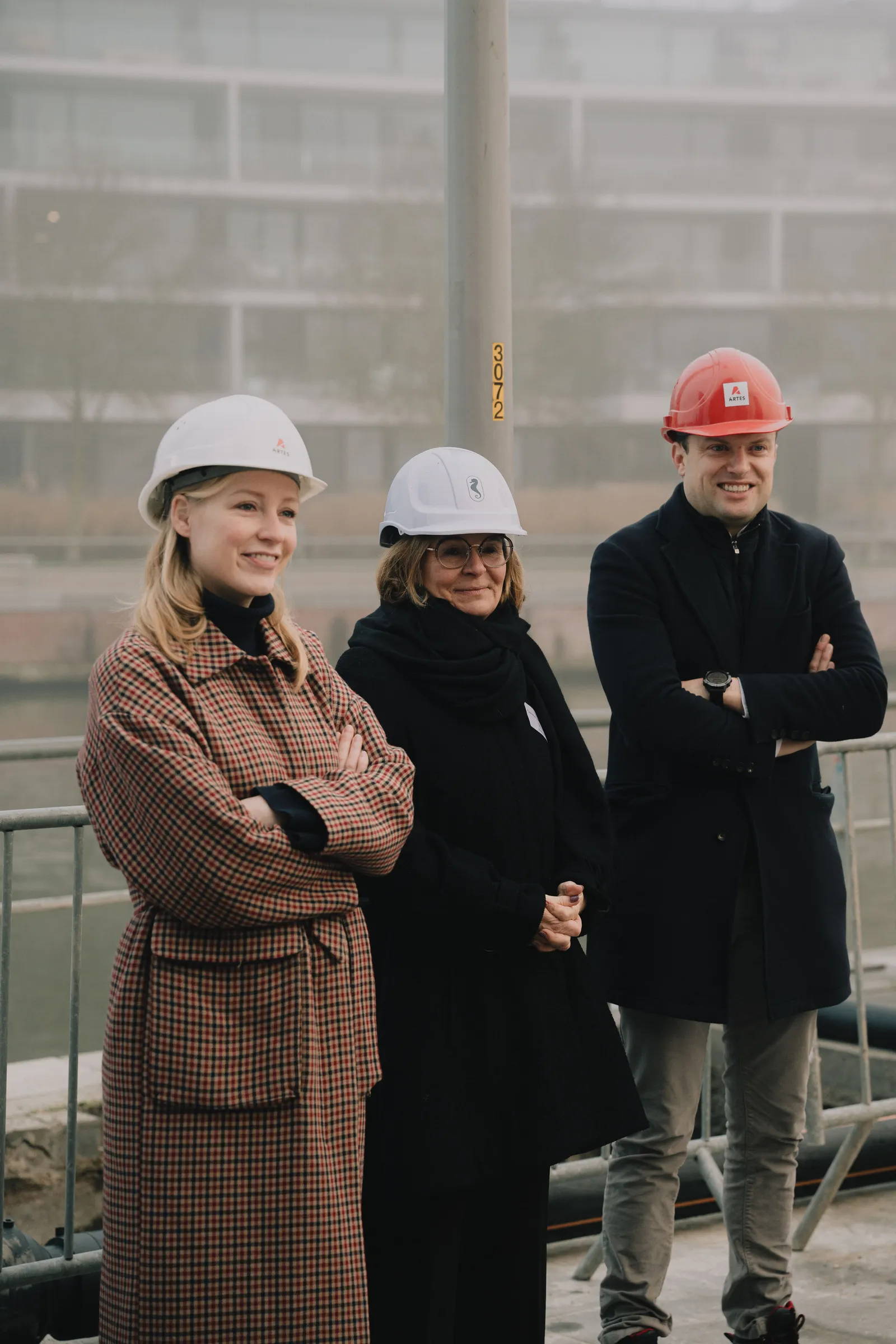
“Flanders needs to become independent of Putin’s gas. It is expensive, polluting and, above all, unreliable. At the press of a button, he can raise the price or cut off our gas. That is why we need to switch to energy produced here in Flanders: water, sun and wind. It is clean and cheaper. Above all, it gives us the certainty that electricity will always be available. I am therefore extremely proud that here in Kortrijk, for the first time in Flanders, we are providing an entire district with heat from water from the Leie. This means hundreds of families, students and HOWEST can enjoy clean energy. Together with the city council, Flanders is preparing Kortrijk for the future”, says Flemish Minister for Energy and Climate Melissa Depraetere.
A first for fossil-free heating
Kaai City will be the largest residential project in Flanders to use this fossil-free heating technology. The development, coordinated by CAAAP and Artes Group, shows how sustainable heat production can be seamlessly integrated into large-scale urban regeneration. As an Energy Service Company (ESCO), Energiehaeven is responsible for the design, delivery and long-term management of the entire system. This keeps the initial investment affordable for residents, which remains the biggest obstacle for those considering a heat pump. The collective approach and professional coordination also help limit energy consumption, resulting in lower energy bills.
In a rapidly changing and often uncertain energy market, a reliable ESCO gives residents the reassurance they need. University college HOWEST is also involved in the project, both as a customer and as a research institution. As part of the European Waterwarmth project, it is studying the impact and optimisation of aquathermal systems. Energiehaeven is making the system’s operational data available to the research team.
“The project is tangible proof that sustainable district heating is not only technologically feasible, but can also be affordable and scalable when construction partners and policymakers are working towards the same goal”, concludes Caroline Van Marcke, CEO of Van Marcke.
Een zakelijke vraag aan Van Marcke NV? Get in touch
Who worked on it
Kaai City in Kortrijk, new build
- property developerCAAAP
Keep following this
Get an email when a new story is published. No account needed.
- ProjectKaai City
- ThemeFossil-free heating and cooling
- SubjectNews
- CompanyCAAAP
- CompanyVan Marcke NV







