Systems thinking and collaboration will future-proof Belgium’s building services sector, says manufacturer of HVAC and sanitary components
Text Lieke BousemaImage Caleffi
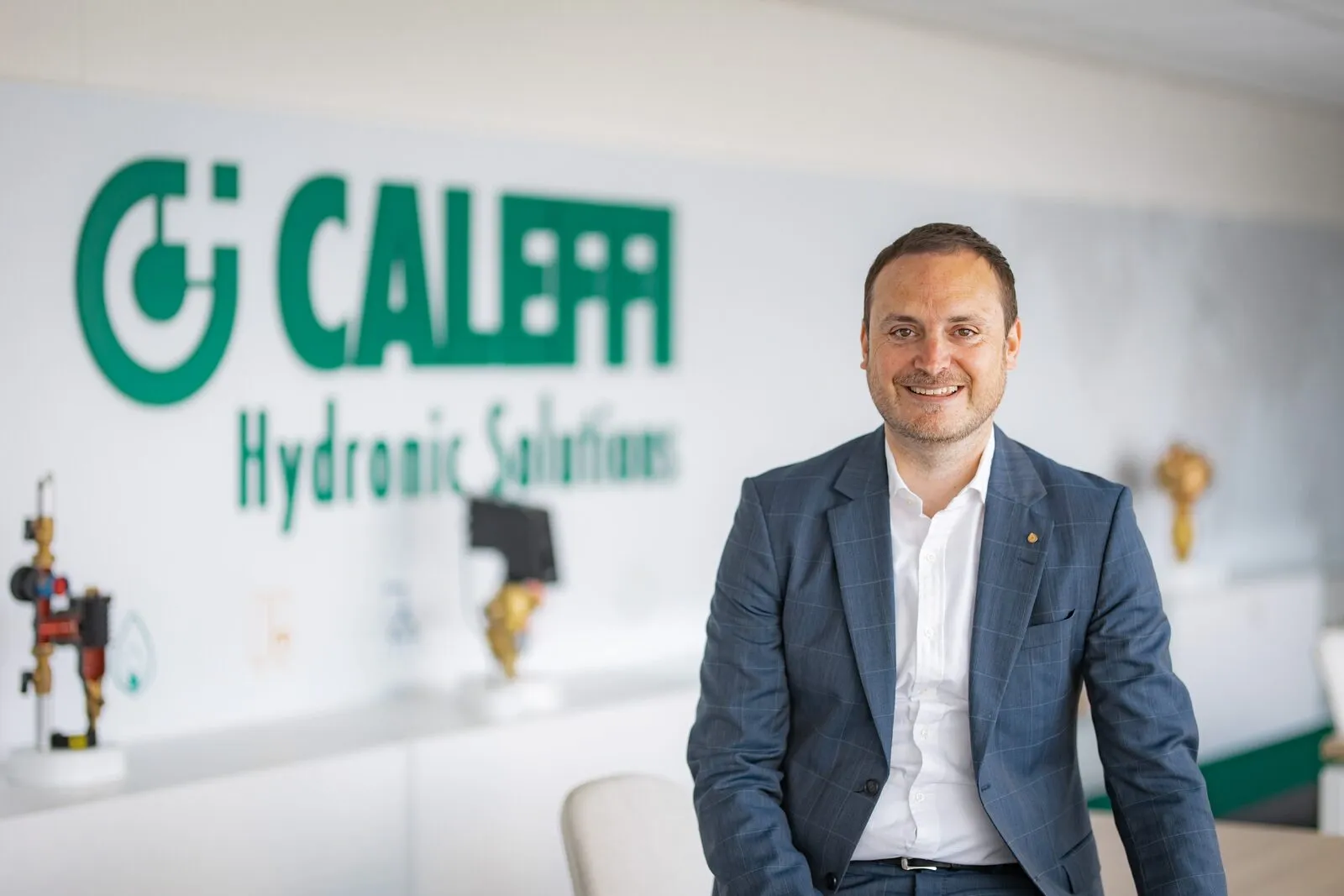
Flanders and Wallonia are each following their own path towards more sustainable buildings. But for Mauro Manfredi, director of Caleffi, the Italian manufacturer of components for heating, cooling and sanitary installations, one thing is clear: only through systems thinking, knowledge sharing and close collaboration between manufacturers and installers can Belgium’s building services sector meet its climate targets for 2050.
“Belgium’s building services market is undergoing major change. The energy transition calls for new technologies, different forms of collaboration and increasingly specialised knowledge. At the same time, the sector is facing an ageing workforce, staff shortages and heavy workloads. That calls for a different way of working,” says Mauro Manfredi. “Manufacturers and installers need to work more closely together. Only then can we make a real impact.”
Two regions, different challenges
To understand Belgium’s building services market, Mauro Manfredi says, you have to distinguish between Flanders and Wallonia. “The energy transition is progressing at a different pace in the two regions and calls for different solutions,” he says. “Flanders is placing a strong emphasis on electrification. All-electric and hybrid heat pumps will play an important role. But the ratio between electricity and gas prices remains a concern. It needs to become more balanced to make investment in electrification and heat pumps more attractive.”
In Wallonia, Manfredi sees greater potential for district heating networks, particularly in urban areas. “Heat pumps are also attracting interest, but progress towards more sustainable buildings is slower,” he says. “There are more constraints and policy is less clear. This calls for targeted measures.”
For manufacturers, this regional diversity means that a one-size-fits-all approach is not enough. Mauro Manfredi says: “When it comes to the energy transition, Belgium is really a country of three realities. You have to offer solutions that suit the regional context. In Wallonia, for example, conventional heating solutions will continue to play a role for the time being.”
From components to systems
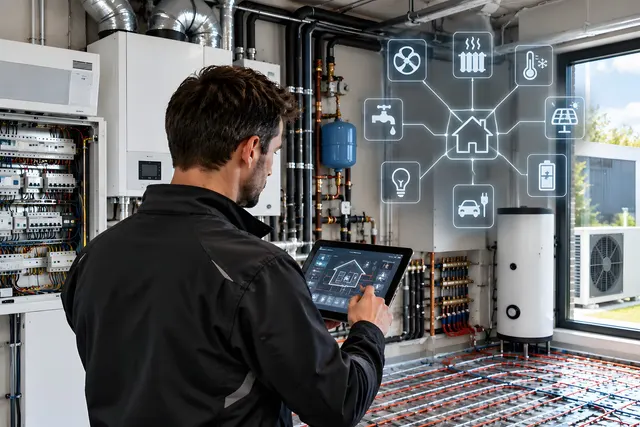
One principle that must always guide the approach, according to Caleffi’s director, is systems thinking. “A heat pump or a connection to a district heating network does not, in itself, guarantee an energy-efficient installation. The entire system has to work, from generation and distribution through to heat emission and control,” he explains. “Correct sizing, water quality and hydronic balancing are important too. Only when everything is properly coordinated will the system perform as intended.”
Caleffi is responding with a broad range of hydraulic components and an increasing number of integrated solutions, such as hydraulic modules and heat pump packages. “We have the components to support the entire heat pump system, from air and dirt separation to protection and clear performance monitoring. By bringing solutions together, we can make life easier for installation companies and reduce the cost of failures,” says Mauro Manfredi.
Caleffi also develops products for drinking water quality, such as check valves and solutions for backflow and Legionella prevention. It also offers digital and cloud-connected applications that help users gain greater insight into installation performance.
Sharing knowledge
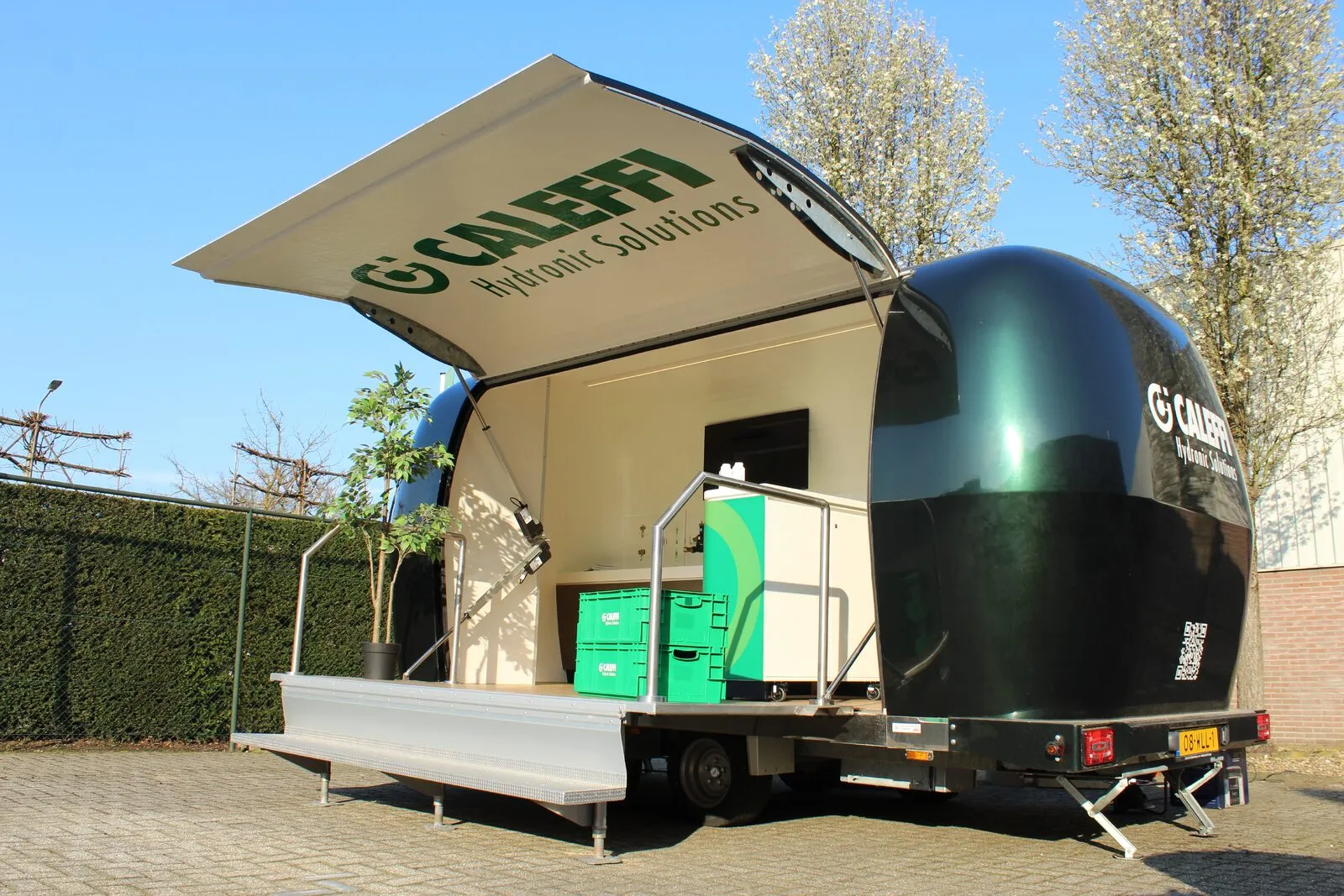
“Technical solutions alone are not enough. The increasing complexity of installations also calls for well-trained professionals,” notes Caleffi’s director. And that, he says, is where the problem lies. “The workforce is ageing, while recruitment of new staff is lagging behind and installers are under considerable time pressure. That is why Caleffi is investing heavily in knowledge transfer. This includes practical training, both on site and on the road in the Caleffi Streamer minibus, as well as at the company’s premises in Weert.”
“We are also launching a digital e-learning platform in early 2027, enabling installers, consultants, specifiers and technical staff at wholesalers to build their knowledge step by step. We want to make knowledge accessible at every level, from beginner to expert. This is not just about our own products, but above all about how complete systems work. That is why we are also bringing this knowledge together with other manufacturers.”
Building together for 2050
“The relationship between manufacturer and installer needs to change,” concludes Mauro Manfredi. “Manufacturers should no longer simply supply products. They need to involve themselves early, working with installers and providing information and advice, sometimes alongside other parties. That makes it easier for installers to make decisions.”
Finally, Caleffi’s director stresses that more attention should be paid to attracting new professionals to the sector. “We need to show young people that technical careers are very different from what they used to be. There are many opportunities to specialise, which makes the work all the more interesting. Perhaps we also need to rethink job titles: not just installer, but, for example, climate specialist,” he concludes.
Een zakelijke vraag aan Caleffi International N.V.? Get in touch
Companies in this story

Keep following this
Get an email when a new story is published. No account needed.
- ThemeSafe and efficient water use
- SubjectYearbook
- CompanyCaleffi International N.V.