Sustainable cable recycling at transparent prices
Text Piet AndriesImage Kopuur
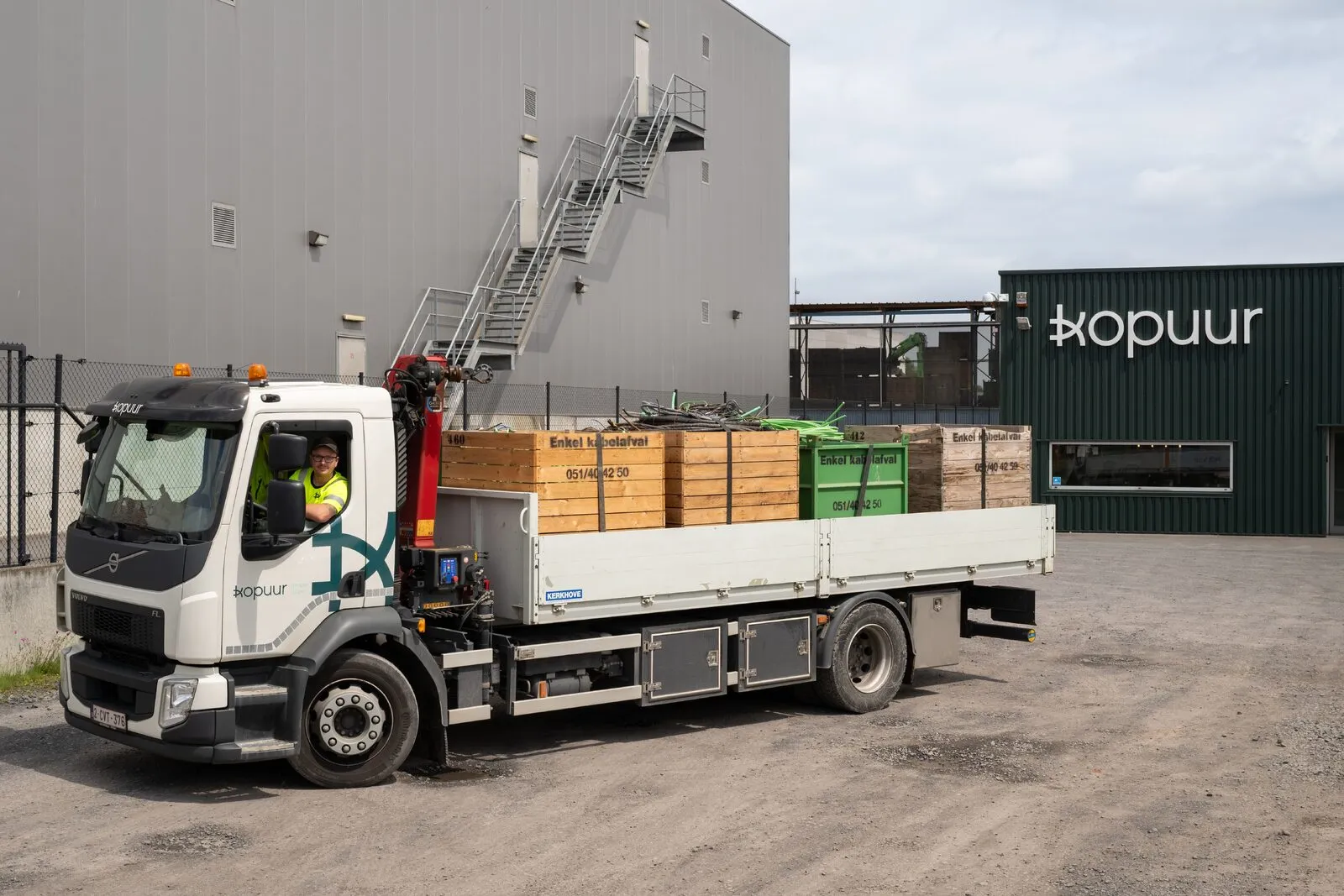
For many installers and contractors, cable waste remains a by-product with no clear value. They face unclear prices, while transport is also an unknown. Recycling company Kopuur is putting an end to that uncertainty with transparent rates and a free container service. Recovering copper from cables is the backbone of this West Flanders family business, which has grown into a pioneer in the circular economy.
Five years ago, Tess Debacker, co-owner of Kopuur, took over the reins with her brother Wout from their father Geert, who founded the company in 1981. Back then, it was still called AZ Kabel. Since the handover, the customer base has grown by 66% and the volume of cable offcuts processed has increased by 48%. The recent name change to Kopuur, a blend of the words for copper and pure, was a strategic move. “The name now better reflects what we do. We’re easier to find online, and we expect it to raise our profile beyond West Flanders,” says Tess Debacker.
Within ten working days
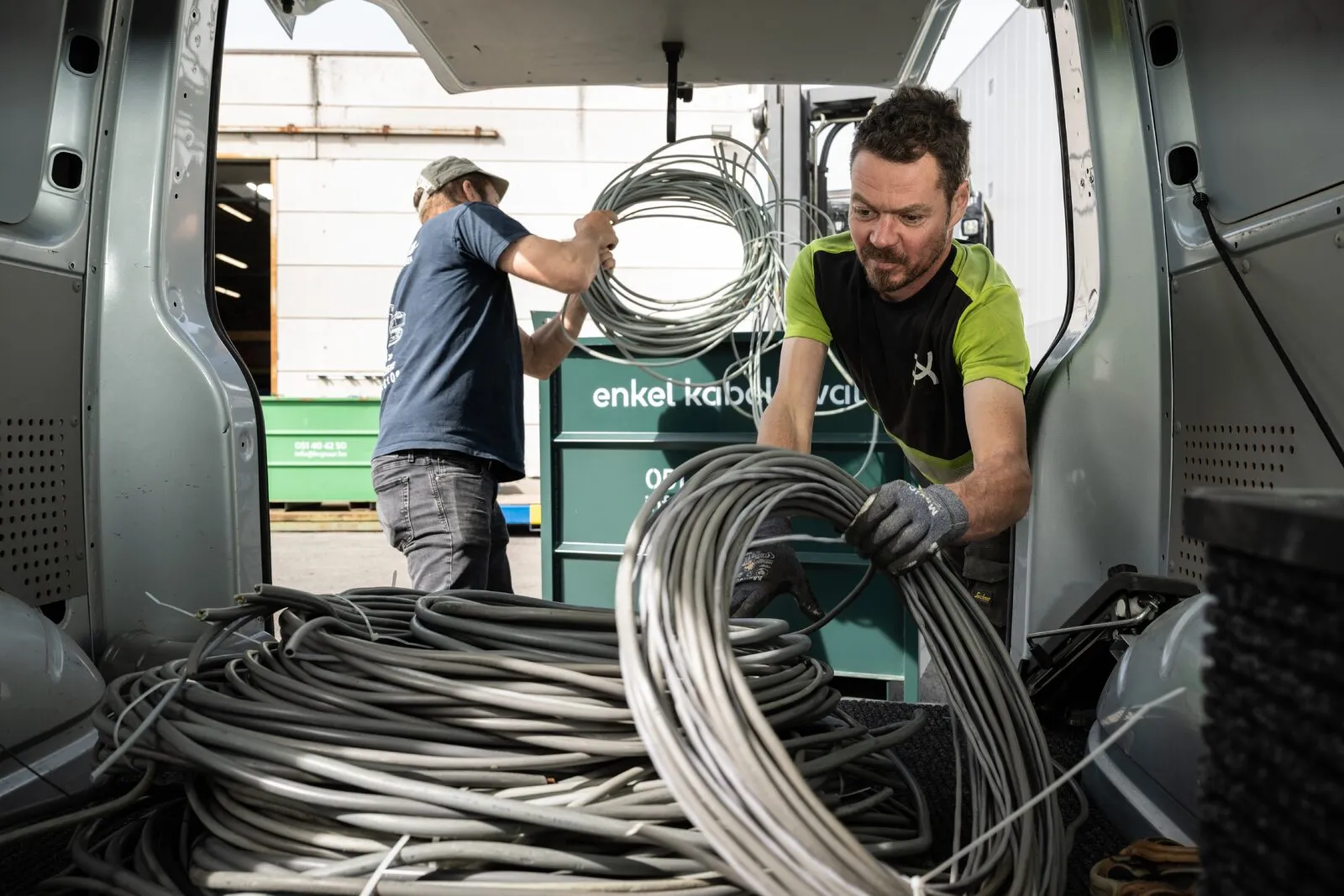
What sets Kopuur apart is its choice of radical openness in a sector where prices are often negotiated behind closed doors. All rates are published on the website. “The sector isn’t used to this kind of transparency,” says Tess Debacker. “Anyone can compare our prices with those of other companies. But they’re fair. And when people know they’re getting a fair price, trust and loyalty grow.” The results extend beyond the professional sector, with more and more private individuals also turning to Kopuur. A key part of the service Kopuur provides to make life easier for its customers is its free container service. Kopuur offers a wide range of container sizes, from compact models to 30 m³, and can supply several at once. Once a container is full, the customer calls and collection is scheduled within ten working days. “It’s completely free,” Tess Debacker continues. “We simply collect the material and pay for it.” Kopuur currently has 1,350 containers in circulation, serving independent electricians and large multinationals.
The purer it is, the more valuable it is
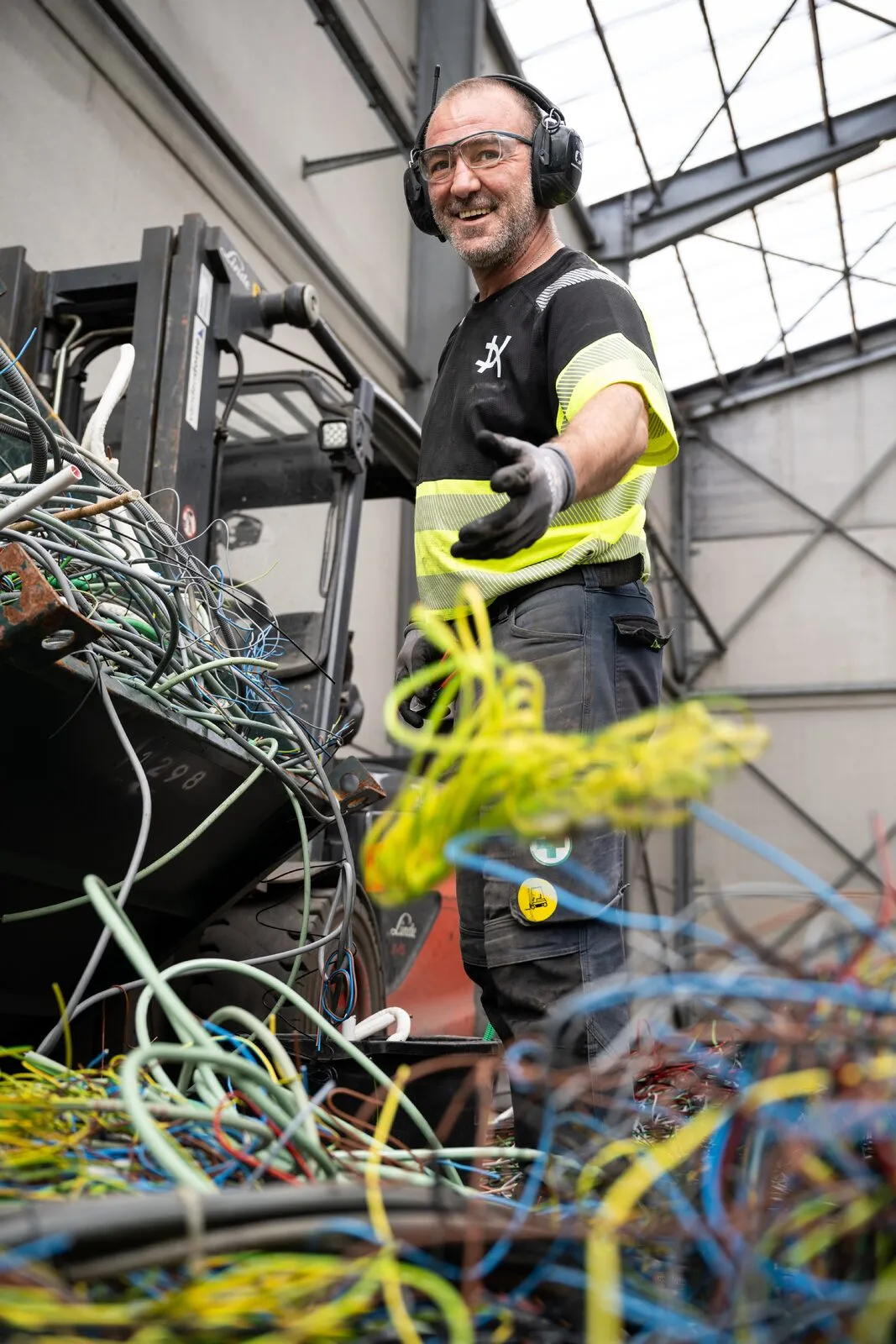
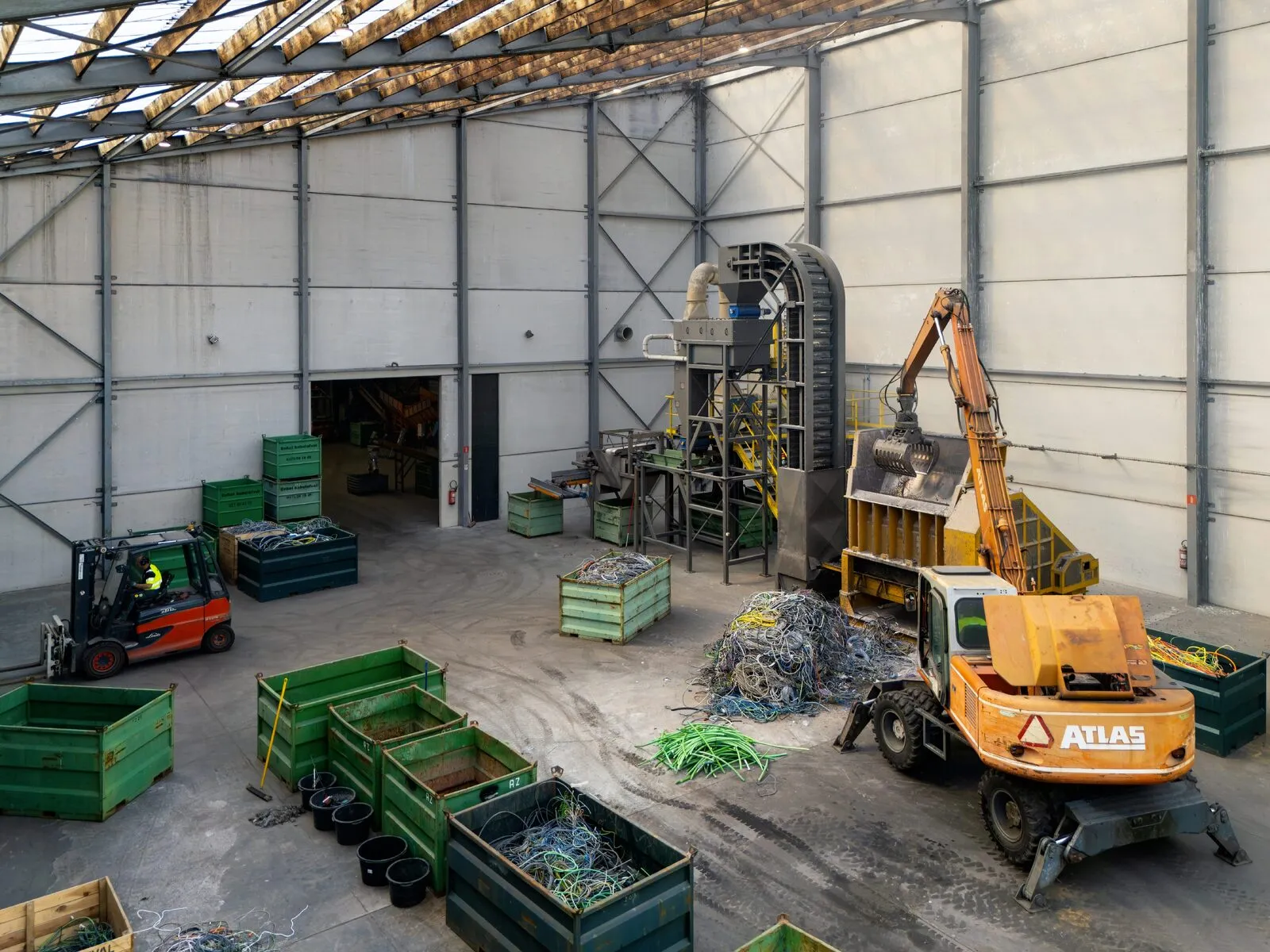
The recycling process itself has not changed fundamentally in decades: shredding and separation using shaking tables. The added value lies in manual pre-sorting. “The better we sort the material beforehand, the purer the copper we end up with,” says Tess Debacker. “That gives us a higher-quality product and earns our customers more.” Kopuur separates recycled cables into first-grade copper (pure) and second-grade copper (with a tin coating). This purity has also built trust further along the supply chain. “At first, every delivery we made was analysed. Today, we can unload directly without any further checks. That trust is enormously valuable to us,” says Tess Debacker.
Although cable-recycling machinery has not changed dramatically, that should not obscure the fundamental shift that has taken place. Kopuur has gradually digitised all its administrative processes, with a direct impact on efficiency and customer service. “It was a logical step, but its impact has been enormous,” says Tess Debacker. This has also led the company to plan the launch of a customer portal soon, where professional customers will be able to track the status of their collections and payments in real time.
Kopuur is already looking further ahead, towards a new material. The electrification of the construction and installation sectors is bringing more aluminium cable, driven by the rise of solar panels and EV charging points. Kopuur wants to get ahead of this trend and is planning a dedicated aluminium processing line. “That will enable us to guarantee the same level of purity as we do with copper. It’s the logical next step in our growth,” concludes Tess Debacker.
Een zakelijke vraag aan Kopuur? Get in touch
Companies in this story

Keep following this
Get an email when a new story is published. No account needed.
- ThemeElectrical infrastructure under pressure
- SubjectElectrical
- CompanyKopuur