Why safe water in sanitary installations starts with a well-designed internal plumbing system
Text Kris VandekerckhoveImage DELABIE
Water for sanitary use must be heated more efficiently. At the same time, hygiene, Legionella prevention and user safety must not be compromised. For installers, the plumbing system is therefore increasingly a balancing act, from the water meter to the tap.
The fact that drinking water is supplied safely to a building does not automatically mean it is safe when it comes out of every tap. The internal plumbing system also affects water quality. Pipework, fittings, taps, temperatures, periods of stagnation and possible connections to alternative water sources all play a part. This makes the work more complex for installers, but also more significant.
The tap as part of the system
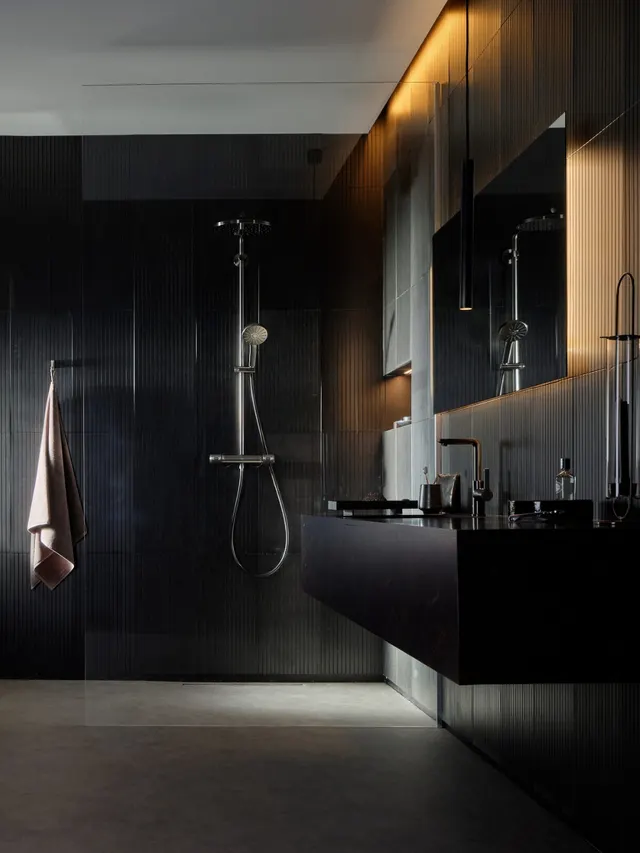
DELABIE, a specialist in sanitary solutions for public and communal buildings, is also seeing this shift. According to the company, attention is moving increasingly from individual products to the way the entire installation performs. A tap, shower or mixer is no longer simply an endpoint for drawing water, but also one link in a wider chain involving hygiene, consumption control, temperature management and maintenance.
Risks such as stagnation, Legionella, cross-connections and the incorrect use of rainwater or well water show why this systems approach is needed. Managing these risks starts at the design stage and continues through installation, maintenance and product selection. Particularly in communal buildings, healthcare settings, sports facilities, schools, hotels and public washrooms, the question is not just whether a system works, but whether it remains safe in everyday use.
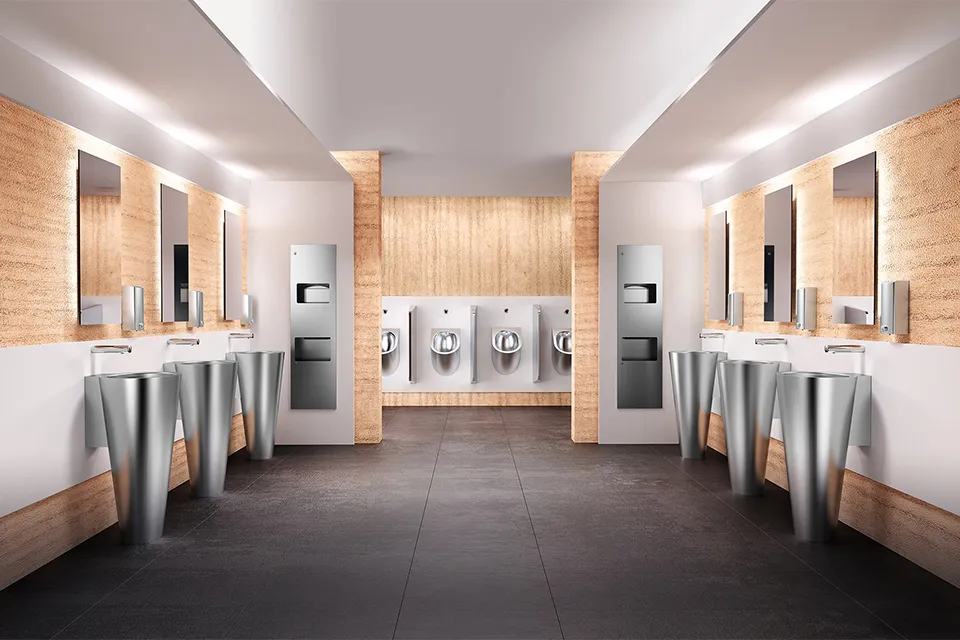
The system does not stop at the water meter
A properly designed internal plumbing system starts with a clear separation of water flows. Alternative water sources are becoming more important, but require a watertight design. Rainwater or water from a separate circuit can be useful for certain applications, but must never come into uncontrolled contact with drinking water.
Installers have a clear responsibility here. Schematics must be correct, backflow prevention must be selected appropriately, and taps must be connected clearly and safely. Stagnation also requires attention. When water stands for a long time in little-used pipes or taps, it can warm up and its quality can deteriorate. The risk is greater in buildings with fluctuating occupancy, such as schools during holidays, hotels with seasonal occupancy or washroom areas that are only partly in use.
Warm enough, but not needlessly hot
This is compounded by the challenge of supplying hot water for sanitary use. The energy transition is putting pressure on temperatures, storage volumes and consumption. Using less energy remains essential, but indiscriminate cuts can create new risks. Legionella management requires adequate temperatures, circulation and attention to critical points in the system.
For installers, this means that efficiency can never be considered separately from safety. A system must be energy-efficient, but also easy to monitor. Hot water must reach the right temperature, cold water must not warm up unintentionally, and taps must be selected to support hygiene, comfort and effective management.
The tap as an active link
This is precisely why tap selection is becoming more important. Whereas taps and showers were once assessed mainly on flow rate, comfort and robustness, stagnation, touch-free operation, thermal management and ease of maintenance now also come into play.
DELABIE sees this shift particularly in public and communal installations. Sanitary facilities in these settings are often used intensively, yet may also remain unused for periods. In such environments, the right product selection can help reduce water consumption, enable touch-free operation and support the management of little-used taps.
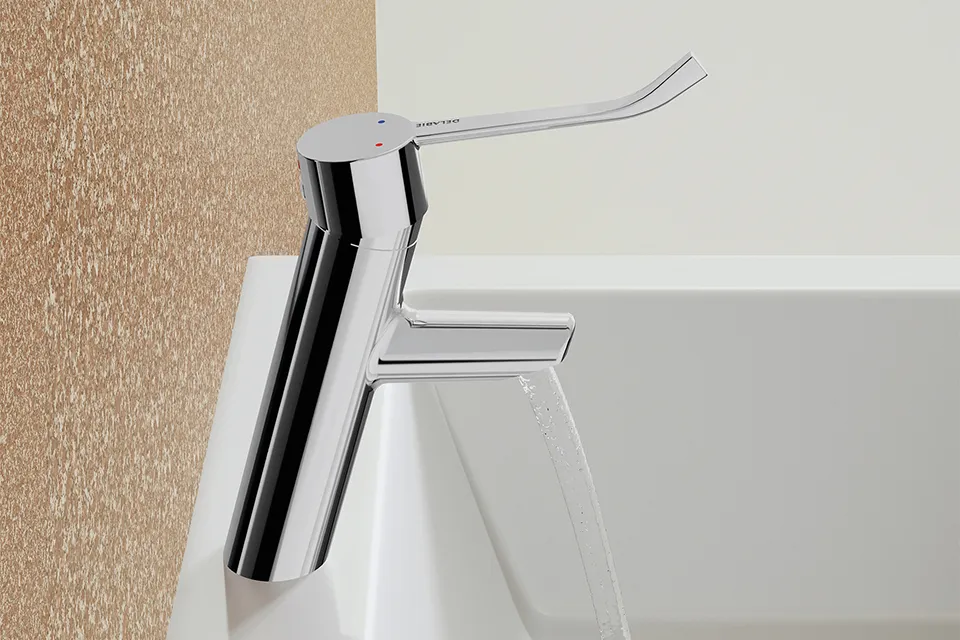
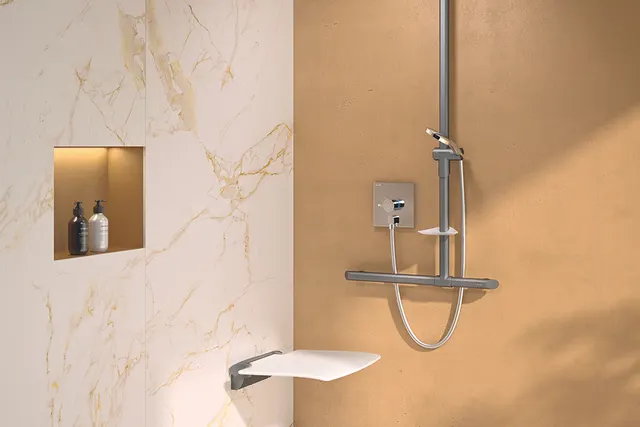
Depending on the application, electronic taps and shower solutions can support periodic flushing. Thermostatic solutions, meanwhile, need to combine comfort and safety without losing sight of wider Legionella management. The design of sanitary products is evolving too. Smooth internal surfaces, low water content, easy cleaning and the option of thermal flushing are becoming more important criteria. Product ranges such as SECURITHERM and BIOSAFE are part of this development, not as standalone product claims, but as examples of taps evolving in line with the requirements of modern internal plumbing systems.
Reducing consumption requires more expertise
Saving water and energy remains important. But in plumbing systems, lower consumption is not automatically better if it leads to insufficient flow or temperatures falling too far. The challenge is to strike the right balance: save where possible and manage risks where necessary.
This is shifting installers’ role from contractor to adviser. The question is not just which product to install, but how the entire system will perform in everyday use. Safe water in sanitary installations does not start at the tap. It starts with a design that takes account of use, risks and management.
DELABIE positions its solutions for public and communal washrooms precisely at this intersection. Rather than presenting a single product as the answer, it develops taps that help installers consider water consumption, hygiene, comfort and management together. In modern internal plumbing systems, it is not only the technology behind the wall that makes a difference. The final link must also be selected carefully.
Delabie: Stand number 123
A business enquiry for Delabie? Get in touch
Companies in this story
Keep following this
Get an email when a new story is published. No account needed.
- ThemeSafe and efficient water use
- SubjectSanitaryware
- CompanyDelabie