Round-table discussion: heating in an age of electrification and grid congestion
Text Wouter PolspoelImage Louwers Mediagroep

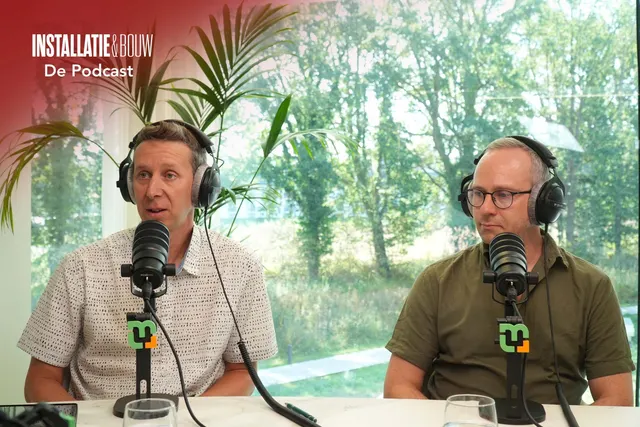
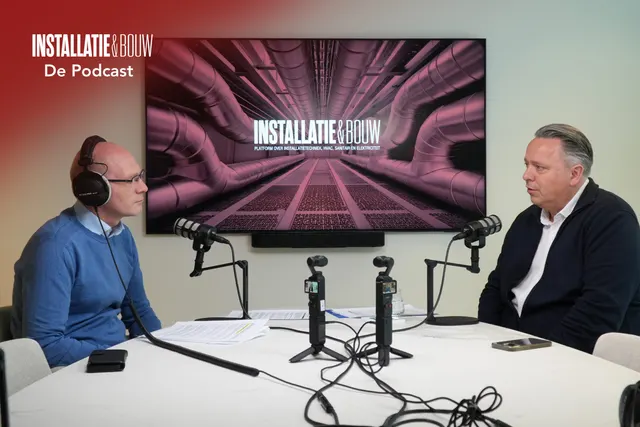
What does day-to-day practice in the heating sector look like in an age of far-reaching electrification, with the electricity grid increasingly running up against its limits? Installatie & Bouw brought together five seasoned experts to discuss the issue at a round-table discussion. Structured around four propositions, the discussion also explored various related issues, such as whether hybrid heating is a blessing as an interim solution or simply an excuse for delaying action, whether the heat emitters deserve more attention in the debate, and how far the heating sector in Flanders has progressed with digitalisation and data integration. Get ready for an engaging and informative discussion. One caveat: the round-table discussion took place before the Belgian budget agreement, which includes plans to reduce electricity prices in the coming years.
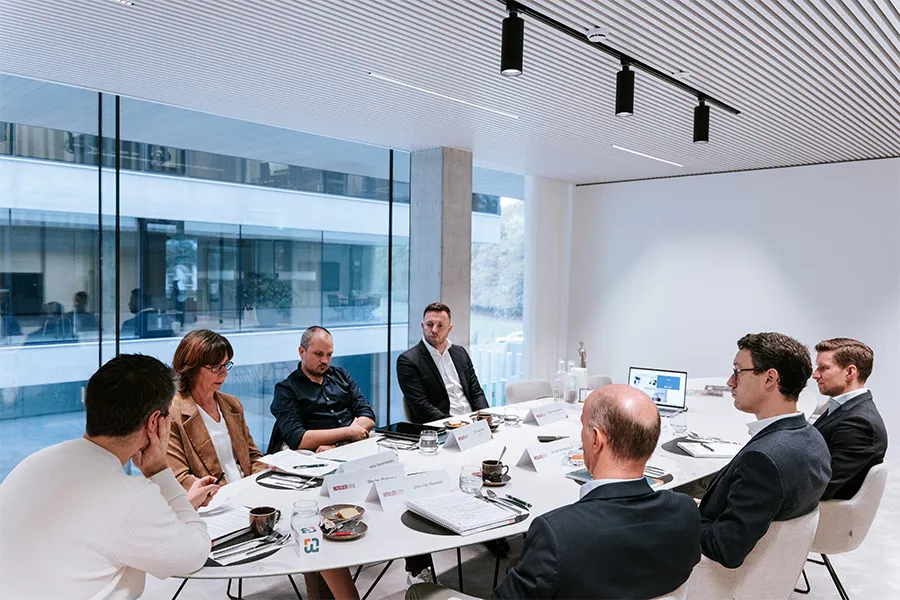
Participants:
Vincent Vancaeyzeele, technology & innovation team manager at Techlink
Patrick O, public affairs officer at Climafed (he joined remotely)
Tim Heymans, account manager for East and West Flanders at Buderus
Hilde Vandenberghe, category manager for renewable energy and HVAC at Cebeo
John Van Beveren, product specialist at Weishaupt
Moderator:
Wouter Polspoel (content agency Palindroom), editor-in-chief of Installatie & Bouw België
PROPOSITION 1: the electrification of heating is inevitable and desirable
Patrick O: “I don’t entirely agree. It is the most logical way to heat buildings in order to meet climate targets, but if we say it is inevitable, we are ruling out other technologies. Green fuels have also proved their worth for some time. However, they have failed to take off, mainly because of the fall in electricity prices.”
Hilde Vandenberghe: “I agree with the proposition, because we need to cut CO2 emissions, and electrification is the right way to do that. I would add, though, that end customers are not concerned about the environmental rationale today. Sustainability is not their top priority. Comfort and the price they pay come first when choosing one heating solution over another.”
Patrick O: “We should stress that Wallonia is not on the same wavelength when it comes to electrification. Flanders has higher ambitions.”
Tim Heymans: “Oil-fired heating is indeed still commonplace in Wallonia. And the electricity grid there is not what it is here in Flanders either.”
Vincent Vancaeyzeele: “I can see why the electrification of heating is inevitable, but I do have a few reservations about current policy in this area. First, new-build homes are so thermally efficient that a heat pump is the obvious choice. In the renovation market, however, the question in Flanders, Brussels and Wallonia alike is whether heat pumps can be used efficiently, because high-performance thermal insulation is less of a given. If a heat pump does not achieve the expected efficiency, the bill becomes unaffordable. I also note that governments, both national and European, are paying more attention to defence than to the energy transition. Given current policy, which makes new-build homes essential to the electrification of heating, I would put the date for full electrification of the heating sector at 2100, by which time enough new homes will have been built.”

The electrification of heating is often automatically associated with heat pumps, but are there other options? I’m thinking of electric resistance heating, infrared panels, electric boilers …
John Van Beveren: “Any electric heating system that delivers at least the same efficiency as a heat pump could be an alternative. But are there any? I think the answer to that question is obvious (laughs).”
Tim Heymans: “There is a market for electric boilers and instantaneous water heaters today. But these solutions are not efficient. Certainly not in Belgium, where electricity prices are too high for them.”
Hilde Vandenberghe: “As an electrical wholesaler, we do still see strong demand for infrared panels, electric resistance heating and storage heaters. But these solutions work on a one-to-one basis: for every kWh of electricity you put in, you get one kWh of heat out. With heat pumps, one kWh of electricity can sometimes produce 4 kWh of heat. That is why these electric alternatives to heat pumps are always combined with solar panels or other technologies for generating electricity on site.”
Patrick O: “These alternatives are certainly still useful in bathrooms, which typically have two peaks in consumption. I’d also like to mention solar thermal, which still has a place today for heating domestic hot water.”
Vincent Vancaeyzeele: “In my view, solar thermal will have to give way within three to five years to a combination of solar panels and a battery. The latter are becoming cheaper very quickly.”

Where is a heat pump the best solution today, and where is it not (yet)?
Vincent Vancaeyzeele: “A heat pump is an obvious choice in new buildings using low-temperature heating, or LTH. I also believe in heat pumps for the renovation market, but only for major renovations where at least double glazing, cavity wall insulation and suitable radiators are installed. Otherwise, the heat pump will struggle to operate efficiently, resulting in lower comfort and high electricity bills.”
John Van Beveren: “That’s right. In my view, heat pumps are not an option in buildings that could do with better insulation. They need additional insulation first. That is the first step, because adding insulation after installing a heat pump makes the entire heat pump system less efficient.”
Tim Heymans: “That brings us to a problem we often encounter today: someone’s boiler breaks down, but a heat pump is not an option because the home really needs additional insulation first, and there is no money for that. So they simply install a new boiler instead. And even when a home is sufficiently well insulated, many people still opt for a boiler rather than a heat pump because of the higher upfront investment.”
Is hybrid heating a blessing as an interim solution, or a risk that it will encourage people to put things off?
Tim Heymans: “It can be a blessing in large, well-insulated buildings that still have significant heat losses. I should say, though, that the market for hybrid heating systems is small for us.”
John Van Beveren: “It’s the same for us. And the few hybrid systems there are are always bespoke.”
Tim Heymans: “An additional heat pump can also be a good solution for people with a boiler and solar panels who have a surplus of self-generated electricity because they can no longer benefit from the meter running backwards. It gives them a way to use that extra electricity.”
What role do you see for alternative fuels such as green gas or hydrogen?
Patrick O: “None. According to Fluvius, the maximum injection of green gas in Flanders is around 10%, which is simply too little to use for heating on a large scale. And I’m absolutely not a believer in hydrogen, except in heavy industry.”
Tim Heymans: “Producing hydrogen in a green way is not yet possible today. And the infrastructure is not there either. People sometimes suggest that the natural gas network could simply be used, but I don’t see that happening any time soon.”

PROPOSITION 2: LTH will become the standard in both new-build and renovation
Patrick O: “That is where we are heading, yes. European legislation strongly encourages the use of LTH. It makes sense, because LTH maximises a heat pump’s efficiency. I’d also like to mention the 55 °C test. This involves setting the boiler temperature to 55 °C in the depths of winter and then checking whether it meets the heat demand. If it does, the home is ready for a heat pump.”
Vincent Vancaeyzeele: “To be completely accurate, the test needs to be carried out when the outside temperature is -7 °C.”
So LTH really will become the standard in both new-build and renovation. Are installers and designers still encountering any obstacles in this context?
John Van Beveren: “In urban areas, where homes are closer together, noise emission standards are something to keep an eye on. As is whether there is enough space for the heating system, because homes are getting smaller and smaller.”
Tim Heymans: “Absolutely.”
Hilde Vandenberghe: “Building smaller homes is indeed at odds with electrification, which requires larger plant rooms.”
Vincent Vancaeyzeele: “In the domestic market, it is the installer, not a consultancy, who has to carry out the heat loss calculations, draw up a hydraulic diagram and calculate pipe sizes. That is not straightforward, especially for smaller installation companies. Customers also have to pay for that design work and are not always willing to do so. They may then accept a higher operating temperature instead.”
How can you prevent comfort complaints with LTH, such as slow warm-up or a building that is too cold because the heat demand has been underestimated?
Hilde Vandenberghe: “LTH should really be on all the time. If that condition is met, it follows that there should be no comfort complaints. Users may experience them for a few days when LTH is first switched on at the start of the heating season, so the key is to start it up in good time.”
Can LTH also be used in buildings that are less well insulated?
Tim Heymans: “Certainly. Correct sizing is everything. If the heat losses are calculated properly, then in theory you can always use LTH. You may need fan convectors, which have a higher output than underfloor heating. The reason why a heat pump, and therefore LTH, is not always the best option for renovation projects is that LTH requires low heat loss as well as sufficient heat emitter capacity, and in renovations one of the two is often not up to scratch.”
Should the heat emitters, underfloor heating, convectors and radiators, receive more attention in the debate?
John Van Beveren: “Definitely. And I can see all the other participants around the table nodding too (laughs). And importantly, the heat emitters start where the heat pump is connected to the indoor system.”
Vincent Vancaeyzeele: “I’ve noticed that policymakers focus heavily on the heat generator, and not enough on the heat emitters. The apparent mantra seems to be: ‘Install a heat pump and you’re all set.’ No, every component of a heating system matters, as do correct sizing and control.”

PROPOSITION 3: heating is evolving into an active part of the energy system
Patrick O: “55% of the energy a home needs goes towards meeting its heating requirements and 15% towards heating domestic hot water. With electrification, this consumption becomes part of the electricity bill. In that sense, heating is certainly evolving into an active component of the energy system. And in that context, dynamic and capacity tariffs are only going to become more important.”
How can a heating system function as a thermal battery?
Patrick O: “By storing heat in the form of hot water. However, I wouldn’t overdo it. We’ve found that boilers and buffer tanks do have significant heat losses. After a day, a boiler or buffer tank can already have cooled by 10 to 15 °C.”
Tim Heymans: “The system can also store heat in materials that cool slowly, such as thick concrete walls or floors with a lot of screed. That is also one of the purposes of underfloor heating.”
What does grid congestion mean in practical terms for heating solutions?
Vincent Vancaeyzeele: “Techlink is a national federation, so we can make a good comparison between Flanders, Brussels and Wallonia in this respect. Fluvius, in Flanders, has invested heavily in keeping grid congestion under control. This congestion is certainly affected by the electrification of heating, but also by the shift to electric vehicles. For example, the grid operator nearly doubled its standard connection capacity not so long ago. In Brussels and Wallonia, Sibelga and ORES respectively still have some catching up to do in this area.”
Tim Heymans: “That said, there’s still plenty of room for improvement in Flanders too. Some regions still have a 2x110V network, which often causes problems with air conditioning and gas boilers, or a 3x230V network, which can make installing a heat pump more difficult.”
What opportunities are there in smart controls, dynamic tariffs and integration with solar panels and batteries?
Vincent Vancaeyzeele: “We’ve already partly answered that question. One additional point I’d like to make is that Dutch research has shown that people remain motivated for six months to optimise their energy use with the measures mentioned, but then lose interest. That’s why automation is so important: prices are read in automatically every day, and an energy management system then activates the various electrical installations at the most cost-effective times.”
Patrick O: “The rollout of digital meters has increased the use of these energy management systems in recent years, and that can only be a good thing.”
Hilde Vandenberghe: “I should say, though, that systems which control electric heating, a charging point and a home battery are certainly not yet mainstream.”
Patrick O: “No, but a few years ago energy management systems weren’t even on the radar, so things are moving really fast.”
How far has the heating sector in Flanders progressed with digitalisation and data integration?
John Van Beveren: “Both are already part of the heating sector. We’ve just touched on digitalisation. When we talk about data integration, that could include integrating weather forecasts. Larger heating systems can already take those forecasts into account, but for heating systems in the domestic market, it’s currently optional, if it’s possible at all.”
Tim Heymans: “The increased level of digitalisation and data integration does require closer cooperation between heating engineers and electricians.”
STATEMENT 4: affordability and skills determine the pace of heating electrification
Patrick O: “That’s certainly true. Part of the population can easily afford to electrify their heating, but for a larger proportion that’s less straightforward.”
How can heating electrification be made viable for households and businesses already under financial pressure?
Patrick O: “If you start tinkering with energy prices, you end up with the gilets jaunes as in France, or far-right voting as in Germany, because people see energy as a basic right. So it’s a very sensitive issue. Even if prices are lower, not everyone will be happy, because ultimately someone will always have to pay for that reduction, often through taxes.”
Hilde Vandenberghe: “Even so, electricity prices will have to come down if we want electrification to be affordable for everyone. In our country, electricity costs around four to even five times as much as gas. In neighbouring countries, it’s ‘only’ twice as much. It should be the same here.”
Vincent Vancaeyzeele: “At Techlink, we take a slightly more moderate position and propose a ratio of 2.5, meaning electricity would cost 2.5 times as much as gas, to make the energy transition possible. Even with a ratio of 3.5, the shift to electricity would already be highly inclusive. But at present, electricity and gas prices are indeed far too far apart.”
Tim Heymans: “Electricity prices aren’t going to stay where they are today. They have to come down.”
Vincent Vancaeyzeele: “The cost of connecting to the gas network, which since 1 January 2025 is only an option for existing buildings, not new ones, was significantly increased in Flanders at the start of this year. VAT on boilers has also risen from 6 to 21%. So the cost of heating with fossil fuels is going up in Flanders. But we have no guarantee that this extra revenue will be used in full to reduce electricity prices. In my view, the Flemish government should be clearer about that.”
How can installers and designers build up the expertise they need to implement new technologies correctly?
Tim Heymans: “Manufacturers need to provide good support, before the project with product training, and during the work and commissioning of the system.”
Hilde Vandenberghe: “As wholesalers, we too can give installers and designers the guidance they need to implement new technologies correctly. Explanations of new technologies should, first and foremost, be brand-neutral. You have to explain the principle behind the new technology first.”
Vincent Vancaeyzeele: “Another way is to ensure that pupils in secondary-school STEM programmes learn about and work with the heating systems that will be standard in the future. And to make sure those pupils complete their training, which is a real problem today. At Techlink, we also provide training for installers and teachers in STEM programmes. We also ask all the education umbrella organisations to report to their boards how many STEM teachers have completed training with a manufacturer, distributor or federation, and how many have not done so in recent years, to encourage teachers to update their skills.”
Tim Heymans: “For me, the biggest challenge is ensuring that pupils who start a STEM programme complete it and then go on to work in the trade. From experience, I know there are real problems on both fronts.”
One final question to round things off: imagine it’s ten years from now. Which heating solution do you think will be found in most homes in Flanders?
John Van Beveren: “Today, far more homes are still heated with fossil fuels than with electricity. Let’s hope that the balance has shifted towards the latter in ten years’ time.”
Vincent Vancaeyzeele: “I’m a little more pessimistic, or perhaps more realistic. Ten years isn’t actually very long. I think we’ll still be heating with fossil fuels quite often in 2035.”
Tim Heymans: “I agree. The transition will take longer.”
Hilde Vandenberghe: “I feel the same way.”
Patrick O: “In almost all new-build homes, there’ll be a heat pump within ten years, probably combined with solar panels and a home battery. Electrification in the renovation market will be slower, because there aren’t enough incentives at present. Fit for 90, the next major step in European climate policy, aims to ensure that by 2040, fifty years from now, we will no longer choose fossil-fuel solutions. Until then, I think many people will still be quick to renovate with, yes, a fossil-fuel solution. That’s why I see 2040, not 2035, as the tipping point.”
Thank you for your valuable insights!
Question about this story? Ask your question
Companies in this story


Keep following this
Get an email when a new story is published. No account needed.
- ThemeElectrical infrastructure under pressure
- SubjectPanel discussion
- CompanyBuderus
- CompanyCebeo
- CompanyWeishaupt NV