Round table on smart buildings: how far have we come?
Text Tim JanssensImage Kurt Van Strijthem
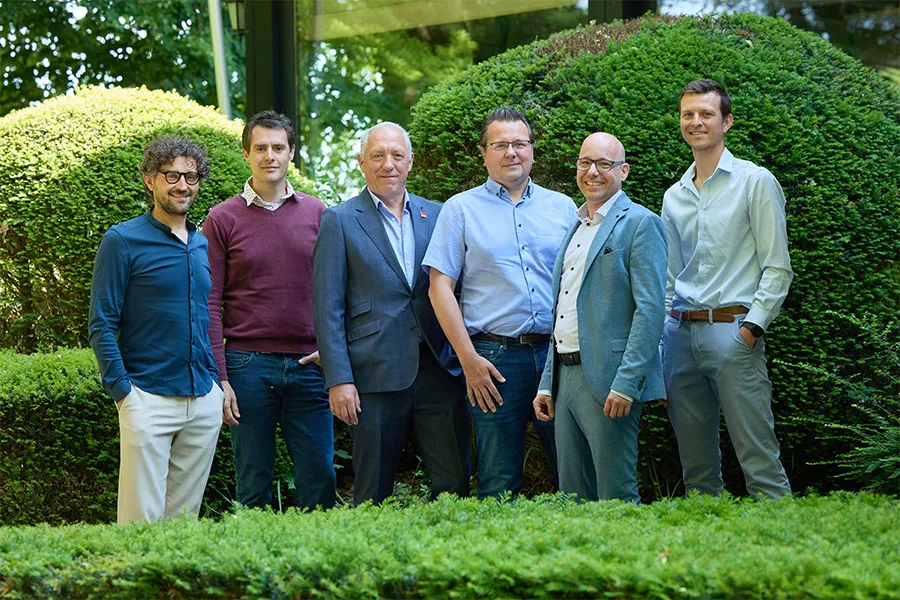
Smart buildings: everyone in the construction and building services sectors is talking about them these days. Yet it is not always easy to see the wood for the trees. Where does connected end and smart begin? Can most new buildings justifiably be called smart, or is there untapped potential? And what impact will new European legislation and the rise of AI have on the ‘smart transition’ now well under way? Installatie & Bouw brought together five experts to provide well-informed answers to these and other pressing questions.
Participants
Paul van Hinsberg, Managing Director at B.E.G. Belgium
Philippe Kygnée, Sales Manager at WAGO BeLux
Alexander Hermans, Account Manager at Beckhoff Automation Belgium
Kristof Van Gorp, Home & Building Specialist at Rexel Belgium
Johan Vercammen, Product Manager at Wygwam, a division of Niko NV
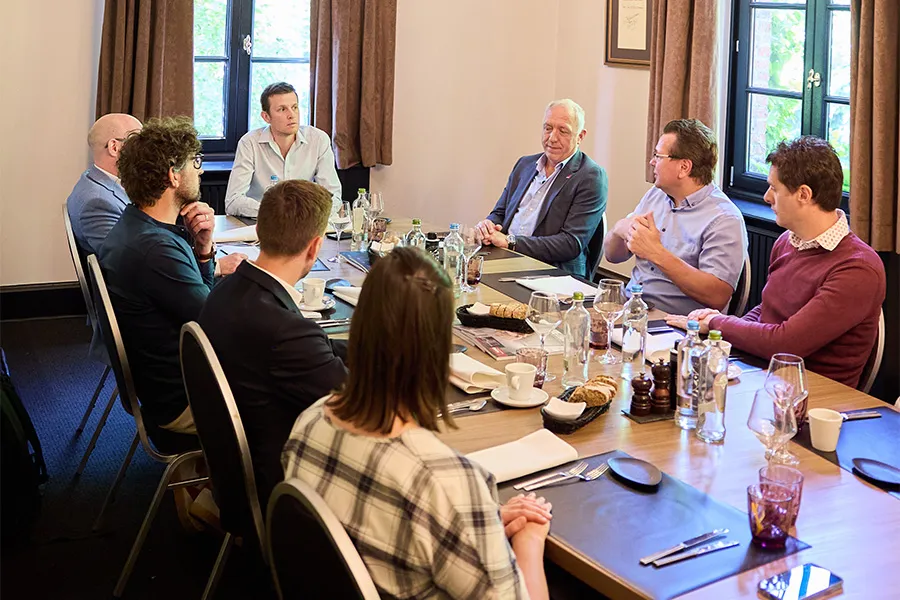
Gentlemen, thank you for joining us. To start, could you briefly explain exactly how your companies contribute to the development of smart buildings?
Paul van Hinsberg: “B.E.G. Luxomat is known for developing motion and presence detectors. From there, we have moved into automating mainly tertiary buildings, where we can control various systems, such as lighting, HVAC and solar shading.”
Johan Vercammen: “At Niko, we launched the first version of a smart home solution about thirty years ago. Initially, the focus was on individual products and functions. Step by step, we have evolved towards a fully smart, open platform that takes account of the latest technologies and trends. Wygwam was set up as a separate division for this purpose.”
Kristof Van Gorp: “As a wholesaler, Rexel aims to inform installers about the various smart home and building systems available to them. Our focus is not limited to controls, but also extends to building infrastructure, including HVAC, distribution boards and IT rooms.”
Alexander Hermans: “Beckhoff Automation distributes hardware and software solutions for various types of buildings. The aim is to make them smarter and enable all connected systems to work together seamlessly.”
Philippe Kygnée: “WAGO is a manufacturer of both interconnection and automation solutions. With our building automation solution, we are mainly active in the tertiary and industrial markets. We enable all building services, including HVAC, electricity, lighting, solar shading, EV charging points and energy supply, to communicate with one another, as well as with the overarching control system and, where applicable, the cloud.”

In your view, what requirements must a building meet to earn the label ‘smart building’?
Kristof Van Gorp: “An essential requirement for claiming the ‘smart’ label is that different systems and the way they operate are coordinated. It is important to have shared components that can combine certain controls.”
Johan Vercammen: “As well as integrating systems, there must also be interaction with the user, whose behaviour and preferences need to be accommodated as effectively as possible. And this must be done consistently, through precise commissioning.”
Paul van Hinsberg: “For now, this is easier to achieve in a residential setting than in tertiary buildings. At present, these are more connected than smart, because the different systems still tend to operate in silos. That naturally makes seamless integration of different systems much less straightforward. Fortunately, we are seeing an increase in smart applications, such as automatic controls based on motion and presence detection. The transition to smart has begun, but we are not there yet.”
Alexander Hermans: “The key is to create synergies between different systems, thereby maximising both energy efficiency and end-user comfort. This can be achieved by implementing user-friendly platforms that are easy to maintain and use open standards. The overarching control system acts as an interpreter, translating all the different open standards into a set of data. A programmer can then use this data to link the systems efficiently, making them more than the sum of their parts.”
Philippe Kygnée: “That’s right. On top of connectivity and communication, the automation layer must ensure that both energy and comfort targets are met. Ideally, users should barely notice it, especially in tertiary buildings. The new European legislation also requires us to go a step further.”
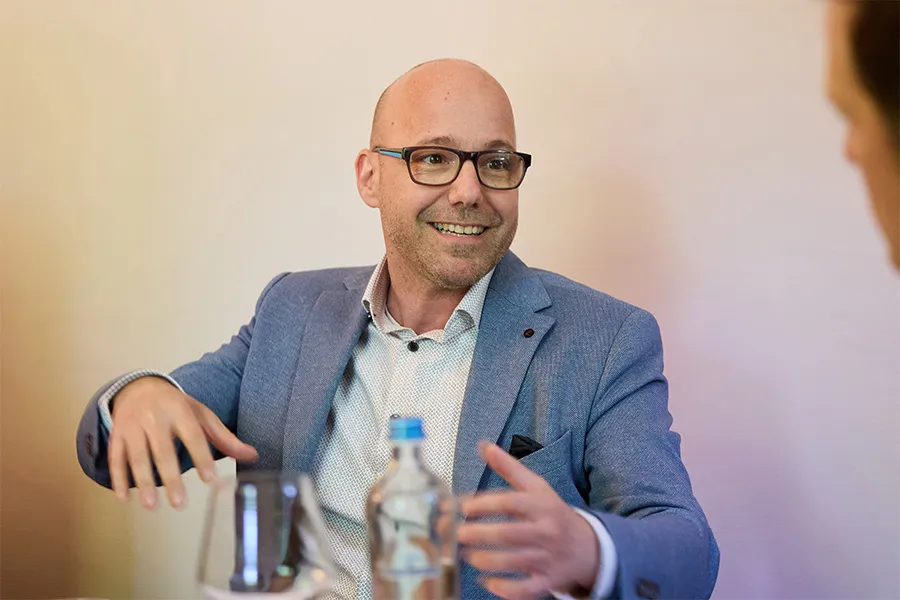
You’re referring to the EPBD IV regulations, which more and more companies will have to comply with from 2026. What impact will they have?
Paul van Hinsberg: “All new tertiary buildings will have to be smart, without exception. And manufacturers will have to start using open, standardised protocols, whether they like it or not. There will always be companies that continue to write their own software, but closed protocols will no longer be an option. That is a very good thing, because this is one of the key differences between connected and smart.”
Alexander Hermans: “Thanks to these open standards, problems can be addressed quickly, without having to depend on the party that originally installed everything. The new European legislation will probably also mean that investors who previously tended to keep all systems as cheap as possible will have to pay greater attention to end users’ needs and preferences if they want to keep their projects attractive.”
Philippe Kygnée: “Indeed, energy-saving measures alone, such as better insulation, will no longer be enough for property developers to ensure a building complies. Integrating systems, along with all the associated functional requirements, will be essential. There will be no getting around it.”
Kristof Van Gorp: “For installers, integrating new technologies into existing installations will be quite a challenge. At the same time, other players are entering the picture. They may not know the systems themselves, but they do understand the standards. They can use the data provided in the building operating system to improve the user experience, without needing to know how everything works technically.”
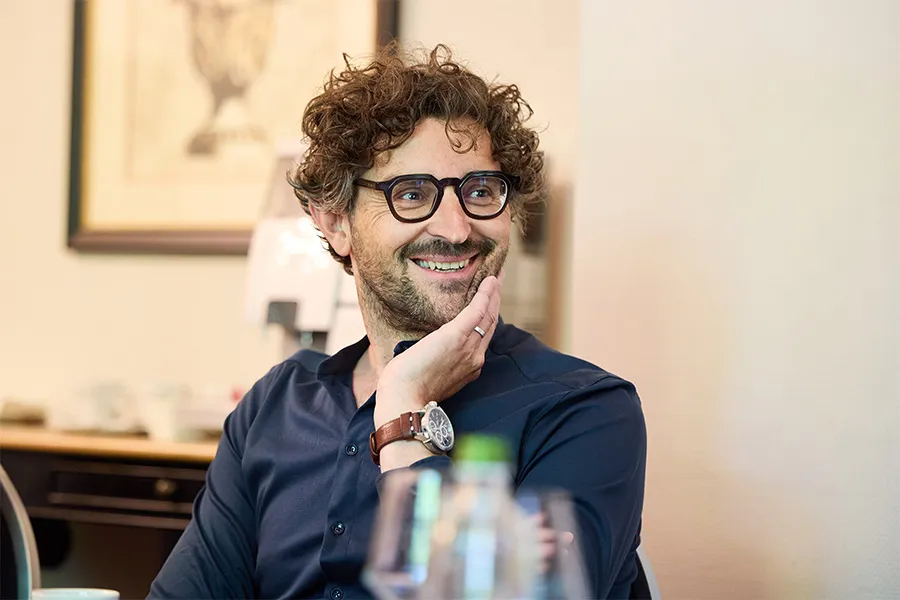
The European directives do not apply to the smaller residential market. Will smart buildings eventually become the norm there too?
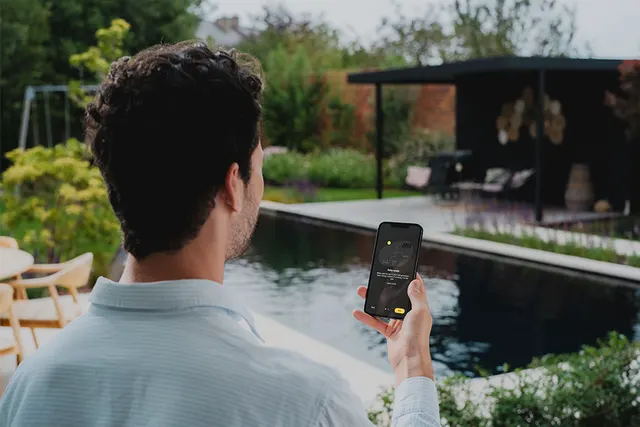
Johan Vercammen: “Definitely. We are already seeing some movement in that direction, although there is not much standardisation at present. The question is how to get all these different ‘connected’ systems to work together in a simple, user-friendly way. It is something many integrators are grappling with today. Local partnerships between electricians and heating specialists are another possibility. We are also doing our bit by helping installers and end users integrate different systems. In any case, smart home solutions are gaining ground rapidly, partly driven by innovative technologies such as PV installations, heat pump systems and EV charging infrastructure, and the associated legal requirements. For example, a smart EV charger and air-conditioning system can be linked to a PV installation with a battery, so that they are powered by as much green electricity as possible.”
Kristof Van Gorp: “I get a great many questions from installers about these smart applications. Because systems remain stubbornly siloed in the residential sector, they have to keep looking for suitable integration concepts. But little by little, things are becoming more structured. Thinking in terms of overall interconnectivity will inevitably become the new standard in the residential sector too, although smart control of all these systems is still often lacking. The fact that users can monitor certain technical data via an app does not, of course, mean that everything is working optimally. The possibilities are there, but it will take time to put them into practice. Often, it simply comes down to a lack of budget and/or knowledge.”
Philippe Kygnée: “Make no mistake: there are still areas in the tertiary sector where there is hardly any standardisation. EV charging points are a good example. There are many different solutions available, and everyone is doing their own thing. It is high time to bring this into better alignment. The same goes for new wireless technologies, which are very useful for refurbishments, but which many manufacturers use in a closed way. As long as there is no organisation working on testing procedures and standardisation, as there is for DALI, BACnet, KNX and so on, this can lead to communication and integration problems. As a result, each project requires bespoke work, which naturally takes more time and costs more.”
Alexander Hermans: “You sometimes see manufacturers using a particular standard while also speaking a kind of in-house dialect to keep things internal. This means it is not necessarily possible to get other technologies to communicate with their application.”
Philippe Kygnée: “And yet they still label it an ‘open protocol’, even though in reality they are creating a grey area. You see this with many new technologies, as a way of maximising the return on an investment. DALI was subject to this for a long time too. It was only with the arrival of DALI-2 that full standardisation became a reality. The result is a fantastic solution that makes it easy to switch between different components.”
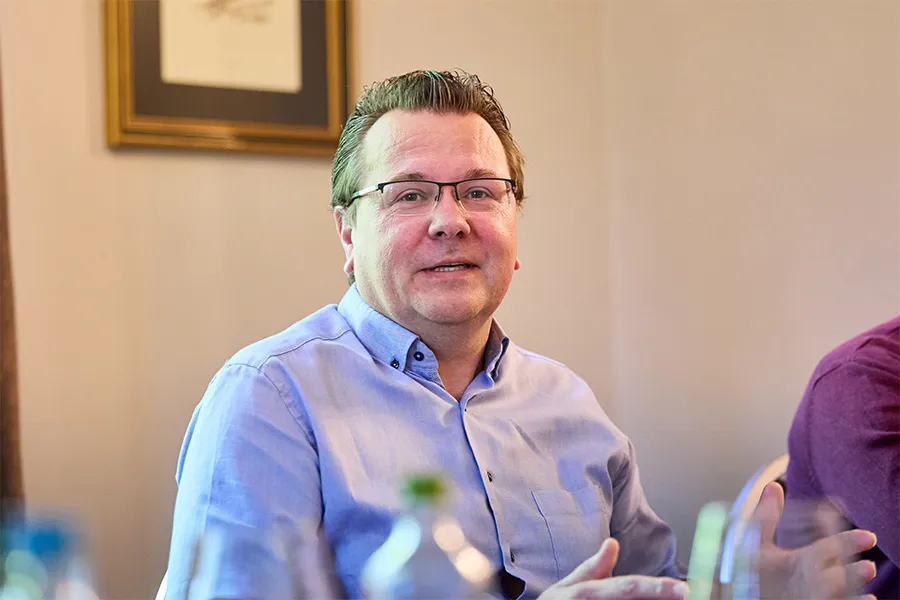
Can most new buildings justifiably be called smart? Or is there still a great deal of untapped potential?
Paul van Hinsberg: “There are regional differences in the tertiary sector. Brussels is leading the way. You could call everything being built there now smart, often older office buildings undergoing a major upgrade and/or being given a new purpose.”
Philippe Kygnée: “But how smart is smart, of course? In the Belgian property development market, it is still difficult to think long term. Developers tend to look at the cost per square metre rather than the total cost of ownership. They are much less interested in the savings that smart technical management can deliver after installation. That is why we are keen on turnkey projects that also include a maintenance contract, because this automatically brings greater focus on the quality and performance of the technical infrastructure. It is up to the engineering consultancies to set this out clearly in their specifications. That is where it all starts, after all.”
Alexander Hermans: “Indeed. In that respect, it is a good thing that the parties responsible for integrating the systems are brought into the discussion at an increasingly early stage. In other words, while engineering firms are drawing up the specifications. This gives them the opportunity to consider how new buildings can be made future-proof, so that maintenance remains easy to carry out years later and any new technological innovations can be implemented with ease.”
Kristof Van Gorp: “It is also up to us to inform large and small installers who are not yet very familiar with the subject. That is why, in the projects I help oversee, I always ask about the options for communication, connectivity and integration. And you often find that certain technologies are replaced by other systems that work to the same standard, creating valuable synergies.”
Philippe Kygnée: “Smart building applications are much more obvious in projects where the client remains the owner. Industrial players are definitely willing to invest in them, since they are the ones who reap the benefits. Energy monitoring, smart control … they more than recoup the cost of everything they implement, in the best case within a very
short time.”
Alexander Hermans: “The benefits go well beyond automating certain scenarios and detecting and addressing potential losses. Take predictive maintenance, which makes it possible to forecast when certain components are at risk of failing. By taking a proactive approach, companies can avoid downtime and therefore improve their overall performance.”
How can we also encourage property developers to opt for smart building applications?
Paul van Hinsberg: “The new European legislation will certainly make a significant difference in that respect. Until now, many property developers have focused primarily on the BREEAM score and delivered shell buildings that were theoretically smart, but whose smart features were not used in practice or were not even properly connected, as we recently experienced ourselves when we moved into our new office. If they want to continue selling and letting their projects, they will now have to raise the bar, by opting for high-performance technologies, smart controls and monitoring systems that can stand the test of
time.”
Philippe Kygnée: “I wonder how many SME projects involve people paying a lot for an impressive installation that does not work properly. Given the number of problems we detected in the existing installation when renovating our own office building, I dread to think about all the companies that, unlike WAGO, do not have the necessary expertise in-house to collect the right data and manage everything themselves from start to finish.”
Kristof Van Gorp: “That is why it is a good idea for such companies to have their installations thoroughly audited on a regular basis by a specialist firm. The firm can then show in black and white what may be going wrong. Improving the control of a heat pump can already make a big difference to the energy bill. It is an excellent way to ensure buildings operate efficiently, alongside routine building management, and to get the most out of smart building applications.”
Alexander Hermans: “Identifying problems is one thing, but solving them is another. The technicians carrying out the work also need to keep up with this digital (r)evolution. One of the major priorities for the near future is therefore to upskill these professionals, who often still lack sufficient understanding of the underlying technology and the complexity of today’s installations. We can start designing and building smart buildings on a massive scale, but we also need to ensure they are properly maintained afterwards. We must not overlook that as part of this smart transition.”
Philippe Kygnée: “Another major challenge is the Cyber Resilience Act, which introduces much stricter cybersecurity requirements. Manufacturers, integrators and end customers all share responsibility. This calls for a considerable effort and investment from everyone involved. It also makes it more complex to get different systems working together now that all protocols are being strictly secured, such as BACnet Secure Connect and KNX Secure, not to mention the added complexity at infrastructure level.”
Is the role of installers changing as smart buildings become more widespread?
Paul van Hinsberg: “I am convinced it is. Installers used to be purely hands-on. Today, they are broadening their knowledge and helping lay the foundations for fully fledged smart buildings. In the non-residential market, most integrators have by now been incorporated into large installation companies, which are seeking to bring all the expertise needed to make a building smart in-house. This means clients are no longer dependent on several different parties, such as the installer, programmer and software supplier, and have just one point of contact. That is a huge advantage given the technical complexity of smart building projects.”
Kristof Van Gorp: “These ‘one-stop-shop installers’ can be involved from start to finish and provide the necessary after-sales service too. I think that is a good thing. You will always need the people carrying out the work, but we are also seeing new roles emerge. Take an energy consultant in residential construction, for example, who knows how to coordinate different technologies.”
Johan Vercammen: “Absolutely. Making the different technologies work together requires additional expertise. In the near future, different types of installers will work closely with the technical experts who design a home or handle the programming and configuration. And, as Paul already mentioned, they will often even be part of the same installation company.”
Philippe Kygnée: “That is a significant challenge in itself, because everything is organised around separate disciplines, such as HVAC, electricity and energy supply, and engineering firms structure their specifications accordingly. It therefore takes a considerable effort to overcome those traditional boundaries. Buildings are also expected to do more and more, including offering flexibility for the future. Companies that make sure the technology they install can be easily reprogrammed and reconfigured, with any changes also immediately passed on to the higher-level system, will always have an advantage. In any case, the more you can streamline technical management, the more open building owners, facility managers and users will be to smart building applications.”
What potential does AI have in this area? Is it already being used in smart building solutions?
Philippe Kygnée: “Absolutely. The trend for large non-residential buildings is to have a kind of digital twin running alongside them, optimising all processes and setpoints based on the available data, either independently or through a third-party company.”
Alexander Hermans: “Many research institutes are already experimenting with it extensively too. The data is there, so if you apply the right tools, you can anticipate and respond to certain issues very quickly and accurately. The possibilities are certainly endless.”
Johan Vercammen: “Many people immediately associate AI with complex applications and calculations, but it can also start very simply. For example, you could predict the ideal times to charge an electric car based on energy flows and user behaviour. AI can be used to apply all kinds of smart techniques to data reporting and analysis.”
Philippe Kygnée: “AI is a buzzword, though, and these days it is sometimes used where it does not belong. Heating a building according to occupancy levels and the outdoor temperature does not in itself require artificial intelligence, although it is often automatically described as AI. There is no doubt that AI has enormous potential for the future, but we are still looking for ways to make the most of it.”
Finally, which building, project or solution best reflects what a smart building is, or should be?
Kristof Van Gorp: “One interesting solution we recently helped deliver in a supporting role is a hotel application based on a KNX structure, with the HVAC system linked to the guest room management system.”
Alexander Hermans: “The ZIN project in Brussels is a striking example. Our installation partner VMA has made this circular building fully smart using our hardware. We are very proud of that. They are also carrying out all kinds of research into smart building applications at EnergyVille in Thor Park in Genk.”
Paul van Hinsberg: “Most new or refurbished office buildings in Brussels are smart-ready. Some good examples are OXY, Brucity, Frame and M10.”
Johan Vercammen: “As part of its renovation, Van der Valk Hotel in Beveren opted for Niko Home Control. The smart technology was integrated into 130 rooms and several suites to give guests greater comfort and help staff work more efficiently.”
Philippe Kygnée: “Everything in our own building is automated from start to finish: HVAC, electricity, heat pumps, charging stations, access control, the higher-level SCADA system … It is a real showcase of what we can do. In principle, we can deliver any smart building solution you can think of, but of course it has to remain manageable. That will be the major challenge in the future: keeping it accessible enough for installers and users despite increasing requirements and the extra complexity that comes with them. Ultimately, the many benefits of smart buildings have to be realised in practice …”
Question about this story? Ask your question
Companies in this story




Keep following this
Get an email when a new story is published. No account needed.
- SubjectSmart buildings
- CompanyB.E.G. Belgium
- CompanyBeckhoff Automation
- CompanyRexel Belgium
- CompanyNiko