











ATEM celebrates 80 years: how smart buildings, charging infrastructure and prefabrication are transforming the installation sector
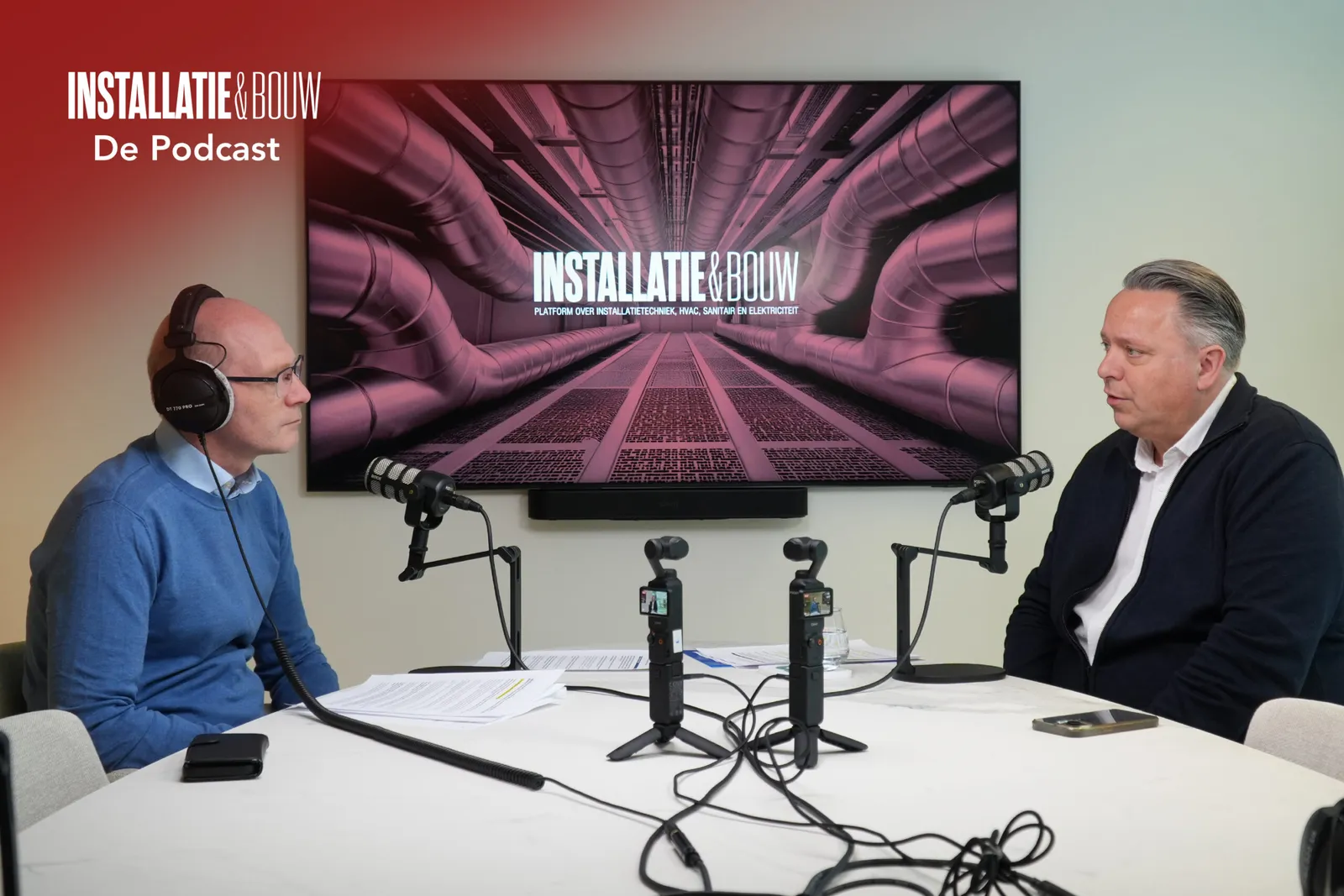
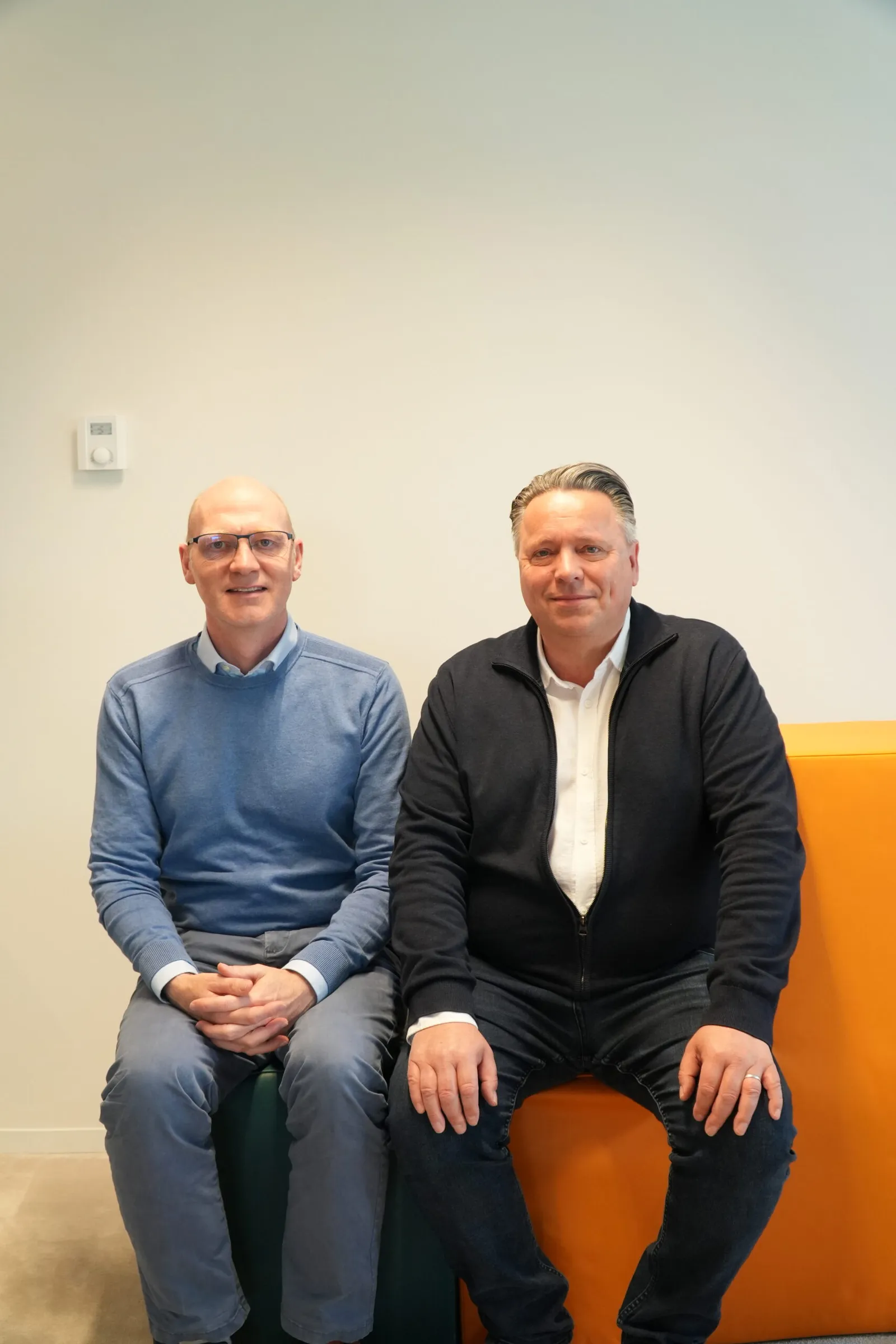
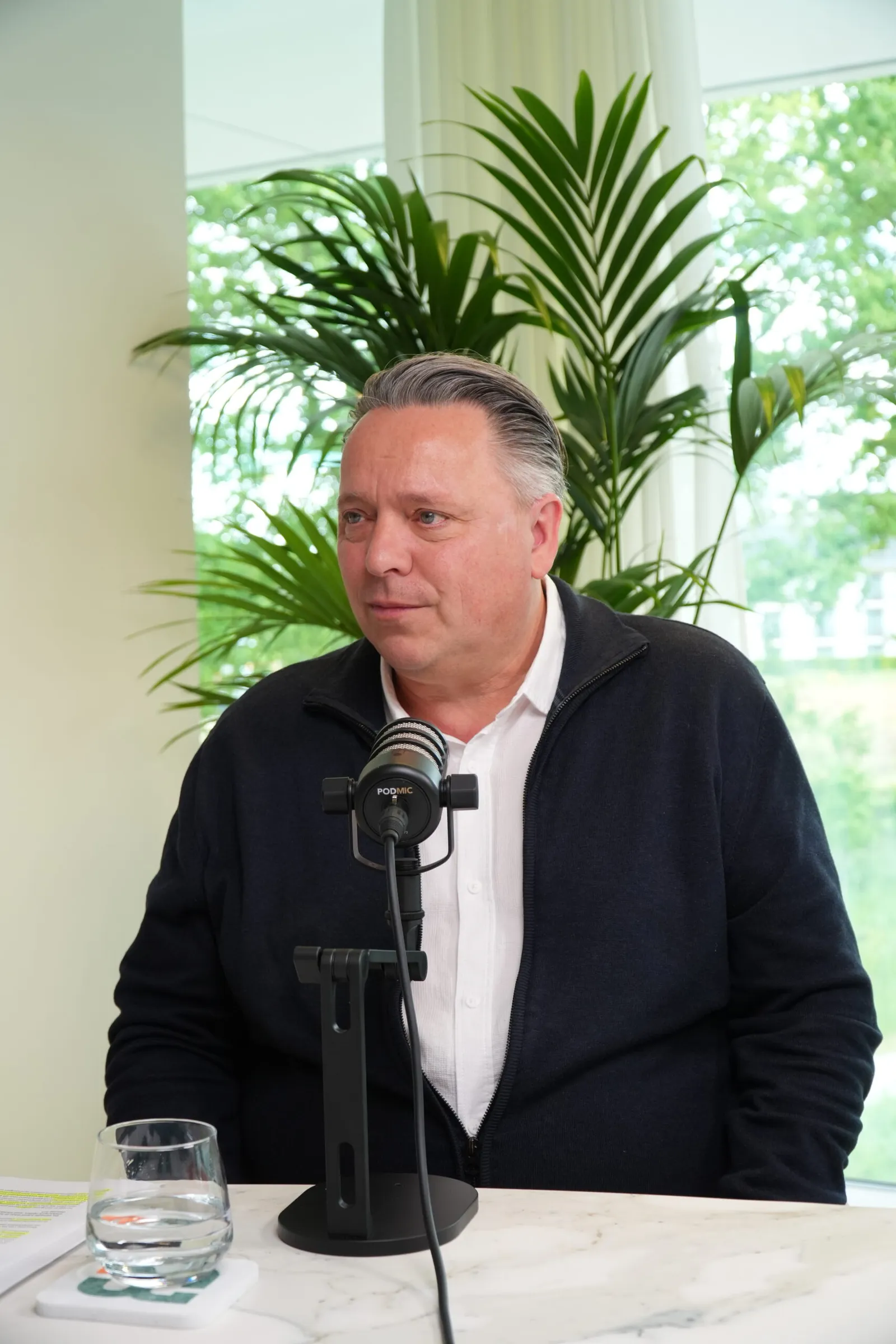
Technology is playing an increasingly important role in modern buildings. Smart building management systems, electric vehicle charging infrastructure and prefabricated construction methods are creating new challenges and opportunities for installers. In this episode of the Installatie & Bouw podcast, Björn Crul speaks to Koen Notelaers, Managing Director of Wieland Electric-ATEM. To mark ATEM’s 80th anniversary, he explains how the sector is evolving, the impact smart buildings are having on electrical installations and why, in his view, prefabrication will play a key role in the future of the construction industry.
Een zakelijke vraag aan Atem NV? Get in touch
Full transcript
All chapters (20)
- Introducing ATEM and its anniversary year
- Acquisition by Wieland Electric
- Wieland as an international player
- Why installers choose ATEM
- Project at the O40 Campus
- The sector’s main trends
- What makes a smart building smart?
- Wieland’s role in smart buildings
- Junction boxes and reducing installation time
- Investing in smart buildings
- The growth of charging infrastructure
- Flat cable as a solution
- Charging point safety
- The breakthrough of electric driving
- Prefabrication and modular construction as a third trend
- Electrical installations in prefabricated construction
- Collaboration with Niko
- Regulations and accessibility of connections
- The future of the installation sector
- Closing remarks
Introducing ATEM and its anniversary year
Björn Crul Hello, listeners, and welcome to this new Installatie & Bouw podcast. Technology is playing an increasingly important role in commercial buildings. To deliver smart, sustainable non-residential buildings efficiently, many installers rely on ATEM’s products and expertise. ATEM is part of Wieland Electric. My name is Björn Crul, and today I’m exploring trends in the installation sector with Koen Notelaers from ATEM. Hello, Koen, and welcome. 2026 is a special year for you, as ATEM is celebrating its 80th anniversary. How did it all begin, and where are you today?
Koen Notelaers Yes, that’s right. We celebrated our 80th anniversary last month. How did it all begin? It was 1946, just after the Second World War. There was a great need to get production back up and running. A number of manufacturing companies decided to set up a central purchasing organisation. Our actual name, our full name, is still L’Auxiliaire Thermique Électrique et Mécanique. It may sound a little old-fashioned, but we’ve always kept it as ATEM. Of course, many products have come and gone over the years. The sector has changed enormously. But one constant since the early 1970s has been our representation of Wieland Electric in Belgium. We’ve had a relationship for decades. After all those years, the shareholders decided to sell the business. Wieland was an obvious choice, and it acquired us in two stages. We are now a wholly owned subsidiary of Wieland Electric.
Acquisition by Wieland Electric
Björn Crul That was exactly ten years ago, so it’s a double anniversary for you this year. What has the integration changed for ATEM?
Koen Notelaers A lot for ATEM, but not so much for our customers. We kept our name because we continued to represent a number of other products as well. For customers, it’s the same name and the same people, with very little change. For us at ATEM, of course, we now have much stronger backing from a larger company, which also gives us the support we need and financial security.
Read the full transcriptCollapse transcript18 more chapters
Wieland as an international player
Björn Crul Wieland is a major German player, a well-established company.
Koen Notelaers Yes, it’s not one of the giants like Siemens and the others, of course, but it is certainly a global company with a very long history, stretching back more than a hundred years.
Why installers choose ATEM
Björn Crul Your customers today include wholesalers, panel builders, OEM customers among machine manufacturers and major installers. We’re thinking of companies such as ENGIE or VMA. How do you make a difference for installers like these? Why do they specifically turn to ATEM?
Koen Notelaers First and foremost, because we are an established name in the market. They know us not only for the quality of our products, which is what you would expect from a typical German company, but also because we see ourselves, and are seen, as specialists in the market. They consult us on projects, whether they need something special or a standard solution, or for special applications. They know they can come to us. We have our own experts, and we also have support from Germany if the requirements are particularly specialised.
Project at the O40 Campus
Björn Crul We’re in the Louwers Mediagroep office building at the O40 Campus in Oostkamp. What’s particularly interesting is that you contributed to the project here too.
Koen Notelaers That’s right. When I saw the address, O40 immediately came to mind. It rang a bell, and sure enough, we worked with VMA here. Or, to be more precise, VMA carried out the installation using our products. It’s great to see, especially as it’s such a beautiful building.
Björn Crul So what might we find here from ATEM?
Koen Notelaers Mainly in the raised floors and suspended ceilings. The cabling for controlling the lighting runs through them. To be honest, I haven’t been able to check the details. But it could also include the controls for the roller shutters or the external blinds. Everything in a building like this, typically a non-residential building, is wired using our type of cable and our connectors to ensure quick installation. There’s quite a lot of our cabling in this building.
The sector’s main trends
Björn Crul Looking at the installation and construction sector, what would you say are the three main trends at the moment?
Koen Notelaers The main trends, particularly those that affect us, are smart buildings first and foremost. They have been increasingly prominent over the past five to ten years. Then there are the charging points being installed everywhere. And the latest development, which is more recent but no less important, is prefabricated or modular construction.
What makes a smart building smart?
Björn Crul Let’s take a closer look at those trends. The first is the move towards smart buildings. What does that mean in practical terms? What makes a building smarter than it used to be?
Koen Notelaers The term smart buildings is used to describe many different things. But you can sum it up as an approach to construction that focuses first and foremost on user comfort. That means indoor climate, ventilation, heating and lighting. At the same time, the focus is on energy efficiency. There is also an emphasis on environmental performance, safety and ease of maintenance. We’re talking mainly about the non-residential sector: office buildings, schools, hospitals and the like.
Wieland’s role in smart buildings
Björn Crul We’re seeing many more connected systems. You’ve already mentioned lighting, external blinds, HVAC and detectors, all doing more through automation. How do Wieland’s products support this? What role do you play?
Koen Notelaers Our role is, quite literally, mainly about making connections. We hope we bring people together figuratively too. A smart building involves a lot of automation. Automation means lots of control systems, as well as measurements and sensors. So there’s much more cabling than before. We play a part by supplying pre-connected cables. For installers, a building like this is an extremely complex project. It requires far more cabling, is much more complex, and at the same time they’re facing a difficult labour market when it comes to finding skilled staff. Construction deadlines remain extremely tight. So they face quite a few challenges. We can help by making the work faster, but also more accurate. Connecting a connector is much easier than traditional work with a screwdriver and wire strippers. That’s one of the major benefits we bring. It’s not just faster, it’s also more reliable, so there are far fewer problems to put right later. That’s a cost that is often overlooked, but it is very real.
Junction boxes and reducing installation time
Björn Crul I understand that installers turn to you because your technology and products help them deliver projects on time, even in very challenging conditions. Does that mean you also offer a different range, more closely tailored to what they actually need?
Koen Notelaers Yes, that’s right. In recent years, we’ve been proposing many more junction boxes. These are connection or distribution boxes that we make to order. Decentralised installation has been around for some time. That means instead of having one large central cabinet in the basement or car park, for example, cabinets are installed at decentralised locations, reducing the amount of cabling required. That is the main purpose. We now make these junction boxes to measure for installers, with the automation built in. The difference is that we wire all the outputs and fit them with connectors. That saves a huge amount of time, which should not be underestimated. The most recent building we’re working on is the Arcelor headquarters in Luxembourg. It has 900 of these cabinets. This has a huge impact on installation time and, as I mentioned, helps ensure error-free installation. That’s a major advantage for installers. It’s an area we’re increasingly focusing on in the market. We’re also seeing growing demand for these kinds of solutions from our installers.
Investing in smart buildings
Björn Crul Buildings are getting smarter and incorporating more technology. I imagine that also makes them more expensive than before. What is the return on investment for all this spending?
Koen Notelaers They are definitely more expensive. On the one hand, they have to meet the standards and requirements imposed by the government. But the added value is that you get a more comfortable building, one that is more pleasant to work in and also delivers much greater energy savings. Buildings like these use far less energy than one built, say, thirty years ago.
The growth of charging infrastructure
Björn Crul Koen, let’s move on to the second trend you mentioned, the rise of electric vehicles and the resulting need for charging infrastructure. How does your offering address this?
Koen Notelaers This is certainly a familiar development in the market. Everyone knows what electric cars mean and that charging points are needed. There’s also fierce competition between charging point suppliers. We don’t intend to get involved in that market. We mainly supply the power supply for those charging points, or just the power supply.
Flat cable as a solution
Björn Crul A crucial component, of course.
Koen Notelaers Yes, and that was somewhat underestimated at first. There was a lot of focus on the charging points themselves, but not enough thought was always given to how they would all be powered. Supplying power to each charging point separately is not cost-effective. It is expensive. That is where our flat cable comes in. It can carry up to 80 amps. So it is not intended for rapid chargers, but we are mainly targeting office buildings, shopping centres and apartment blocks where charging points need to be provided for. The advantage of this flat cable is that you can make a branch connection anywhere, at any time. That makes it very easy to install. In terms of price, it is also a very attractive solution compared with the alternatives.
Charging point safety
Björn Crul It also has a safety system.
Koen Notelaers Yes, we can also provide a separate fuse for each branch connection. This is a built-in module where we can install additional protection. That is only necessary if the charging point itself does not have adequate protection in accordance with the regulations. I think we have a very good solution here. Installers really appreciate it. Because it is easy to use, straightforward, affordable and reasonably attractive, it has gone down well, insofar as you can talk about aesthetics when it comes to cables.
The breakthrough of electric driving
Björn Crul Are you really seeing electric driving take off and the charging point market open up?
Koen Notelaers Absolutely. It has grown enormously. In our specialist cables, we have even seen a tenfold increase in just a few years. We also find that we are further ahead than other countries in this area. This is definitely linked to policies on company cars and tax incentives for electric driving. Other countries are lagging further behind. Along with countries such as Switzerland, we are really leading the way, where this is already much more widely integrated.
Prefabrication and modular construction as a third trend
Björn Crul The third trend, Koen, was standardisation in the construction sector, with more and more projects using prefabricated modules. How do you see this development taking off?
Koen Notelaers We have high hopes for it. Every now and then, you hear about affordable housing as a problem in the media. But the problem is actually much bigger than people realise. One of the few answers is modular and prefabricated construction. What does that actually involve? It is another one of those labels that covers a lot of different things. But what it really comes down to is building more efficiently. That also makes it possible to build more cheaply. The traditional approach of buying a plot, then having the contractor turn up with site cabins and a crane, and seeing how quickly things progress, is simply not efficient. We have to take the weather into account. Frost is a problem. So is excessive heat. And so is cold weather. Getting materials to the site is also difficult. It is simply not the most efficient way to build. That is why people are rethinking how we build. Modular construction involves making modules in a large factory. The advantage is that this can be done regardless of the weather. Deliveries of materials are also much easier, and working conditions are much more comfortable for employees. You can simply build more efficiently. We are definitely seeing this trend coming. For us, it is certainly something that is on the way.
Electrical installations in prefabricated construction
Björn Crul Modular and standardised construction also involves building services and electrical connections, of course. In traditional construction, these are bespoke. Electricians and other workers install everything on site. How are you responding to the trend towards more modular and prefabricated construction?
Koen Notelaers We get involved when the process is genuinely standardised. The more each project differs, the less value we can add. When there is repetition in the construction method, as is typical in modular construction, we talk to the people involved. We have very user-friendly software that makes it easy to design an electrical installation. It then generates a list of the materials needed. We can supply the electrical cabinet with connectors. Everything is connected. Lighting can also be fitted with connectors, as can switches and sockets. This gives you a plug-and-play system that works much faster and, once again, without errors. Why is this so important in workshops of this kind? Because timber-frame construction, which is what we are usually talking about, is already being highly automated using robots and other equipment. The bottleneck is the building services. You often hear: “Stop the installation for a moment, we’re still working on it.” We have an answer to that. So it is not just about installing the electrical system more quickly, but about optimising the entire process. That is, of course, very interesting.
Collaboration with Niko
Björn Crul This is the trend for the future, because you are looking even further ahead to make that pre-wired network simpler still. There is a project under way with Niko. What exactly is in the pipeline, Koen?
Koen Notelaers Niko is also very focused on the prefabrication market. They believe strongly in it. They have designed socket boxes with our connectors integrated into them. That completes the plug-and-play concept. From the connection cabinet and electrical cabinet right through to the sockets and switches, we now have a complete solution for this type of customer.
Regulations and accessibility of connections
Björn Crul That is a very good solution, but then the AREI regulations come into play. They say that all connections must be accessible. That is somewhat at odds with the principle of pre-wiring, plug-and-play and fast installation. What are you doing with the sector to address this?
Koen Notelaers That is certainly true. It is a bit of a sticking point. We understand why the rule was introduced back then. With conventional junction boxes, it made sense for connections to remain accessible. Our point today is that, technically, there is no reason why connections need to be accessible when we install a T-connector or a branch box. Everything clicks together, and there should be no need to inspect it again, because it is easy to maintain or even maintenance-free. That is why we are sitting down with Niko and other colleagues from the sector, as well as the FPS Economy, which is responsible for the AREI, and inspection bodies. Fortunately, there is understanding for our position. They recognise that this is now a restrictive measure. Standards for plug-in connections, in other words connectors, also indicate that this type of connection does not need to be accessible. We are trying to align with those standards. The process is being guided by Techlink, which is keeping everything on track. We are gradually reaching a solution. Our main focus now is on how to set it out clearly and correctly so that it can also be communicated to the market effectively.
The future of the installation sector
Björn Crul Koen, we need to start wrapping up. Perhaps one last question. How do you at ATEM and Wieland see the future of the installation sector, and what does it mean for you?
Koen Notelaers This remains a very exciting market for us. There are huge changes taking place. Everything is moving towards more technology and more connections. At the same time, we are facing a difficult labour market, where skilled electricians are hard to find. We offer a solution to that. That is why we expect to see our cable systems used more and more in the future. We are very pleased to be able to partner with the major installers.
Closing remarks
Björn Crul Koen Notelaers, thank you for the conversation, and best of luck for the future.
Koen Notelaers Thank you.
Björn Crul Thank you for listening. For more news and trends from the sector, please visit our website at installatie-en-bouw.be. Until next time!
Companies in this story

Keep following this
Get an email when a new story is published. No account needed.
- ThemeElectrical infrastructure under pressure
- SubjectNews
- CompanyAtem NV
- CompanyNiko







