Condensation in well-insulated homes: an underestimated problem
Text Wouter PolspoelImage DUCO en AI
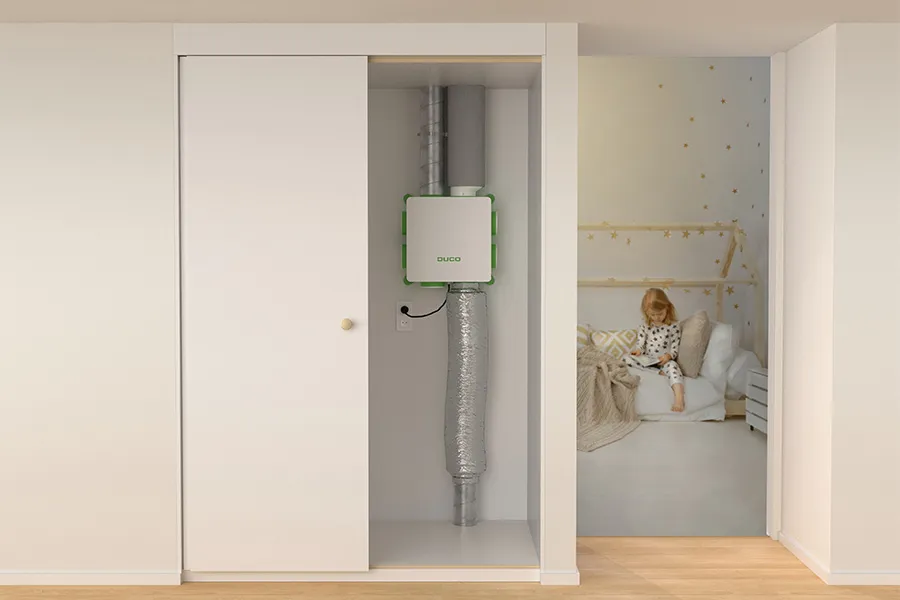
Good insulation and airtight construction save energy, but they also create a pitfall that DUCO is seeing more and more often in practice: well-insulated homes are surprisingly prone to damp problems caused by condensation and stale air. In this article, the manufacturer explains why this happens and how its ventilation solutions can prevent or resolve these problems.
A well-insulated home keeps heat in, but it also traps all the moisture produced by its occupants every day. And it builds up quickly. Breathing, cooking, showering, washing and drying clothes, as well as plants, are all constant sources of water vapour.
In older or less airtight homes, this moisture escapes through gaps, but in modern buildings it stays inside. Warm, moist air condenses when it comes into contact with cold surfaces, such as windows and thermal bridges, often at the corners of external walls where the insulation does not join up properly. The first signs are easy to spot: droplets on glass, mirrors that refuse to clear and damp patches in the corners.
Mould and building damage
Over time, these damp problems affect the occupants’ health and even the structure of the building. Mould develops in damp areas, causing allergies and making it harder to breathe. Children, older people and asthma sufferers are particularly susceptible.
Moisture also damages materials: plaster discolours and flakes off, paint peels and wood begins to rot, in the worst cases affecting load-bearing elements. Repair costs can quickly mount up and the damage may compromise stability.
Loss of comfort
It will come as no surprise that a damp home is less comfortable. It feels stuffy, smells musty and affects sleep quality. What is more, moist air takes more energy to heat.
Visible damp damage and musty smells also put off homebuyers.

Ventilation is essential
To prevent or resolve the problems described above, a home must always be insulated alongside being ventilated. This is a basic requirement for a healthy indoor climate. In modern airtight homes, ventilation is not a luxury but essential. People now recognise this, but that awareness came late. In many projects, the budget was spent first on solar panels, heat pumps or underfloor heating.
Two strategies
Ventilation in new-build homes today falls into two categories: Type C mechanical ventilation and Type D mechanical ventilation, known as balanced ventilation.
Type C mechanical ventilation actively extracts indoor air mechanically, while fresh air enters naturally through wall vents. Balanced ventilation controls both the supply and extract of air mechanically, while also recovering heat. DUCO has developed dedicated systems for both approaches.
A Type C mechanical ventilation system is compact, easy to install and relatively inexpensive. It also requires little maintenance. However, the supply of air still depends on natural airflow, and there is no heat recovery. DUCO groups its Type C ventilation solutions under the name The Natural Family.
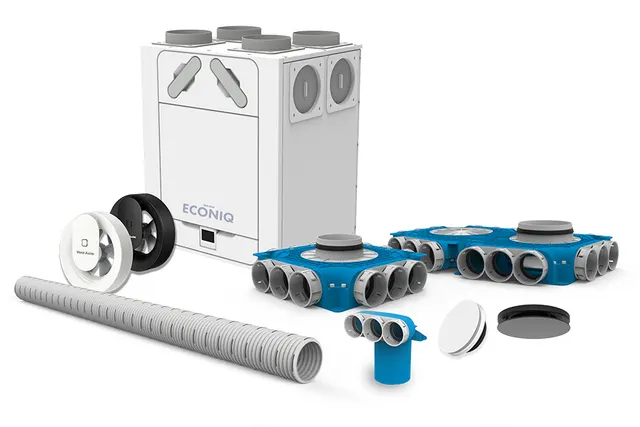
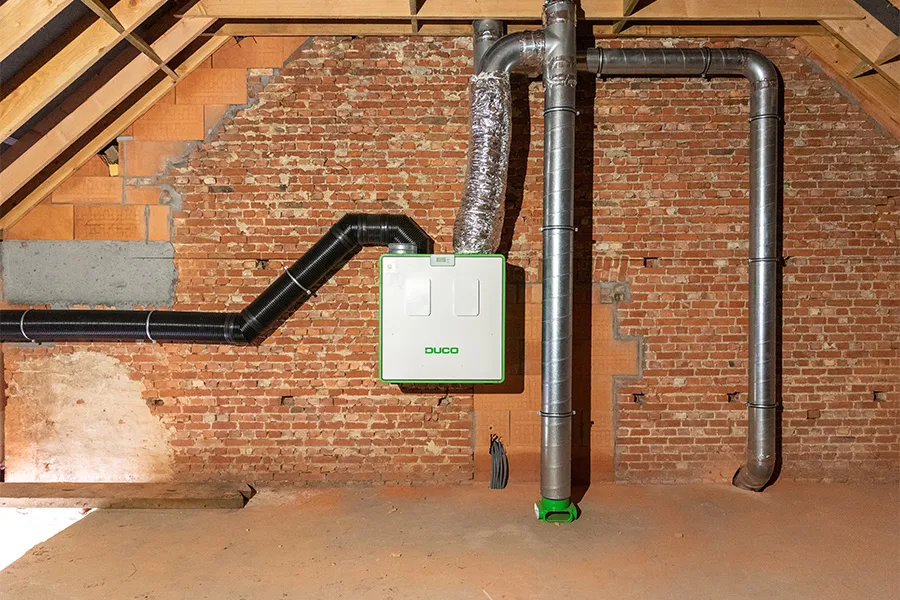
Thanks to the way it works, balanced ventilation provides a stable indoor climate with filtered outdoor air, reducing exposure to pollen and fine particulate matter, and minimises heat loss. Its heat recovery technology can recover 90% of the heat from extracted air to warm the incoming air. With Type C ventilation, the incoming air is always at outdoor temperature. Balanced ventilation requires no wall vents, preventing cold draughts. For all these reasons, it is an excellent fit for nearly zero-energy and passive buildings. The downside is that balanced ventilation requires a higher investment, needs more careful installation, requires regular filter replacement and takes up additional space. DUCO brings its balanced ventilation solutions together in The Energy Family.
Mechanical ventilation is therefore a logical choice for renovation projects and limited budgets. Balanced ventilation is the preferred option when wall vents are undesirable, energy efficiency is a priority and the home is designed to meet nearly zero-energy or passive standards.
In summary, ventilation is not an optional extra in modern homes, but a necessary condition for comfort, health and a sustainable home. Only with a well-designed ventilation system can a well-insulated home realise its full potential. DUCO offers effective solutions tailored to every project.
Have a business enquiry for DUCO? Get in touch
Companies in this story

Keep following this
Get an email when a new story is published. No account needed.
- ThemeHealthy air and summer comfort
- SubjectVentilation
- CompanyDUCO