Building blocks for the building automation of tomorrow
Text Valérie CouplezImage Beckhoff
In the past, building automation was considered adequate if the lights came on when someone entered a room. Today, legislation requires installers to go further. This is not only about improving energy efficiency, but also about enhancing building users’ comfort. Data are key to success in this trend. The more a building knows, the better it can respond. In other words, we are moving from building automation to building management systems that connect the physical world with the world of data. At the recent Light + Building trade fair, held from 8 to 13 March in Frankfurt am Main, Germany, Beckhoff showcased a host of new products designed to support this evolution.
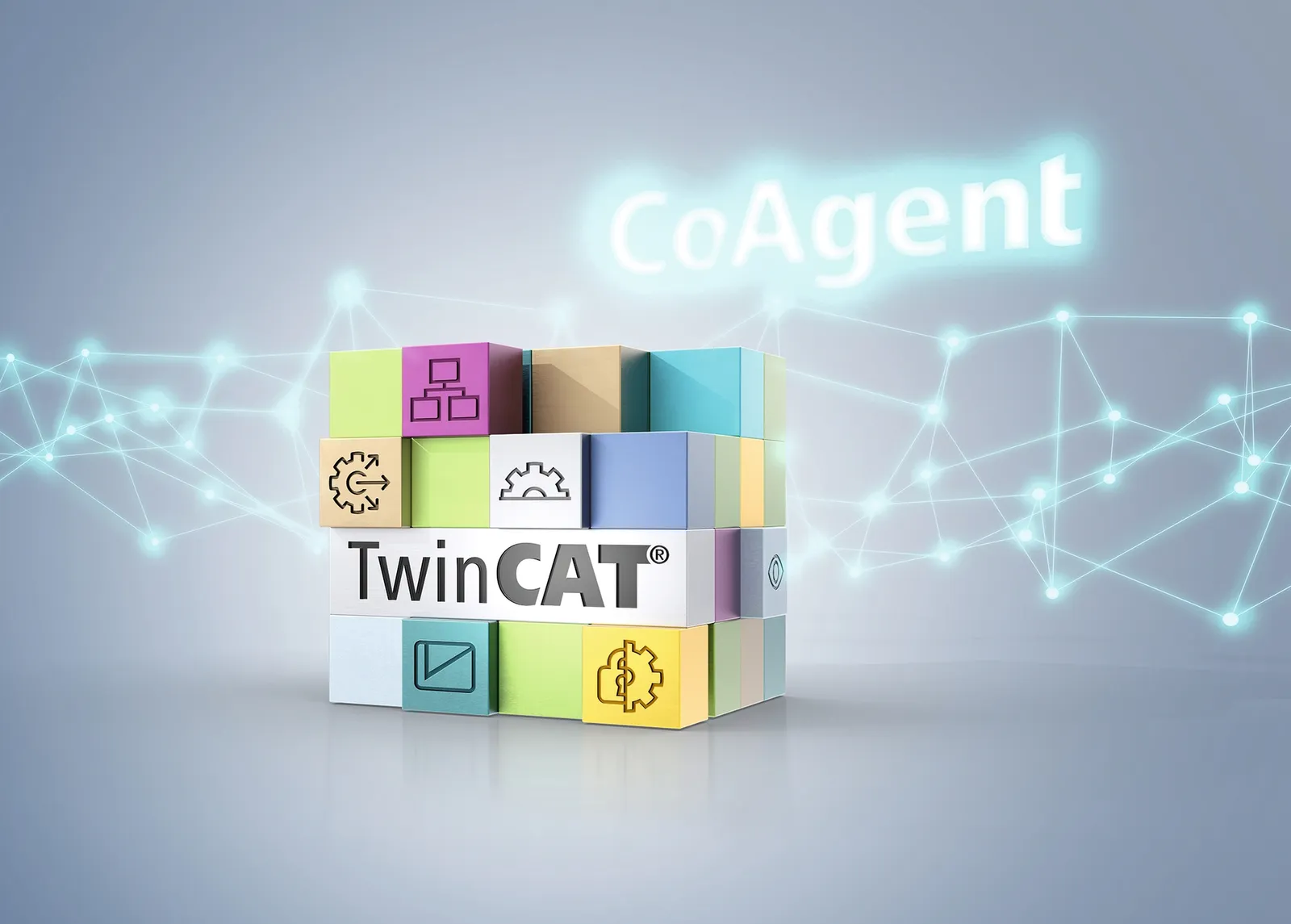
Perhaps the most impressive demonstration was the TwinCAT Co-Agent. Just as your own AI assistant guides you through the day, this tool guides you through the code generation required to programme a building. “It doesn’t do this by trawling the internet, with all the risks of incorrect information or unreliable answers, but by drawing on a Model Context Protocol server, an open standard that allows AI systems to access external data sources,” says Alexey Orlov, international business development manager at Beckhoff. “This is how Beckhoff connects its own knowledge base to these AI applications.”
Lowering the barrier
But what does that mean in practice? “You can ask your TwinCAT Co-Agent in natural language to create a TwinCAT project for automating, for example, the air handling in your building,” explains Beckhoff support engineer Philip Neyens. “First, it points you towards the relevant templates. In an instant, you can see which ones are available and decide which is most relevant to your specific application. This saves a great deal of time and reduces the risk of errors.”
“In future, you’ll even be able to build an entire automation project. That’s when we’ll really lower the barrier to making buildings smarter. How far off is that? I’d say a few years, but developments are moving so fast that it could just as easily happen within a few months,” says Alexey Orlov with a laugh.
New terminals
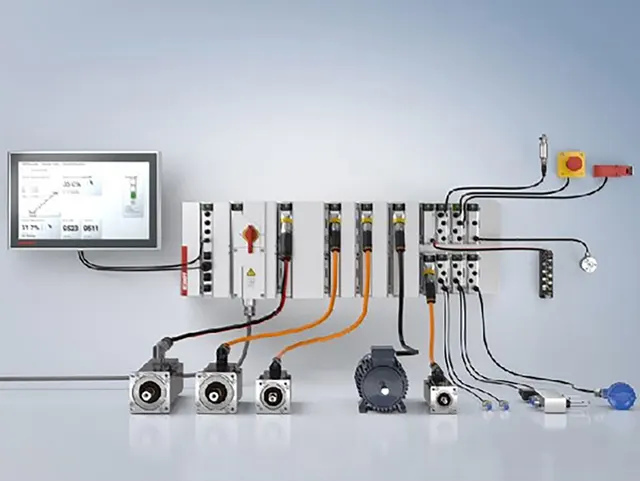
But before you can put AI to work on data, you also need hardware to collect it. That is no simple task, as data from different technologies need to communicate with one another. But it is right up Beckhoff’s street. Openness has been at the heart of its automation technology from the outset. “Since its introduction in 2004, the EtherCAT protocol has become the global market leader. It owes this to its speed, precision and flexible topology. It also allows different technologies to be integrated. For years, for instance, we have been able to migrate DALI to EtherCAT, so that everything can be programmed in the same environment. At Light + Building, we announced the next step in this story: migrating M-Bus. More will follow in future.”
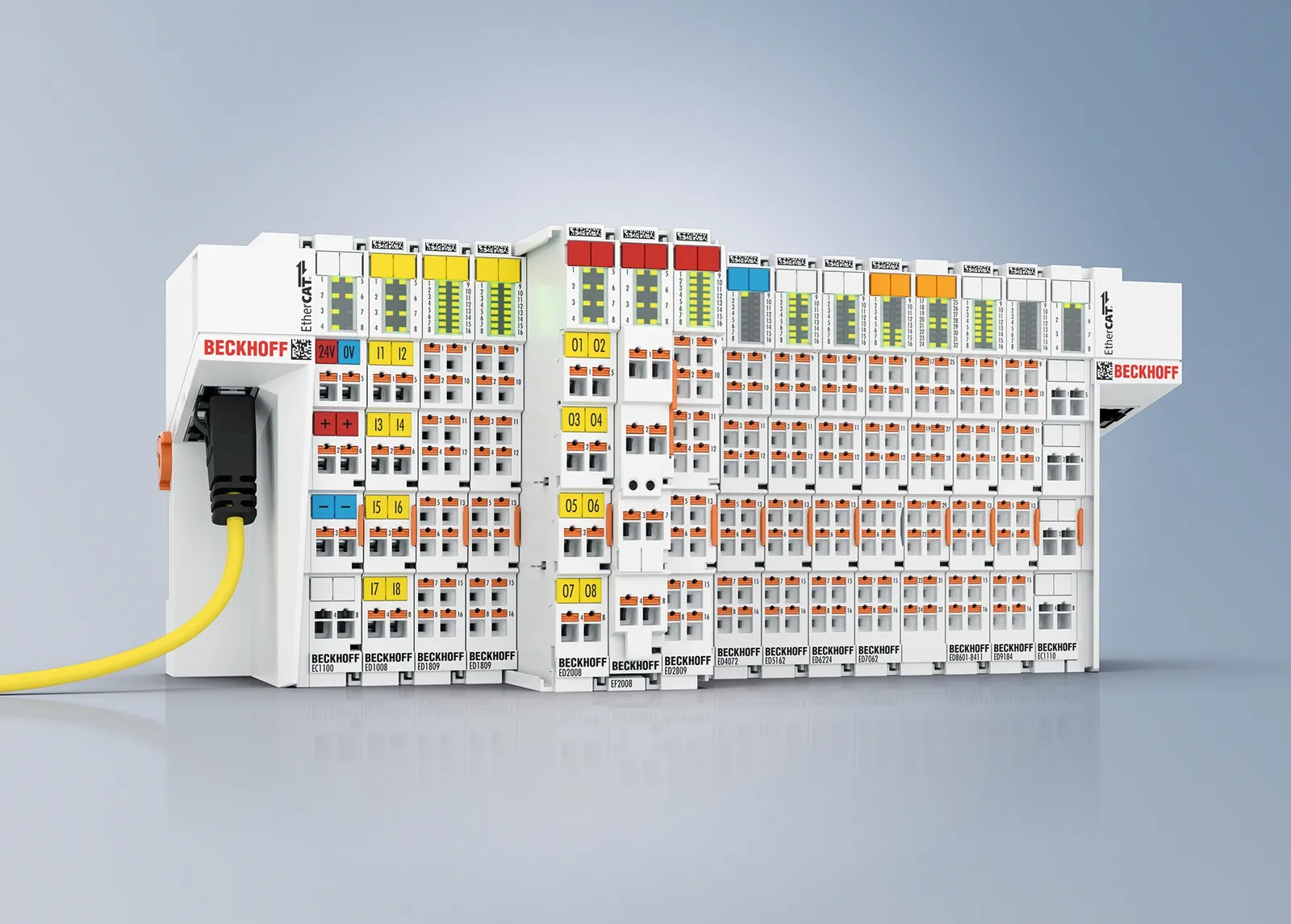
That is not the only new development in terminals. At the trade fair, Beckhoff also presented its ED terminals. They are fully compatible with the EL series, easier to connect thanks to their push-in connection, and offer more diagnostic options.
Distributed Power Management
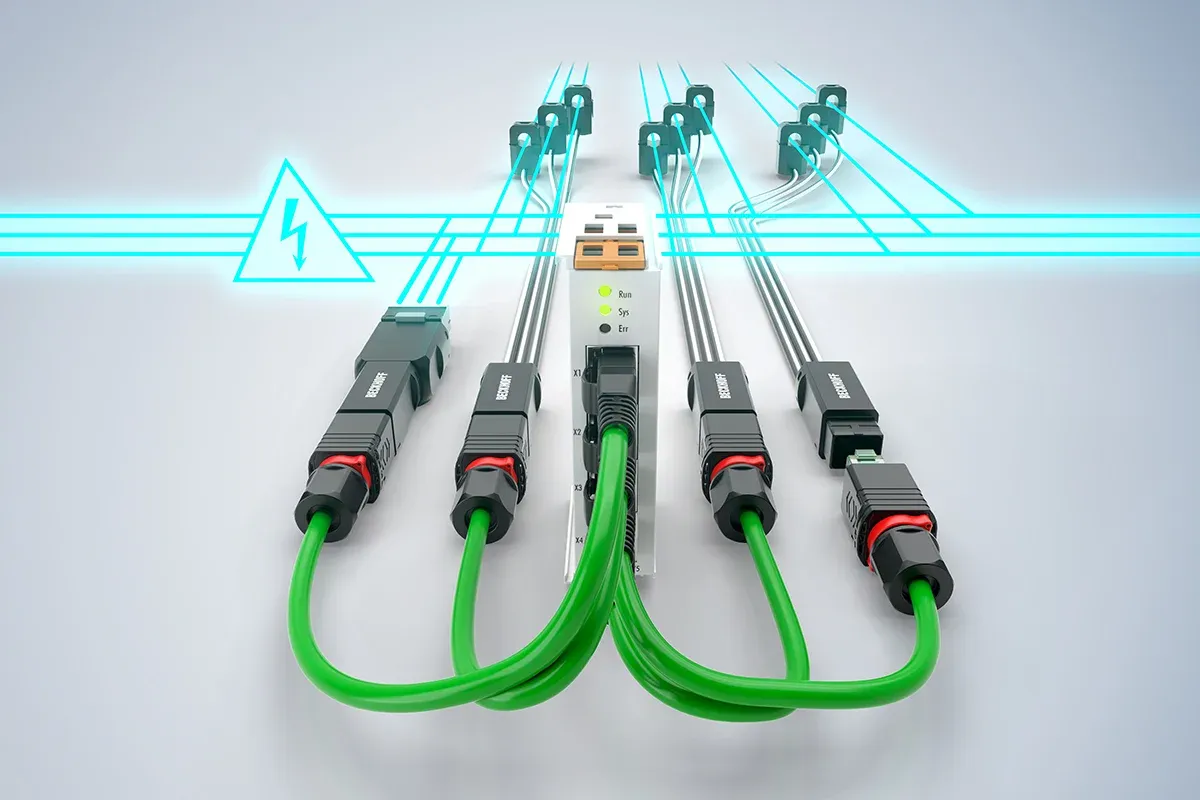
To understand another benefit of EtherCAT, we need to delve a little deeper into the technology. It includes a distributed clocks function, which makes it possible to synchronise every node in the network perfectly, regardless of the network’s size. “This means the terminals always have the correct timing. That feature is also useful for energy measurements. Distributed Power Management builds on this precise synchronisation so that voltage only needs to be measured once, while current is measured at every consumer. So you only need one terminal. This is useful for finding out exactly who is consuming what, but it can also tell you something about power quality, which is relevant information for data centres,” explains Alexey Orlov.
New controllers
The latest additions are the new CX8200 and CX9240 controllers, developed in response to widespread demand. These embedded PCs run on Linux. Philip Neyens explains: “In building automation, IT and operational technology, or OT, are increasingly converging. Many IT professionals, however, prefer working with Linux: it is powerful, offers plenty of scope for automation tasks, makes upgrades easier and allows, for example, an MQTT message broker to be integrated directly. In other words, these controllers are easier to use and open up new possibilities in building automation through deeper integration of IT and OT.” Another notable newcomer is the BACnet controller CX7291. “It is a compact, cost-effective way to visualise all I/O signals in BACnet or another app. This controller is also interesting from a cybersecurity perspective, as the implementation of BACnet Secure Connect is well under way.”
Een zakelijke vraag aan Beckhoff Automation? Get in touch
Companies in this story

Keep following this
Get an email when a new story is published. No account needed.
- ThemeSmart building integration
- SubjectAutomation
- CompanyBeckhoff Automation