











Why water treatment matters in HVAC systems
Text Wouter PolspoelImage Fernox en AI
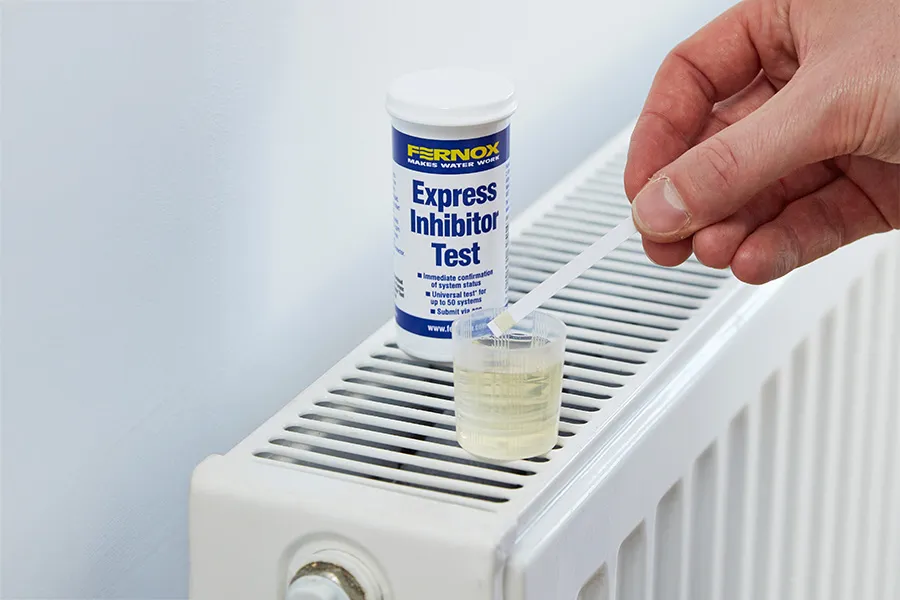
Many HVAC systems have a closed water circuit. The water flowing through it is therefore hidden by definition, so it can sometimes receive too little attention. That is a mistake, because its quality determines how well the HVAC system performs and how long it lasts. Water treatment in HVAC systems is therefore not an optional extra, but a smart investment.
Tap water is clear, tastes good and is safe to drink. But it is rarely ideal for an HVAC system. Tap water contains all kinds of substances, including limescale, salts, metals and oxygen, which can cause problems in the system, such as limescale deposits, particularly on heat exchangers, corrosion, air pockets or sludge formation.
The result? The system operates less efficiently, components wear out faster and faults mount up.
Enter water treatment. But what exactly does it involve?
The aim of treating water in an HVAC system is to bring it to, and keep it in, a chemically stable condition that is suitable for the system. It is not intended to purify it completely, as that is practically impossible.
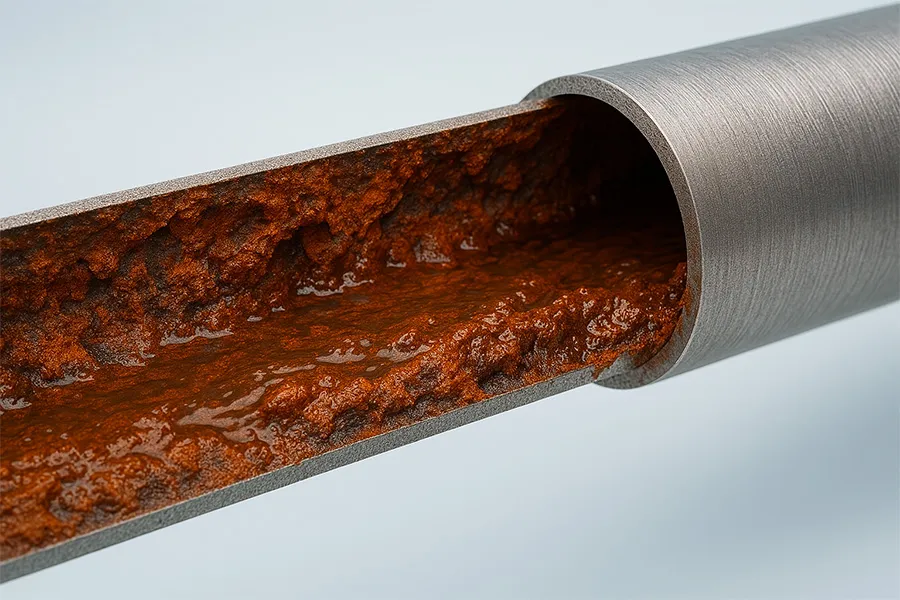
This is done in three steps:
Fill correctly: preferably fill the system with softened water. This prevents limescale and corrosion and gives you a clean starting point. Manufacturers often specify limit values for water quality, such as pH, conductivity, hardness or oxygen content. Ignoring these can often result in loss of warranty cover.
Condition the water: in larger or more sensitive systems, add a chemical protective agent, or inhibitor, such as a corrosion inhibitor, oxygen scavenger or pH stabiliser. This keeps the water balanced. Bear in mind, however, that anything you add must also be monitored. So have the water analysed from time to time.
Maintain the system: check the water every year, because even when the system has been filled with softened, properly conditioned water, its composition changes over time. Measure pH, conductivity, hardness and iron concentration. This allows you to intervene in good time if problems threaten, by adjusting the treatment, replacing filters or flushing the system.
Closed water circuit
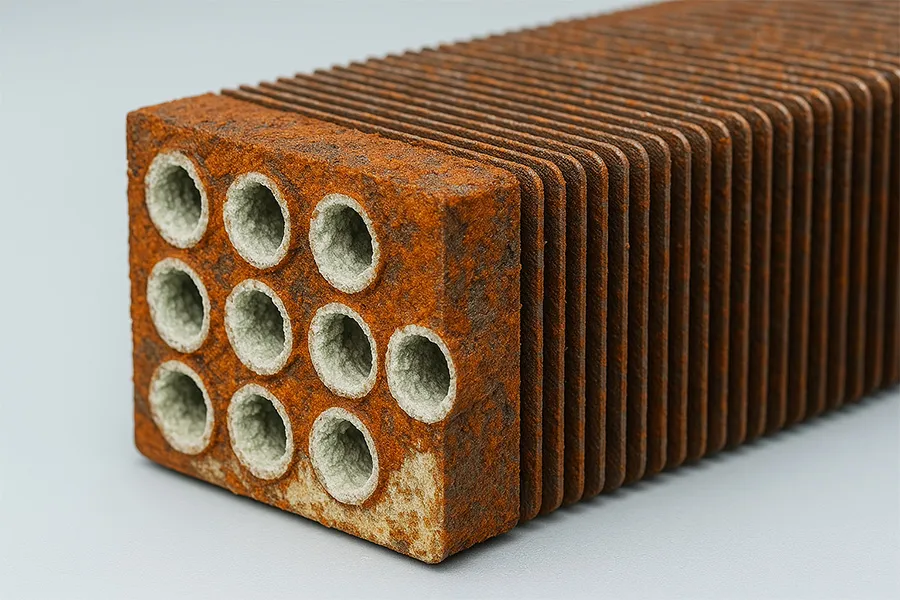
Which systems is this important for? In fact, almost all HVAC systems with a closed water circuit: central heating with radiators or underfloor heating, heat pumps, climate ceilings … Especially if they contain aluminium or stainless steel heat exchangers, have only a small volume of circulating water, increasing the risk of stagnation, or operate at low temperatures, as dirt then settles more quickly.
Water treatment naturally has no role in ventilation systems or air conditioning units that use refrigerant gas, because there is simply no water in the system.
Standards
Water treatment in HVAC systems is not yet an explicit legal requirement in Belgium, but in practice it is often essential. In public-sector contracts and major projects in the country, water treatment is often made a mandatory requirement in the specification, and many manufacturers also require it as a condition of retaining the warranty.
Which standards apply? European standard EN 12828 sets out basic principles for heating systems. In addition, more and more manufacturers refer to VDI 2035, a German guideline that specifies limit values for water quality. NBN EN 1717 is also relevant: it covers the protection of drinking water against contamination by backflow from installations.
It is important for installers to base their work on these standards and guidelines, both technically and legally. This helps avoid disputes over liability and, once again, warranty claims in the event of damage.
Discipline
In short, the days of simply filling HVAC systems with tap water are over. Water quality plays a crucial role in modern HVAC systems. Underestimating this risks not only reduced efficiency, but also damage and disputes. Water treatment requires knowledge, discipline and monitoring, but it always pays off.
Een zakelijke vraag aan Fernox? Get in touch
Companies in this story
Keep following this
Get an email when a new story is published. No account needed.
- ThemeSafe and efficient water use
- SubjectHVAC
- CompanyFernox







