











Water softeners: why choosing the right softening salt makes all the difference

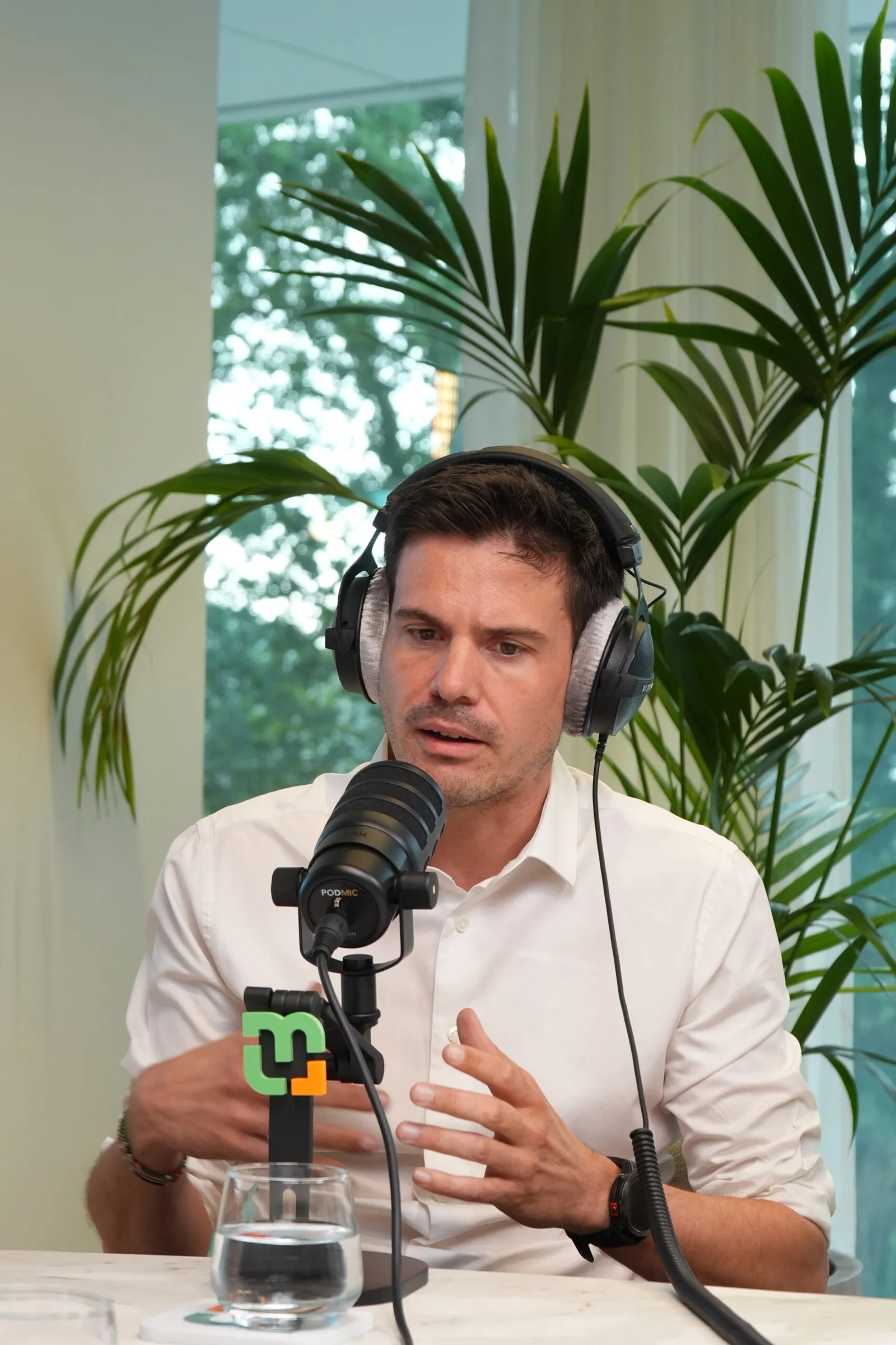
The performance and service life of a water softener are closely linked to the quality of the softening salt. But what is the difference between salt crystals and salt tablets, and what should installers consider when choosing? In this episode of the Installatie & Bouw Podcast, Michiel Heethem, Commercial Manager at ZOUTMAN, and Thidrek Van Grunderbeeck, Marketing & Communications Manager at ZOUTMAN, discuss salt purity, the European standard EN 973 type A, dissolution rate, bridging, sustainability and security of supply, among other topics. They also explain why high-quality salt is important for reliable regeneration and a long service life for the system.

Een zakelijke vraag aan ZOUTMAN? Get in touch
Full transcript
Alle hoofdstukken (32)
- The role of salt in a water softener
- ZOUTMAN as a specialist family business
- How salt quality affects the system
- Impurities and the service life of the softener
- Crystals and tablets tested to EN 973 type A
- The quality of salt crystals and salt tablets
- What salt quality means for the softener’s performance
- Confidence with every regeneration cycle
- Clear brine as an indicator of quality
- Impurities in brine
- The dissolution rate of SOFT-SEL® Crystals
- Faster formation of saturated brine
- Faster dissolution does not mean using more salt
- Saturation determines salt consumption
- Bridging in the brine tank
- Crystal structure and bridging
- The environmental impact of salt crystals
- Water and CO2 footprints
- Why crystals are often cheaper than tablets
- Energy use, production and transport
- Other forms of water-softening salt
- SOFT-SEL® Regular, Plus and Blocks
- Salt for biocidal applications
- Chlorine production through membrane electrolysis
- The benefits of a Belgian producer
- Security of supply and customer service
- Security of supply
- Large salt reserves and two production sites
- The revamped packaging
- Find out more through the ZOUTMAN Academy
- Academy and newsletter
- Closing remarks
The role of salt in a water softener
Björn Crul Hello, listeners, and welcome to this new episode of the Installatie & Bouw Podcast. A water softener is a familiar product for many installers. But what about the salt that goes into it? Does salt get enough attention? After all, a softener can only work as well as the salt you use. My guests today are Michiel Heethem and Thidrek Van Grunderbeeck from ZOUTMAN. They know the world of salt crystals better than anyone, and I’m keen to hear why choosing the right salt can make all the difference for installers too. Thidrek and Michiel, welcome. Let me start with you, Thidrek. ZOUTMAN is a Belgian family business, but what makes you unique in this sector?
ZOUTMAN as a specialist family business
Thidrek Van Grunderbeeck Yes, ZOUTMAN is indeed a Belgian family business, founded in 1997 by brothers Bart and Peter Sobry. It started in Roeselare, alongside the E403, at a production site that is now also our head office. We also have a recent [unclear]. We make various types of salt products: SOFT-SEL® softening salt, MARSEL® food salt, pool salt under the POOLSEL® brand, animal feed salt and de-icing salt. Those are the main ones. I think what makes us unique is that we are a family business in a sector dominated by large international chemical companies, which are not always focused on salt alone, but also on other chemical raw materials. We specialise exclusively in salt, including salt for these specific applications. You can see that focus in the quality of our products, but also in our customer service. If you call us, you’ll quickly get through to someone who knows a great deal about salt.
Read the full transcriptCollapse transcript30 more chapters
How salt quality affects the system
Björn Crul Michiel, today we want to talk about water softening and the role salt plays in it. You’ve found that salt has a direct impact on a system’s service life and on the quality of the water it supplies. Why is that?
Impurities and the service life of the softener
Michiel Heethem Yes, that’s right. Salt quality is very important to how the unit performs. We sometimes say that a softener is only as good as the quality of its salt. Poor-quality or lower-quality salt contains impurities. It can also contain things you can’t see with the naked eye, such as certain minerals, calcium and magnesium. What happens then? The resin lasts less long and becomes contaminated. That’s bad for the service life of the unit. For installers, it also has a major impact on their warranty period, which can be five to ten years. You don’t want to have to go back to your customer after three or four years to replace a unit. That’s simply unacceptable. As for water quality, the brine does not come into direct contact with the water used by the consumer, but it does so indirectly. The brine passes through the resin, which then softens the water. That’s why all the salt we use for water softening is actually food grade. That’s an important point to make.
Crystals and tablets tested to EN 973 type A
Björn Crul Now, you’ve had both crystals and tablets tested by an independent laboratory, including against the European standard EN 973 type A. What did the study conclude?
The quality of salt crystals and salt tablets
Michiel Heethem We’re often asked what people should use. Should I use tablets or crystals? Consumers tend to stick with what they’re used to. That’s something we’ve always supported and believed in, but we also had the products independently tested in a laboratory. The results were very positive. We had both salts tested against EN 973 type A, the European standard: both our salt tablets and our salt crystals. Both products achieved the highest rating. For example, the standard requires a minimum sodium chloride content of 99.4%, which is effectively the purity of the salt itself. Both of our products come in at 99.8%, so they exceed the requirement. As for insoluble matter, such as small stones or anything else that might get mixed in, the standard sets a limit of 0.05%. For both products, we’re at a maximum of 0.01%. So, across all the measurable points, both products came in below the limits, in a good way, of course, and scored very similarly. That was certainly a positive result for the salt crystals. These standards were also introduced to help consumers and installers, because not everyone is an expert in salt. We like to think we know quite a lot about salt, but not everyone is an expert. You need to be able to rely on the standards that have been drawn up. [Unclear], but our people are actively involved in the working groups, where they work with all the different salt producers in Europe to develop the standard. They also work together to decide how to test whether the salt meets it. This is something that can be described in clear qualitative and quantitative terms, helping the end consumer. In Belgium, we also have a trade association together with [unclear], where we look at how best to support consumers and end customers so they can find the right quality.
What salt quality means for the softener’s performance
Björn Crul I understand that the quality of salt crystals is very high, but what does that mean in practice for the softener’s performance?
Confidence with every regeneration cycle
Michiel Heethem Yes, it’s very simple. It’s about peace of mind. You want every regeneration cycle to run properly. It’s very important that no residue gets through, because it can block valves and injectors, and gradually contaminate the resin, meaning it needs to be replaced sooner. It’s simply a matter of building in reliability. It also helps installers keep their customers happy. If an end customer lifts the lid of their softener and finds it full of rubbish, that’s not something they want to see. Especially as these units are quite expensive. If you want to keep the customer happy, you also want the salt to look good when they check the unit and lift the lid.
Clear brine as an indicator of quality
Björn Crul Michiel, you’ve mentioned clear brine as an indicator of water quality and how well the system is working. What can we actually tell from the colour of the brine?
Impurities in brine
Michiel Heethem Yes, in very simple terms, clear brine is brine that will work well. [Unclear] that are present, which you’d rather not have, because not everything can be seen visually. You can see actual impurities, but if, for example, calcium or magnesium is present, you won’t see it with the naked eye. The salt looks fine until you dissolve it. Then you see a residue, which is also harmful to the resin. One important caveat: salt is a key factor in making brine, but you never know what water is being used. If the water is contaminated for some reason, that can also affect the colour of the brine. That’s an important point to mention. That’s a small caveat. If there’s any doubt, the best advice we can give is to take a little of our pure salt and dissolve it in a glass of bottled water. Then you can see whether the problem lies with the water or the salt.
The dissolution rate of SOFT-SEL® Crystals
Björn Crul Thidrek, your SOFT-SEL® Crystals reach saturation in five minutes. Why is that difference in time so important?
Faster formation of saturated brine
Thidrek Van Grunderbeeck Yes, the dissolution rate of crystals compared with tablets is an important factor: our crystals dissolve four times faster than tablets. What does that mean in practice? In applications with very high water consumption, think of large industrial companies that need a lot of softened water, [unclear] of the softener. Salt needs to dissolve quickly enough to produce saturated brine. And saturated brine is essential for effective regeneration. The rate at which salt dissolves in water also slows down in the winter months. Our crystals perform well in these conditions compared with tablets.
Faster dissolution does not mean using more salt
Björn Crul If the crystals dissolve so quickly, isn’t there a risk that you’ll end up needing a lot more salt?
Saturation determines salt consumption
Thidrek Van Grunderbeeck No, that’s a common misconception. You might think that crystals dissolve faster than tablets, but basic physics explains why that doesn’t mean you use more salt. When salt dissolves in water, it keeps dissolving only until the resulting brine is fully saturated. I think that’s around 26%. Once the brine reaches that salt concentration, the salt stops dissolving. So regardless of how quickly the salt dissolves, you’ll end up using the same amount for regeneration.
Bridging in the brine tank
Björn Crul Michiel, a concern sometimes raised about crystals is that they might stick together and form clumps in the brine tank. What is this phenomenon, and how do your crystals help prevent it?
Crystal structure and bridging
Michiel Heethem The phenomenon is better known as bridging. It occurs when the brine tank repeatedly empties and refills, leaving a crust of salt at the top while the space underneath is empty. At a certain point, no more brine is produced. From above, it looks as though there is still salt in the tank, but in reality nothing is happening. Compared with other types, crystals offer an advantage. Their shape and structure allow water to flow around them more easily, giving them very good bridging performance. But in many cases, when we do see bridging, it is not necessarily caused by the salt. Although our crystals have a slight advantage in this respect, the cause is more likely to be the surrounding conditions. We usually see it in environments where humidity and temperature vary considerably. That is generally what causes it.
The environmental impact of salt crystals
Björn Crul Now, when it comes to environmental impact, do you have figures on that? Has it been researched?
Water and CO2 footprints
Thidrek Van Grunderbeeck Yes, we have had the CO2 footprint and water footprint of our salt calculated. It takes 0.18 cubic metres of water to produce one tonne of salt. For mined salt, the average is 11 cubic metres. So that is almost 100 times more. We also have an advantage of about 30% for our salt crystals in terms of CO2. So, naturally, if you are a large industrial company or need a lot of water-softening salt, that difference adds up. Water in particular is a very important topic nowadays. Choosing crystals instead of tablets makes a significant difference. The CO2 footprint also counts towards your scope 3 calculations when working towards your company’s sustainability targets. So it is a significant difference.
Why crystals are often cheaper than tablets
Björn Crul Michiel, crystals are often cheaper than tablets and perform at least as well in terms of quality. How is that possible?
Energy use, production and transport
Michiel Heethem Yes, a very important point has just been raised. Thidrek has just explained the difference in energy consumption. Producing salt tablets requires a lot of energy and water, which comes at a cost. We face other challenges, but our process uses less energy. So today, that is a very important factor. Producing vacuum salt requires a lot of evaporation. It starts as brine, is turned into granules, and then still has to be pressed. That is the first factor. The second factor for the Belgian market is simply that we have a home advantage here. Salt is heavy and cheap, so transport has a significant impact on the cost. In other countries, we actually have a premium product. In some destinations, salt crystals are more expensive than salt tablets. So here, we simply have a home advantage.
Other forms of water-softening salt
Björn Crul Now, alongside the crystals, you also offer salt tablets and salt blocks. Which applications are they best suited to?
SOFT-SEL® Regular, Plus and Blocks
Michiel Heethem Alongside salt crystals, we also have a few other alternatives. SOFT-SEL® Regular is our standard tablet salt. It comes in tablet form and performs very well. Its sustainability score is a little lower, but anyone who simply prefers using salt tablets can use it. Then there is SOFT-SEL® Plus, which has the same shape, the same tablet form, but with one major difference. I think that’s a topic for another podcast.
Salt for biocidal applications
Björn Crul And what can you use that for?
Chlorine production through membrane electrolysis
Michiel Heethem As a biocide, it comes down to the fact that salt is sodium chloride. A little chemistry lesson: you can separate the chloride from the sodium chloride. So, with your salt, you can essentially have your own little chlorine plant. What is it used for? Swimming pools and disinfection units. So when you are actually producing chlorine, the salt has to be suitable for biocidal applications. SOFT-SEL® PLUSS is certified for this. We also have salt blocks. These are blocks weighing two times 4 kilograms. They are used for the same application, in a water softener, and have the same high purity. They are simply pressed into a different shape, for practical reasons. The price per kilo is a little higher, but they are convenient to use. That is the main difference.
The benefits of a Belgian producer
Björn Crul Thidrek, Michiel has just pointed out the home advantage, which certainly helps with the price. What else makes it attractive for an installer that ZOUTMAN is a Belgian company?
Security of supply and customer service
Thidrek Van Grunderbeeck I think the fact that we are a Belgian producer and a Belgian brand is a huge advantage for installers, especially when it comes to security of supply, speed and customer service. We can deliver very quickly, we have an extensive distributor network, and if you try to call us, you get through to Roeselare. You don’t have to navigate eighteen options in a phone menu to reach the right person. We can quickly put you in touch with someone who has a great deal of knowledge about water-softening salt.
Security of supply
Björn Crul You deliver quickly. How do you ensure the security of supply of your product?
Large salt reserves and two production sites
Michiel Heethem There are two parts to the answer. First of all, we have a large stock of raw materials. At our site in the port area in Ghent, we can store up to 300,000 tonnes. That is a figure our loyal ZOUTMAN followers will have heard mentioned from time to time. We are proud of it because it is the largest covered salt storage facility in Europe, and perhaps in the world. We are still looking for someone with a larger storage facility. So when it comes to raw materials, we are always in a good position. The second part of the answer is our two production sites. With our sites in Roeselare and Ghent, we can theoretically produce exactly the same granules and exactly the same products. So if we have a planned or unplanned shutdown, the other production site can take over and ensure we are covered. No salt means no technicians out on the road either. So that is a very important point in our sales process too.
The revamped packaging
Thidrek Van Grunderbeeck The quality of the salt should be reflected in its packaging too. We have revamped the packaging to better communicate the full range of quality to consumers. When you recommend water-softening salt as an installer, it is reassuring that it comes from a recognised brand and in an attractive bag. That gives the customer confidence.
Find out more through the ZOUTMAN Academy
Björn Crul If installers want to find out more about salt crystals for water softening after listening to this podcast, where can they go?
Academy and newsletter
Thidrek Van Grunderbeeck We have set up an Academy on our website, where you can find a lot of information about crystals versus tablets, water-softening salt standards and so on. I would also recommend signing up for the newsletter, because whenever there is something new to report in the sector, we are quick to share it with our customers and newsletter subscribers. So I would definitely recommend it.
Closing remarks
Björn Crul Thidrek and Michiel, thank you for this conversation.
Thidrek Van Grunderbeeck Thank you.
Björn Crul Listeners, what I take away is that salt in a water softener deserves more attention than it has received so far, precisely because it has such a major impact on the system’s performance. That’s all for this podcast. Thank you for listening, and see you next time.
Companies in this story

Keep following this
Get an email when a new story is published. No account needed.
- ThemeSafe and efficient water use
- SubjectNews
- CompanyZOUTMAN







