Precise sensor technology as the foundation for high-performance HVAC systems
Text Wouter PolspoelImage CaTeC
A stable, healthy indoor climate starts with one fundamental step: accurate measurement. Without reliable data, every control strategy is little more than guesswork. CaTeC, based in Wateringen in the Netherlands, is built on precisely this foundation. “We provide the eyes and ears of every HVAC system,” the company says..
As a specialist in instrumentation for climate analysis, CaTeC serves a wide range of applications. “Offices, hospitals and museums, as well as food-industry factories and greenhouses: in all these environments, our solutions can measure parameters such as temperature, relative humidity, CO2, air velocity and pressure,” says Francis van Dooren, area sales manager BeLux at CaTeC. “These measurements form the basis for an indoor climate that feels neither too hot, too cold nor too humid and, above all, remains predictable and controllable.” CaTeC has seen the role of sensors in the HVAC sector change in recent years. “They used to prove their worth mainly in temperature control, but in recent years they have also become increasingly important for ventilation,” explains Francis van Dooren. “Sensors can also help ventilation systems operate more energy efficiently. We are seeing growing popularity for Type D ventilation in particular. That makes sense, as it always recovers heat from the extracted air, which naturally saves energy.”
Partnership as a catalyst
CaTeC works closely with installers. “We do not simply sell from a catalogue. Instead, we provide project-based support, working with the installer to identify the most suitable sensor for each application,” says Francis van Dooren. “Every project requires a different approach: an office with printers and ozone emissions has different requirements from a cleanroom or an industrial ATEX zone. This often involves a site visit. Seeing the context first-hand allows us to refine our advice on sensor type, positioning and measurement strategy.” CaTeC also offers a comprehensive after-sales service. “We carry out calibrations in our own laboratory or on site, and can issue certificates on behalf of the installer,” explains Francis van Dooren. “This means less administrative and technical burden for installers.”
From wired systems to data-driven solutions
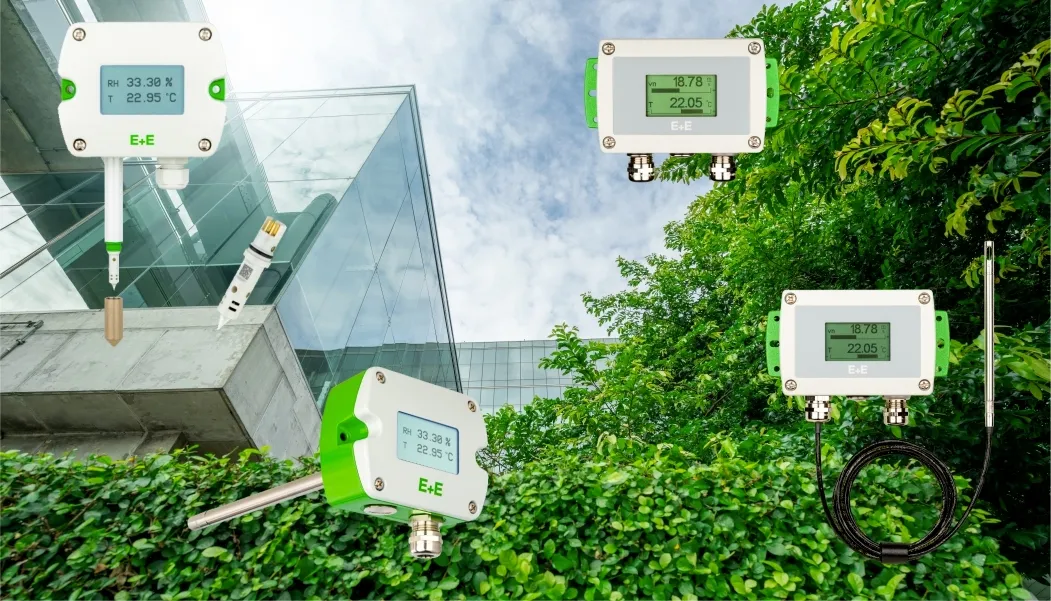
Wired systems are also making way for wireless networks and cloud platforms in the world of sensor technology, explains Francis van Dooren. “Buildings are increasingly responding to occupancy and external factors: less cooling in unoccupied zones, ventilation adjusted to occupancy … At CaTeC, we can only welcome this development. That is why we work closely not only with installers, but also with other manufacturers. This enables us to develop tailored solutions that perfectly match our customers’ requirements.”
From homes to museums and hospitals
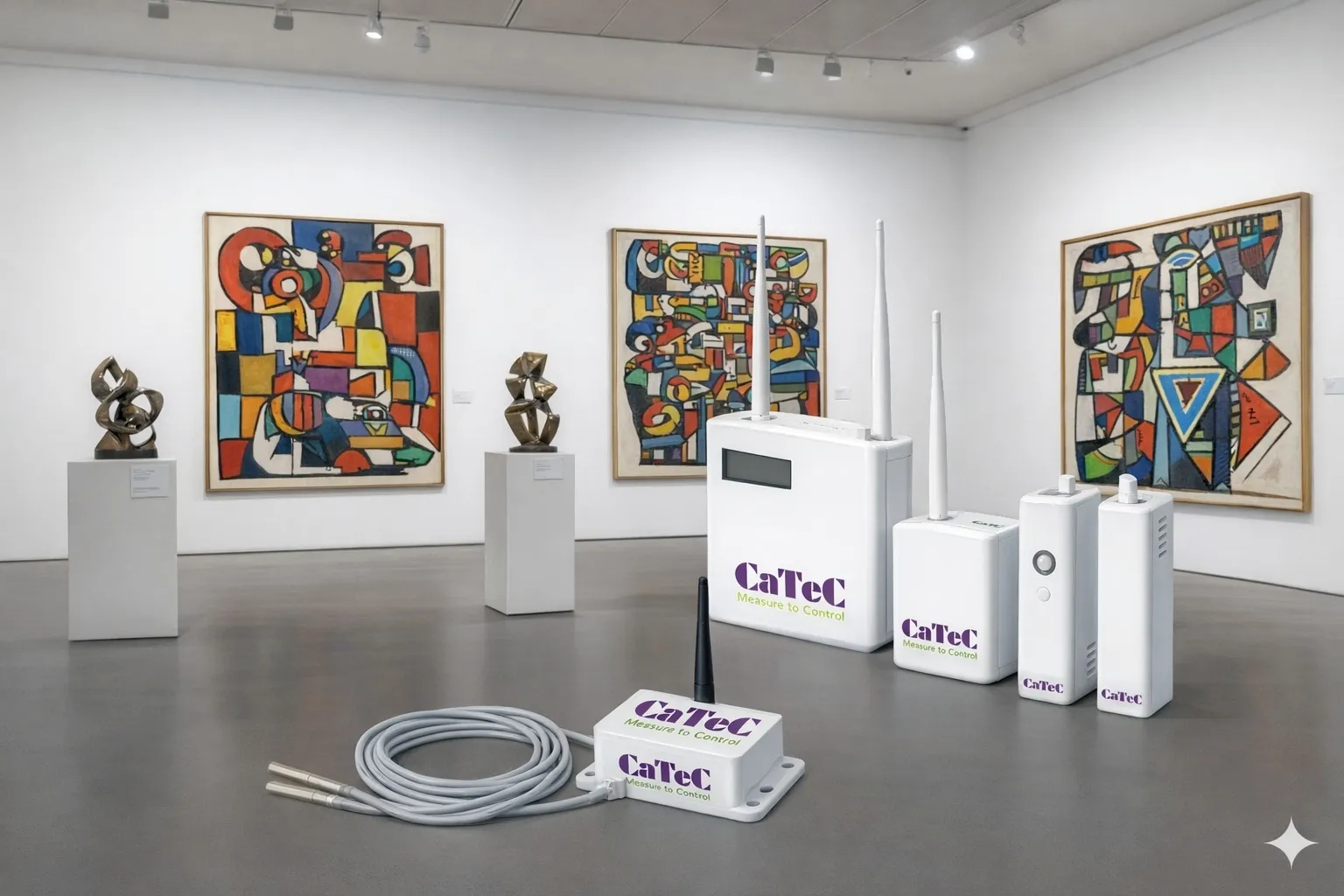
In other words, CaTeC sensors, which are manufactured entirely in Europe, are by no means always generic mass-produced products. “Cheaper sensors are often used in homes, where less accuracy is required: it does not make much difference whether the temperature is 21 or 21.5 °C. In hospitals, museums and the food industry, however, a deviation of a tenth of a degree can have serious consequences. This was well understood, for example, at the Ghent University Museum (GUM) and Mu.Zee in Ostend. CaTeC sensors are used there to protect works of art from fluctuations in temperature and humidity. “Together with the installer, we carefully determined the number of measurement points, their positioning and how the data would be processed for both projects,” says Francis van Dooren. “In pharmacies, medicines must be prepared and packaged under strictly controlled conditions. This requires control not only of temperature and humidity, but also of pressure regimes to keep fine particles and viruses out,” he explains, describing how CaTeC sensors make a difference in the pharmaceutical sector. “And in industry, even the smallest deviations can have a significant impact. In milk powder production, incorrect moisture levels can cause clumping or, in extreme cases, dust explosions. Our sensors help manage these risks.”
Francis van Dooren concludes: “Precise sensor technology is not a minor detail, but a structural driver of performance, energy efficiency and risk management. CaTeC positions itself not as a component supplier, but as a knowledgeable partner that considers context, application and long-term reliability. That is how we aim to make a difference, with more than just high-performing solutions.”
Een zakelijke vraag aan CaTeC? Get in touch
Companies in this story

Keep following this
Get an email when a new story is published. No account needed.
- ThemeHealthy air and summer comfort
- SubjectHVAC
- CompanyCaTeC