The microgrid: a key player in the new energy landscape
Text Wouter PolspoelImage Schneider Electric en Getty Images
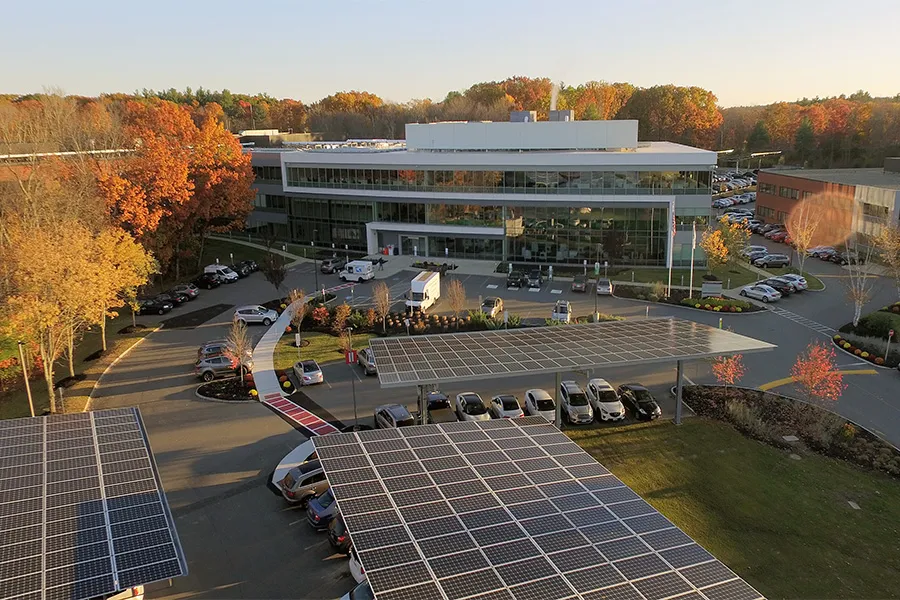
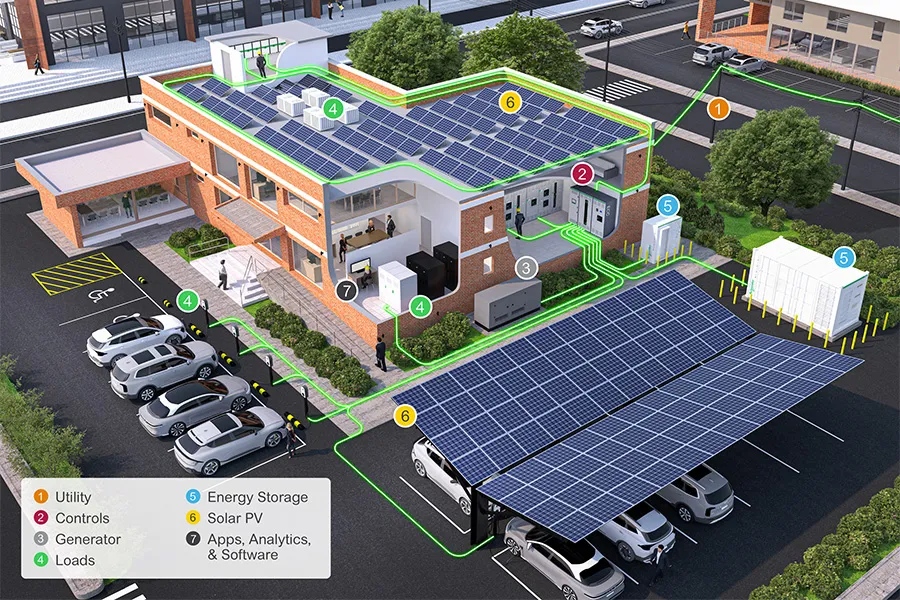
Anyone keeping a close eye on developments in the energy transition will almost certainly have heard of the microgrid. This is a local electricity network that distributes power within a defined area, such as a neighbourhood, business park, hospital, university campus or remote village. A microgrid can generate its own electricity using solar panels, a wind turbine or a combined heat and power system, and therefore operate autonomously, but it can also be connected to the public electricity grid to draw power from it and feed self-generated electricity back into it. A microgrid can also be equipped with energy storage systems and continuously balances supply and demand.
There are three types of microgrid. The most common is the so-called grid-connected microgrid, which remains connected to the public electricity grid at all times, also known as the macrogrid. This type is typically used by businesses or residential areas that generate their own energy but also draw power from or feed it into the grid.
The second type, the islanded microgrid or off-grid microgrid, is a fully autonomous system. It has no connection to the macrogrid and uses only renewable electricity that it generates itself. This type of microgrid is often used at festivals, for military applications or in remote areas.
The final type is the so-called switchable microgrid. It is connected to the macrogrid and operates autonomously only when the macrogrid fails. It is typically used by facilities where continuity of power supply is crucial, such as hospitals, data centres, airports or large manufacturing businesses.
Maximising renewable energy generation
The practical benefits of microgrids should not be underestimated. They are also particularly valuable in the context of the energy transition, as a miniature version of a conventional electricity grid. For example, microgrids systematically help maximise renewable energy generation.
They also make more efficient use of renewable energy by storing surplus power in batteries, or in charging stations, for example, when the grid cannot easily absorb it, and by using smart management systems to maintain a constant balance between electricity generation and demand.
Also of interest to grid operators
Grid operators themselves can also deploy microgrids, particularly in regions where the grid is heavily loaded, to manage fluctuating energy demand and address growing electrification needs.
You may be thinking that grid operators could simply expand the public grid. That is true, but upgrades to the existing grid take more time and cost more than building a microgrid. A microgrid can therefore serve as a temporary solution, postponing investment in the expansion of the conventional grid. Grid operators can just as easily build them as a permanent solution to add capacity during peak periods of electricity demand.
Leading the way
Anyone considering installing a microgrid can turn to Schneider Electric. This global technology company, which specialises in energy management and automation, is one of the leading players in the design, construction and management of microgrids, on both a small and industrial scale. The company works with local technology partners and grid operators around the world.
Een zakelijke vraag aan Schneider Electric? Get in touch
Companies in this story

Keep following this
Get an email when a new story is published. No account needed.
- ThemeElectrical infrastructure under pressure
- SubjectElektroTech
- CompanySchneider Electric