Flat cable makes it easy to power 10 EV charging points
Text Aagje Van Cauwelaert en Wouter PolspoelImage Wieland

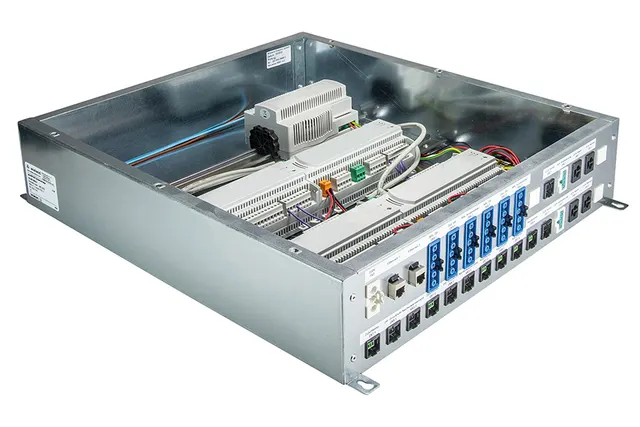
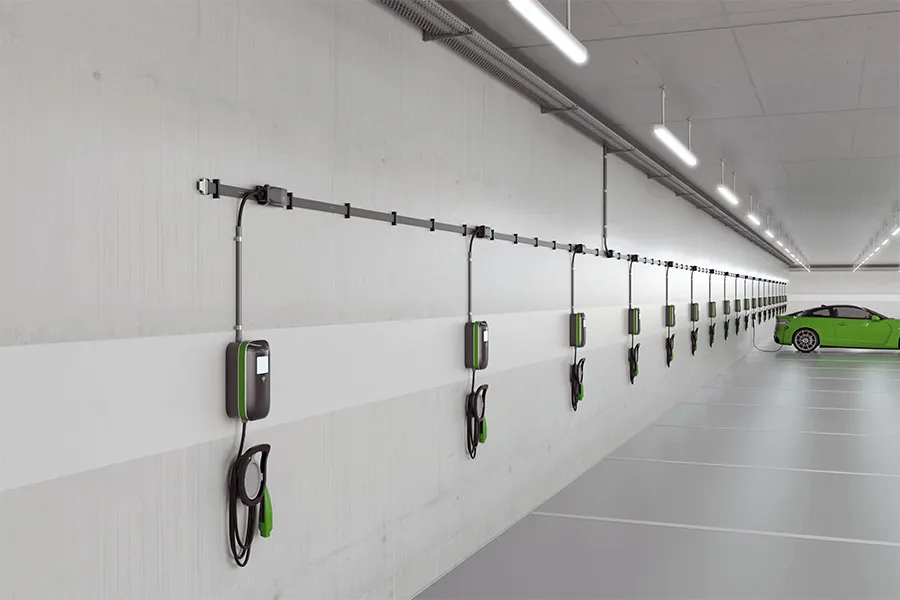
Podis is the name of a solution from Wieland, a German innovator in pluggable cable systems, which makes it easy to expand electric vehicle charging installations. “The flat cable can easily accommodate ten charging points, while only one circuit is needed to connect to the fuse board,” says Koen Notelaers, managing director of Atem in Willebroek, which distributes Podis in Belgium. “However, this means Podis is used for slow charging.”
Electric vehicles are becoming increasingly popular. As a result, expanding existing charging infrastructure is essential. Podis, a flat cable for decentralised power distribution that is also suitable for installing brand-new charging points, makes this possible without the need for building work.
“Many charging points in the car parks of offices, shopping centres and apartment buildings will need to be expanded in the coming years. Podis makes this possible without extensive building work or a lot of additional materials,” Koen Notelaers begins. “The flat cable takes up very little space, so it can be installed very quickly, and extra tap-off points can be fitted in just a few minutes.”
For extensions and new installations
But Podis is not just a retrofit solution. The flat cable is also ideal for use in new charging infrastructure. “The solution makes that infrastructure very flexible,” Koen Notelaers explains. “Imagine that electric vehicles need to be charged in parking spaces 1 and 2 in a car park. By choosing Podis from the outset, chargers can easily be installed at, say, parking spaces 7 and 8 in the future by fitting extra tap-off modules at those points on the flat cable and connecting them to a charging point. This flexibility is what makes the solution so interesting, and enables it to make a fundamental contribution to accelerating the energy transition.”
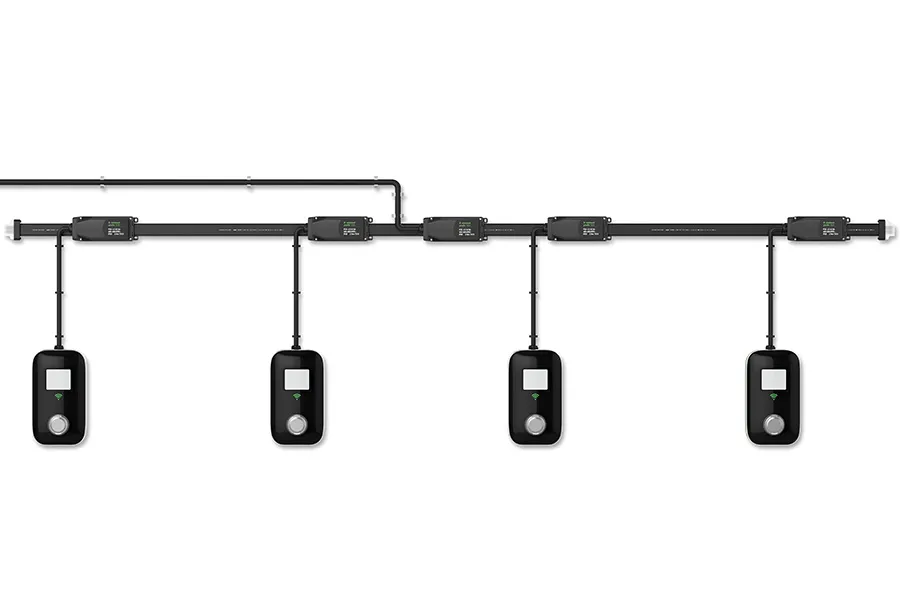
Up to ten charging points can easily be connected to the Podis flat cable. “The flat cable is surface-mounted on the wall, with the end pieces fitted,” explains Atem’s managing director, outlining how it works. “The cable contains the various conductors, and a Podis connection module is secured to it with screws for each charging point. The charging points are connected to the module using a cable gland. Podis offers two types of tap-off module: a standard tap-off module, and one with an additional module for a fuse and residual-current device, which is required by law if the charging station does not have the necessary fuse built in.
Lower cost and less material
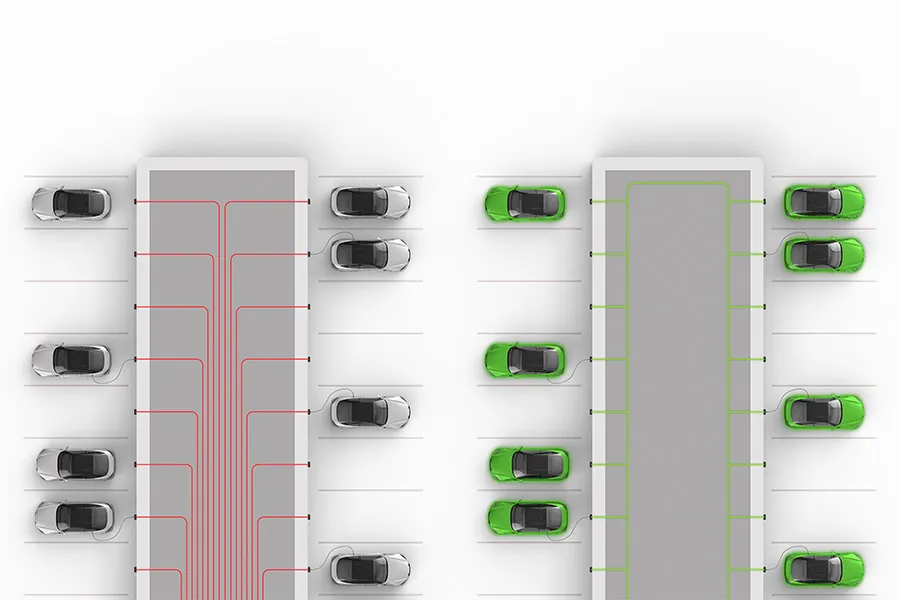
According to Koen Notelaers, Podis is particularly attractive for installations with at least 4 charging points. “A conventional installation has four to five circuits running to the existing fuse board,” he explains. “Thanks to Podis, only one circuit is needed to connect to the fuse board, via an adapter. Electricity is distributed to the charging points locally. Podis therefore serves several charging points with less material: there are fewer circuits, and there is no need to install an additional fuse board. Podis is also cheaper than installing a series of standalone charging points.”
The managing director can back up those last two claims with figures. “A comparison by Wieland with conventional EV charging methods found that Podis uses 66% less material and is 30% cheaper. And while we’re talking percentages, choosing Podis for a new charging installation reduces installation time by 66% compared with the conventional method. Expanding charging infrastructure with Podis is 88% faster than a conventional expansion.”
Sufficient charging capacity
Podis does not provide the conventional installed capacity, but it does provide enough, according to Koen Notelaers. “Ten charging stations on a flat cable provide a minimum of 6 amps per charging station. A conventional installation provides more capacity, but the fuse board is never designed for that. This makes the charging point very expensive. And that much capacity simply isn’t needed. With Podis, the charging system manages everything. The software, which is not included in our offer as we provide the power supply only, determines the variables, such as how many cars are charging at the same time, the initial battery charge and the desired charging time, and distributes the available charging capacity between the vehicles accordingly.”
Podis is therefore intended for slow charging. But Koen Notelaers says there is no need to see that as a drawback. “Slow charging puts less strain on the electricity grid, and vehicles are usually parked for hours anyway: at work, at home, while shopping for a few hours … Charging an EV also requires a different mindset from driving a petrol or diesel vehicle: you should not wait until your battery is empty, as you would before filling up with fuel, but try to charge whenever you park somewhere.”
Een zakelijke vraag aan Atem NV? Get in touch
Companies in this story

Keep following this
Get an email when a new story is published. No account needed.
- ThemeElectrical infrastructure under pressure
- SubjectElektroTech
- CompanyAtem NV