Flat cable makes EV charging installations easy to expand
Text Aagje Van CauwelaertImage Podis®
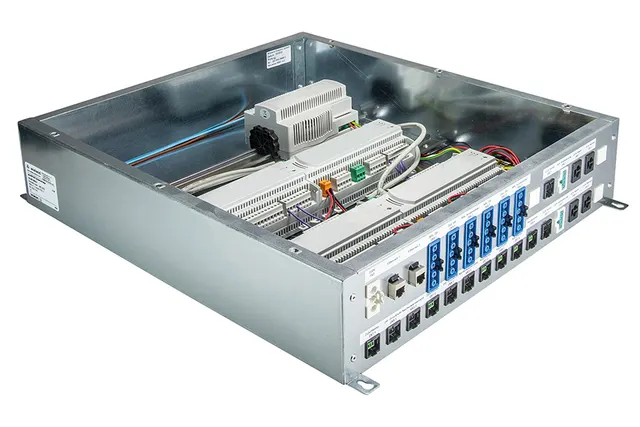
Atem, an electrical distributor based in Willebroek, has teamed up with Wieland, the German innovator in pluggable cable solutions, to offer Podis®, a flexible solution for distributing electricity to charging infrastructure. The decentralised power supply is quick to install and easy to expand. This innovation eliminates the need for disruptive building work and avoids extra material or waste, while accelerating the energy transition.
Electric vehicles are on the rise. Existing infrastructure needs to be adapted on a large scale. This is known as retrofitting. Podis® offers solutions for retrofit projects, as well as for new-build projects where everything is installed in one go.
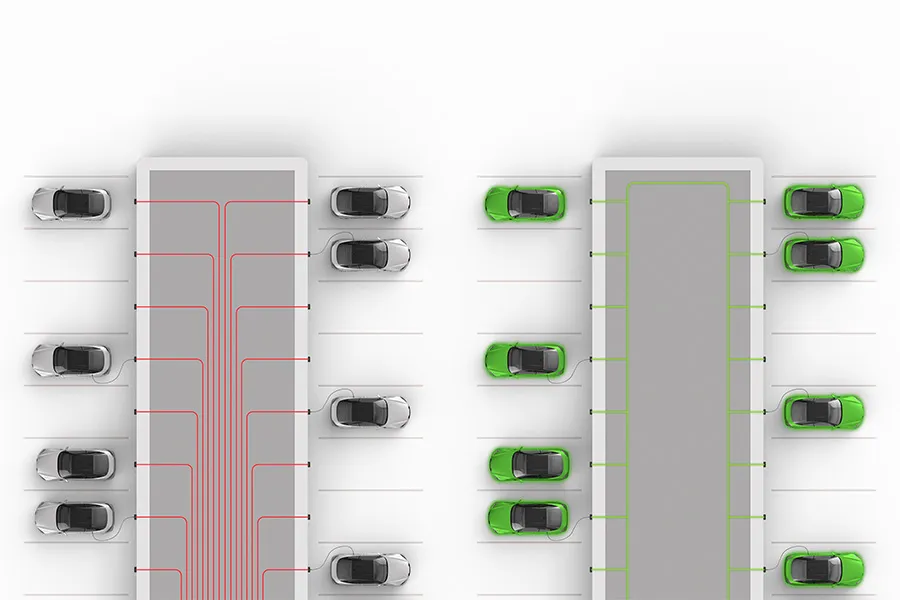
Flexible expansion of EV charging points
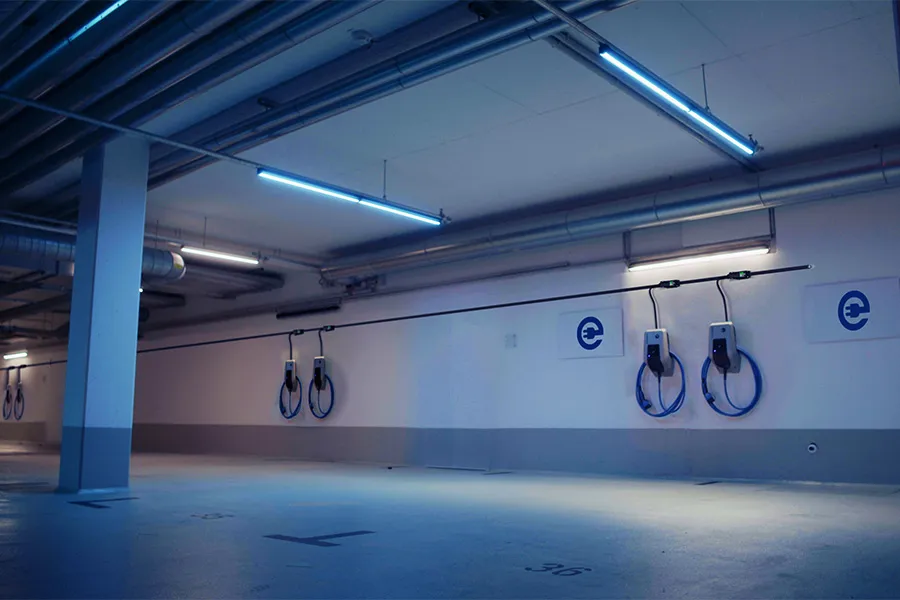
The installation of EV charging points in the car parks of offices, shopping centres or apartment blocks usually starts on a small scale and is then expanded. Atem offers a solution that can be easily expanded using prefabricated cabling and tap-off modules. Podis® takes up very little space and can be installed in just a few minutes.
“In an apartment block, the first EVs need to be able to charge in parking spaces 3 and 5. The Podis® flat cable is already in place. The first tap-off modules are installed at those spaces and connected to two charging points. If parking space 8 is added, a third tap-off module is screwed onto the flat cable. That flexibility is what makes this solution so interesting,” says Koen Notelaers, managing director of Atem.
Podis® flat cable as pre-installation
The Podis® flat cable provides an easy power supply for ten charging points. The cable is surface-mounted against the wall, with end pieces attached. The flat cable contains the various conductors.
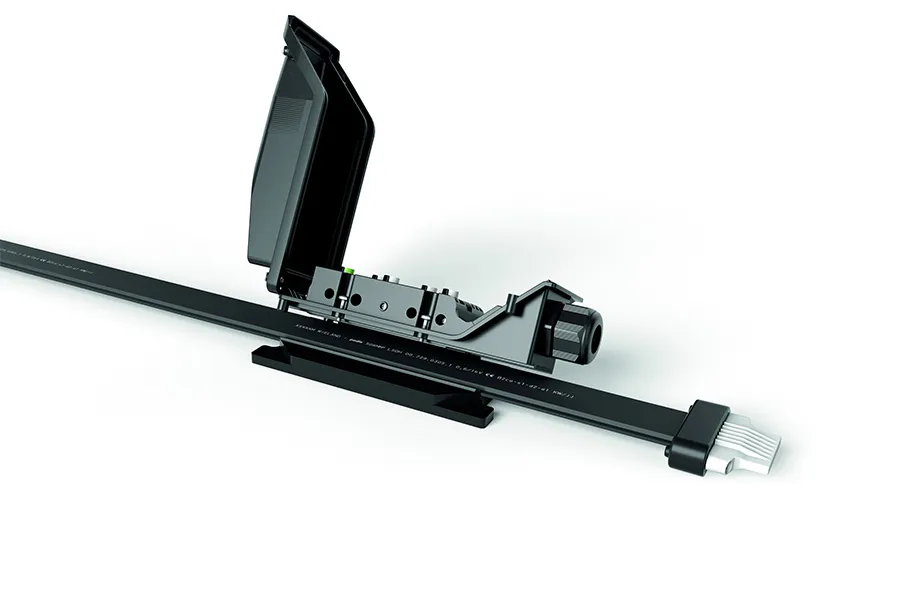
Pluggable power modules
A Podis® connection module is screwed onto the flat cable for each charging point. The cover of the connection module is opened. The wiring for the charging points enters the module through a cable gland. Screws pass through the flat cable and make contact with the conductors.
New to the Podis® range: fuse module and double tap-off module
Podis® has two new modules. Under the AREI, each charging point must be protected against electric shock. The flat cable is already protected at the distribution board, but the tap-off module provides protection locally. A double tap-off module is now also available.
Savings on costs and materials
“Podis® really comes into its own with four or five charging points,” says Koen Notelaers. “A conventional installation has four or five circuits running to the existing distribution board. With Podis®, only one circuit is needed, via an adapter to the distribution board. Power is then distributed locally to the four or five charging points.” The solution costs less and uses fewer materials. “Fewer circuits are needed, and existing wiring is left untouched. There is no need to install an additional distribution board.”
Highly sustainable
Podis® scores highly on sustainability. A comparison by Wieland with conventional methods found that it requires 66 % less material and costs 30 % less. Initial installation time is 65 % shorter, and expanding an existing installation is up to 88 % faster.
Sufficient power
“Podis® does not require the conventional installed capacity, but it does provide enough power,” says Koen Notelaers. Ten charging points on a flat cable provide a minimum of 6 Ampere per charging point. “A conventional set-up requires so much power that the distribution board is not designed to handle it. That is very expensive and not necessary in practice.”
“The charging system manages everything,” explains Koen Notelaers. “The software determines the variables, such as how many cars charge at the same time, the batteries’ starting charge level and the desired charging time. It distributes the available charging capacity across the vehicles.”
For slow charging
Podis® is used for slow charging, which also puts less strain on the electricity grid. Vehicles are parked for hours: at work, at home, during a few hours of leisure or while shopping. “Electric vehicle charging requires a different mindset,” says Notelaers. “The idea of only charging when your battery is empty does not apply. You charge whenever you park somewhere. So charging usually takes place at home or at the office.
Een zakelijke vraag aan Atem NV? Get in touch
Companies in this story

Keep following this
Get an email when a new story is published. No account needed.
- ThemeElectrical infrastructure under pressure
- SubjectElektroTech
- CompanyAtem NV