Will Leuven soon heat its buildings with water from the Dijle?
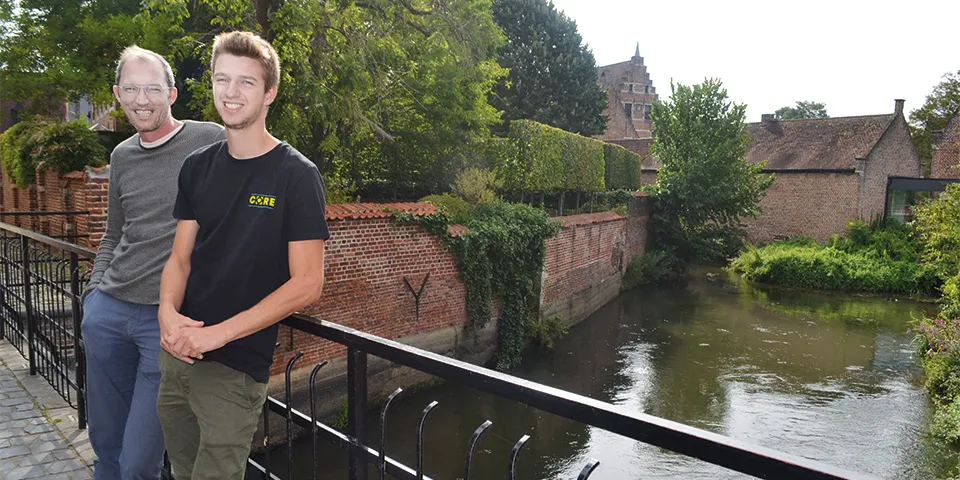
Heating buildings in our cities with river water could soon become a reality in Leuven. CORE, a company set up by engineering students at KU Leuven, aims to launch a pilot project and install a heat exchanger in the Dijle by 2020. “This technology could allow us to heat 20% of Leuven. The next step is to test it in practice for the first time in Belgium,” says student Thomas Holemans.
CORE is one of the team projects available to students at KU Leuven as part of the postgraduate programme in Innovative Entrepreneurship for Engineers. CORE is a fully operational company developing projects focused on efficient and sustainable energy use. Its plan to heat a building in Leuven with water from the Dijle by 2020 shows that CORE is much more than a student project. “In practical terms, we’ll use the technology behind a conventional heat pump, but instead of drawing energy from the ground or the air, we’ll extract it from the river,” explains Thomas Holemans, an engineering student and CORE shareholder. “A river stores solar energy in its water. By installing a heat exchanger on the riverbed and connecting it to a heat pump, we can use that energy to heat a building. In theory, this technology could heat 20% of Leuven and reduce CO2 emissions from heating by 50%. This makes the technology particularly sustainable, especially as we aim to generate the electricity needed to run the heat pump from the river itself, using a turbine, where possible.”
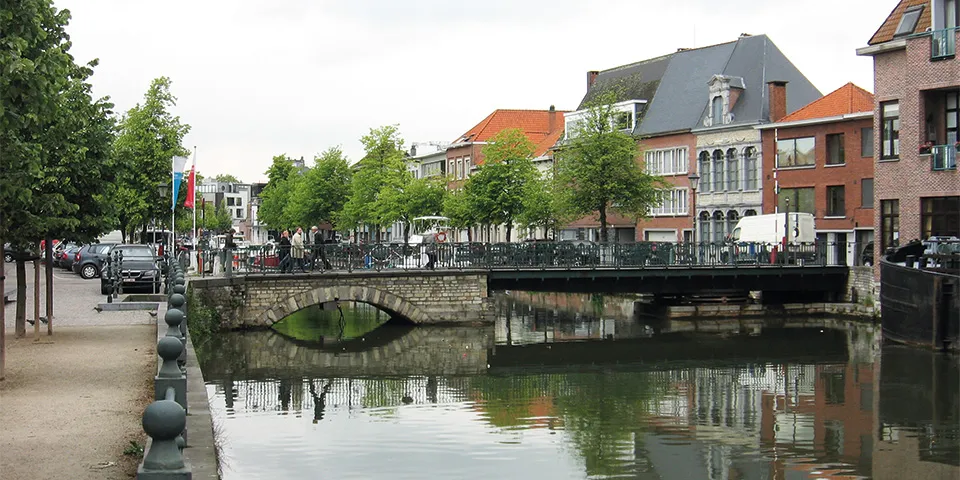
Mechelen, further downstream on the Dijle, could also use the water. (Image: Michiel1972 / Wikimedia Commons)
Strong potential in urban areas
“Ground-source heat pumps require a major investment because of the drilling involved. Air-source systems use a colder heat source than surface water. Even in winter, the water in the Dijle is still four degrees, making river-water heating more efficient,” says lecturer Stijn De Jonge. “What’s more, drilling is not always possible in urban areas because space is limited. Many residents in cities such as Leuven also live close to surface water, as the rivers are highly interconnected. This makes the technology particularly interesting for historic cities working to become more sustainable. They can make use of an energy source that is still largely untapped.”
First test site in Belgium
The technology is ready to be rolled out; only the exact location for the pilot project remains to be decided. Discussions are still under way, but it will most likely be an existing apartment building with a very good building envelope. The students’ pilot project will be a first, as it would be the first test site in Belgium to use the technology.
Leuven city council is already keen to proceed, and the Flemish Environment Agency is also on board. “We’re working closely with the VMM, as there are no regulations yet governing the use of surface water for heating,” explains Stijn De Jonge. “We’ll also study the effects on the river ecosystem.”
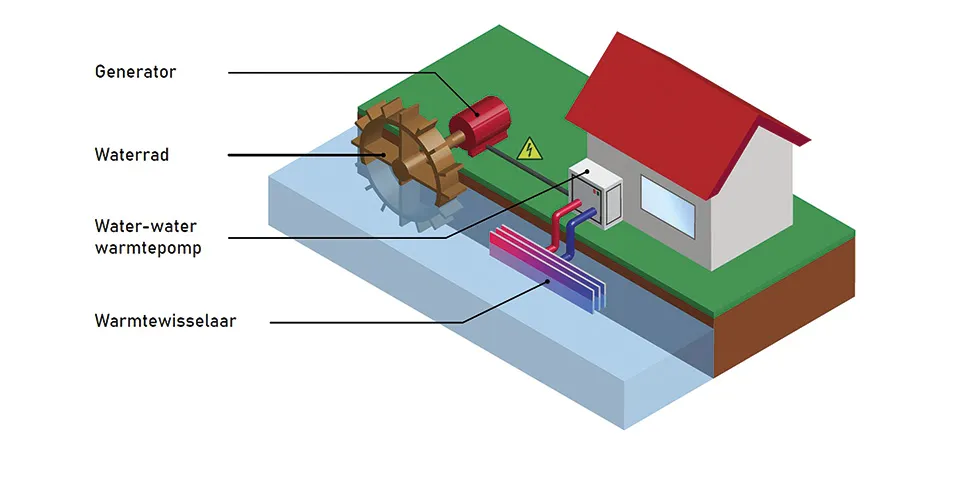
By installing a heat exchanger on the bed of the Dijle and connecting it to a heat pump, CORE aims to use this energy to heat an existing apartment building in Leuven.
One other important question remains: if Leuven extracts heat from the Dijle, what effect will that have on Mechelen, further downstream? The VMM wants to develop a cooperative system so that all cities along a river can use its water. “There are still a number of legal and
financial issues to resolve,” Thomas Holemans continues. “For example, who installs the heat exchanger, given that nobody owns the river? Will residents pay only for a service contract, or will they jointly buy a pump and take responsibility for its maintenance? We still need to
investigate that further.”
From test case to reality?
Many engineering firms have already expressed interest and want to use the technology in their construction projects. “With CORE, our main aim is to plant the seed. It’s up to the industry to put it into practice. If this technology becomes one of the standard options alongside conventional heat sources, we’ll have achieved our goal,” concludes Thomas Holemans.
Question about this story? Ask your question
Keep following this
Get an email when a new story is published. No account needed.
- SubjectProjects