Replacing an underground tank
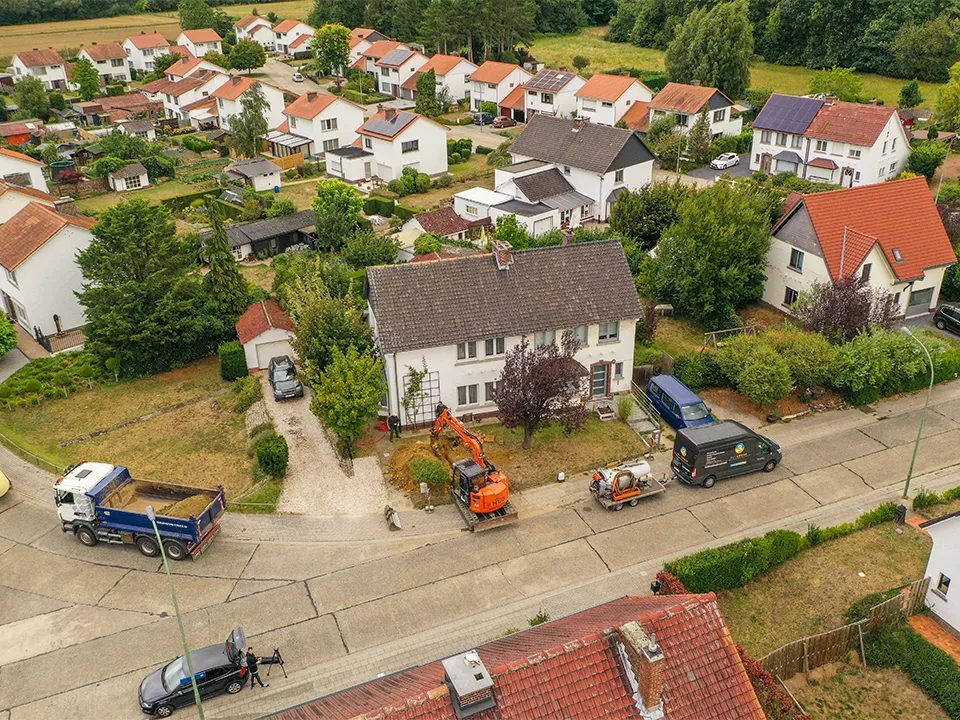
After inheriting the property, the new owners decided to give it a makeover and then rent it out. The underground heating oil tank was also replaced. We spoke to Frank Scherens of Bel Group, a company specialising in heating systems and heating oil tanks.
According to the heating installer, when proactively replacing an underground tank, most owners tend to choose an above-ground model rather than a new underground one. The house dates from the 1970s. Although the heating system, installed in the late 1990s, was still working perfectly, the heirs wanted to avoid the tank causing problems in the future. To prevent this, they decided to excavate the old tank and install a new one.
One of the owners was reluctant to switch to natural gas, but was concerned about how legislation on the renovation of heating systems might develop. “I regularly use Informazout’s information materials on the energy transition to inform my customers and reassure them about the future of heating oil,” says Frank Scherens. “Liquid fuels are evolving and will remain available. The problem is that consumers are inundated with information that is not always accurate, and sometimes find it difficult to make sense of it.”
Once the customers had been reassured that they could keep their heating oil boiler, they had to choose what type of tank they wanted. An above-ground tank is easy to install and costs less because no excavation work is needed. But that is not the only consideration. The building’s location made the situation technically very complex. To install an above-ground model at the bottom of the garden, the connection to the boiler would have had to run across a steep, wide slope. The customers therefore decided to stick with an underground model in the same location, which is also more aesthetically pleasing. “We also checked that the water and gas pipes were far enough apart for the installation, and that the ground around the site was stable enough to work on safely,” Frank adds.
What tank capacity?
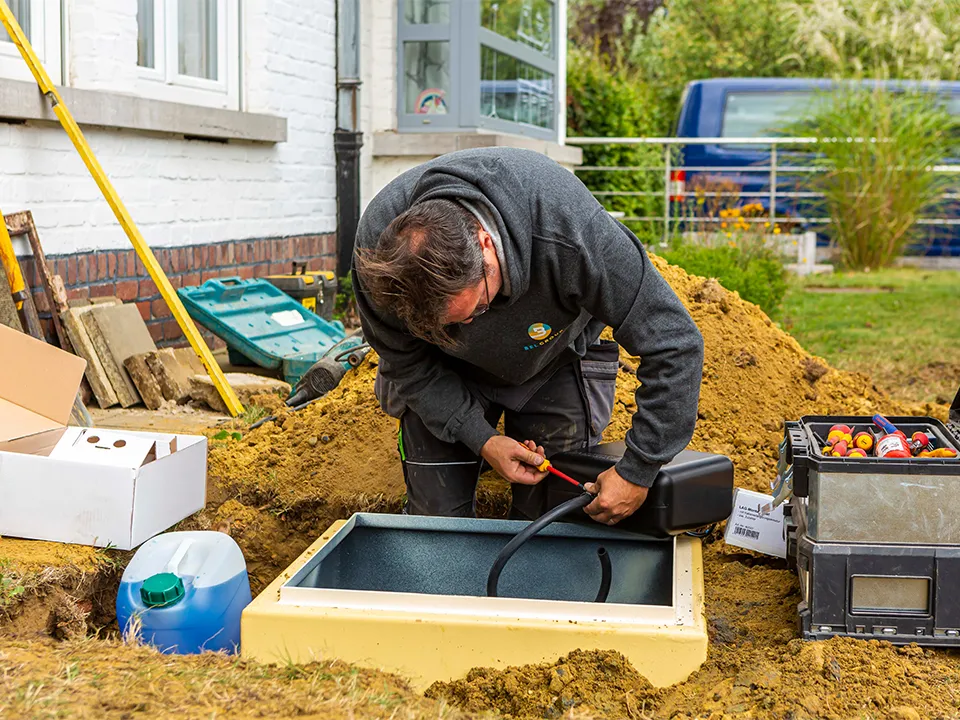
The tank capacity was the subject of the most discussion. “As I usually do, I recommended a 2,500-litre model. It’s ideal, because you can order more than 2,000 litres at a time, which means a lower price per litre. Heating oil prices fell sharply last spring, so the customers opted for a tank with a larger capacity, allowing them to stock up on heating oil at a good price.” The price difference between 2,500, 3,500 and 4,200-litre tanks is relatively small, which also played a part. The owners chose a steel model with all the required equipment, including leak detection and overfill protection. “I’m not a fan of underground plastic models,” he continues. “I’ve encountered a lot of problems with them, hence my view.”
As standard practice, the installer always replaces the tank’s pipework. “I don’t take any risks with the pipes, especially the suction line. A little dirt in the suction line can cause a breakdown. We always opt for a single-pipe system in a storage installation. With a two-pipe system, a leak in the return line won’t trigger a leak alarm. That’s why we favour a single-pipe system,” Frank explains.
Legislation
Frank works on the language border and therefore regularly comes up against differences in legislation. “There are good and bad points on both sides. In Wallonia, for example, I support the introduction of periodic inspections for heating oil tanks of less than 3,000 litres, and the simplification of tank inspections. I don’t understand why a tightness test is always required for storage tanks of 3,000 litres or more in Wallonia, even when the leak detection system is working properly at the time of inspection. It wastes our time and costs the customer more.” That’s clear!
Question about this story? Ask your question
Companies in this story

Keep following this
Get an email when a new story is published. No account needed.
- SubjectProduct information
- CompanyInformazout