Neat joints, watertight results: the sealant for every wet area
Text Wouter PolspoelImage Soudal
In areas with running water, or where relative humidity and temperatures can rise, joints are usually sealed with silicone to prevent moisture from getting into them. It is important to use sanitary silicone sealant rather than ordinary silicone, as it resists mould growth. However, not every wet area requires the same sanitary sealant. That is why Soudal has developed a range of sanitary silicone sealants to provide a solution for every joint in every bathroom, kitchen or cold room. The range also takes account of end customers’ aesthetic preferences, with an extensive choice of colours.
For areas with running water, high humidity or temperature fluctuations, it is recommended that joints be sealed with sanitary silicone sealant to prevent moisture problems. Unlike ordinary silicone, sanitary silicone sealant contains fungicide, a chemical agent that prevents mould growth. Ordinary silicone does not contain it, although the exact amount can vary.
A sealant can only be called a sanitary sealant if it complies with the CE marking requirements and standard EN 15651-3:2012. Specifically, this means it has been tested in accordance with ISO 846, a standard that assesses the resistance of plastics to micro-organisms. Soudal’s Silirub range of sanitary silicone sealants meets these requirements.
They also provide optimum adhesion and elasticity. This is important because a sealant must permanently close the joint between two moving building elements. Particular care should be taken to ensure good sealant adhesion when installing plastic and acrylic baths.
A sanitary sealant for every substrate in every wet area
Silirub offers a solution for every joint in every conceivable wet area. The manufacturer divides its range of sanitary silicone sealants into two categories: Sanitair Easy and Sanitair Premium. The first is intended mainly for standard and residential use. With the Sanitair Premium range, Soudal positions its Silirub sealants for the professional market, where durability, adhesion and mould resistance are even more important.
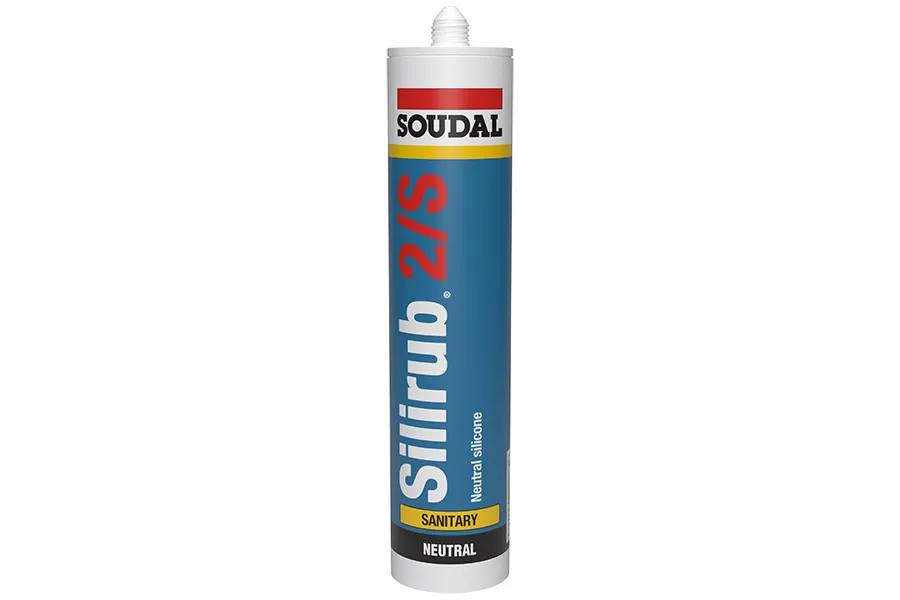
One of the premium sealants is Silirub 2S, a neutral sanitary silicone sealant, meaning it does not release acidic substances or odour while curing. It is particularly suitable for professional use in bathrooms, as it adheres well to many materials and offers excellent mould resistance. Silirub 2S is available in around fifteen colours, as well as in a transparent version.
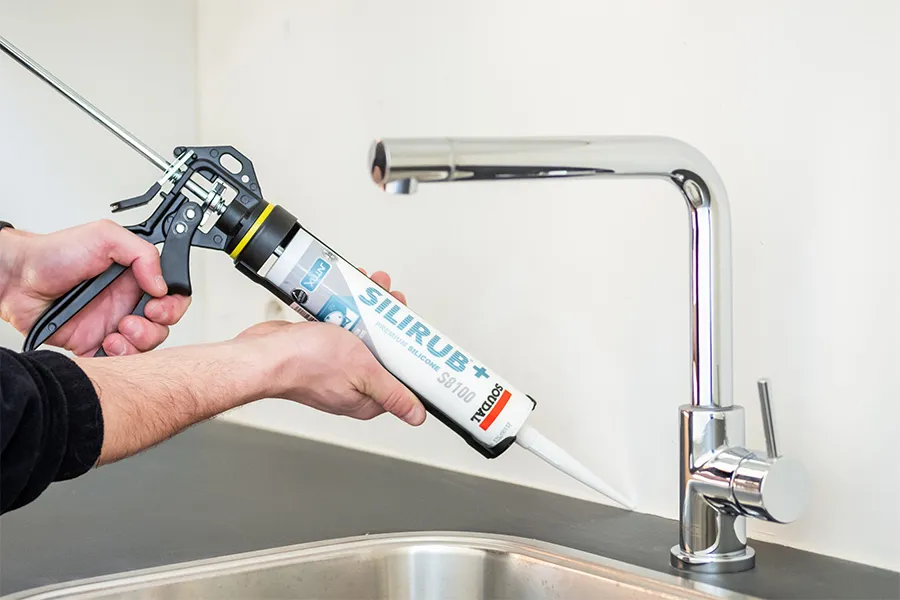
Silirub+ S8100 is also part of the Sanitair Premium range. Its properties are comparable to those of Silirub 2S, but it has a slightly firmer texture and improved adhesion to aluminium and painted surfaces. Silirub+ S8100 offers particularly good adhesion to aluminium and painted materials, making it the ideal sanitary sealant for joints between a bathroom wall and a bath or shower tray, as well as for joints in most kitchens and between most floors and skirting boards in wet areas. Silirub+ S8100 is available in a more transparent version and in more than 25 colours.
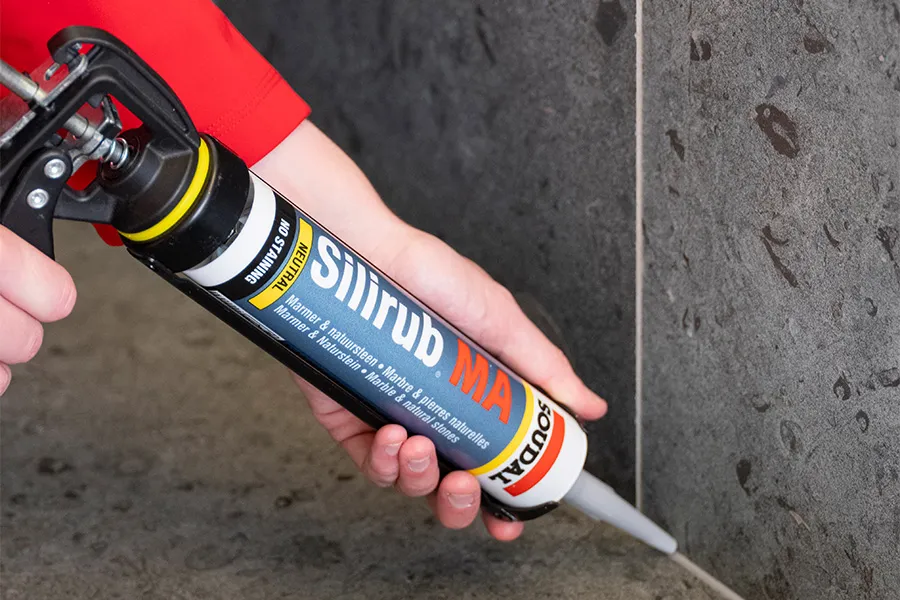
Within the Sanitair Premium range, Silirub MA was developed specifically for natural stone such as marble and bluestone, which is now a popular choice in bathrooms. Standard sealants can cause staining in natural stone. Silirub MA is available in around ten colours, allowing for an aesthetically refined, professional finish on surfaces made from a range of natural stones in wet areas.
For anyone looking for a sanitary sealant for joints in natural stone surfaces that feels firmer during application and is therefore easier to handle, Silirub+ S8800 is the solution in the premium S range. This sealant is available not only in a wide palette of ten shades, but also in several matt finishes, which are increasingly popular in modern interiors.
Finally, Soudal’s Sanitair Premium range also includes Silirub Cleanroom, a neutral sanitary silicone sealant for use in cold rooms, cleanrooms, commercial kitchens, hospitals and laboratories. Silirub Cleanroom stands out for its even greater resistance to bacteria, as demonstrated by various labels and certificates.
Apply correctly and maintain properly
According to Soudal, choosing the right sanitary sealant for each job is important, but the application method also requires particular attention. When sealing the joints between a bath and other bathroom surfaces, for example, it is important to fill the bath halfway first. This means the joint is at ‘half height’ while the sealant is applied and cures, helping to prevent excessive stress caused by the joint’s expansion and contraction.
Soudal also stresses the importance of maintaining sanitary sealant properly. In practical terms, the manufacturer recommends ensuring good air circulation in the room and cleaning the sealed joints regularly with neutral or alkaline cleaning products. This removes not only bacteria, but also soap residue and skin flakes, which provide a breeding ground for mould.
One final point: as durable as the sealant is, so too is the range. Next year, the Silirub range will celebrate its fiftieth anniversary, and Soudal can look back with pride on half a century of continuously refining its sanitary silicone sealants. Quality never goes out of fashion.
Een zakelijke vraag aan Soudal? Get in touch
Companies in this story

Keep following this
Get an email when a new story is published. No account needed.
- ThemeSafe and efficient water use
- SubjectProduct information
- CompanySoudal