











Problems with water softening
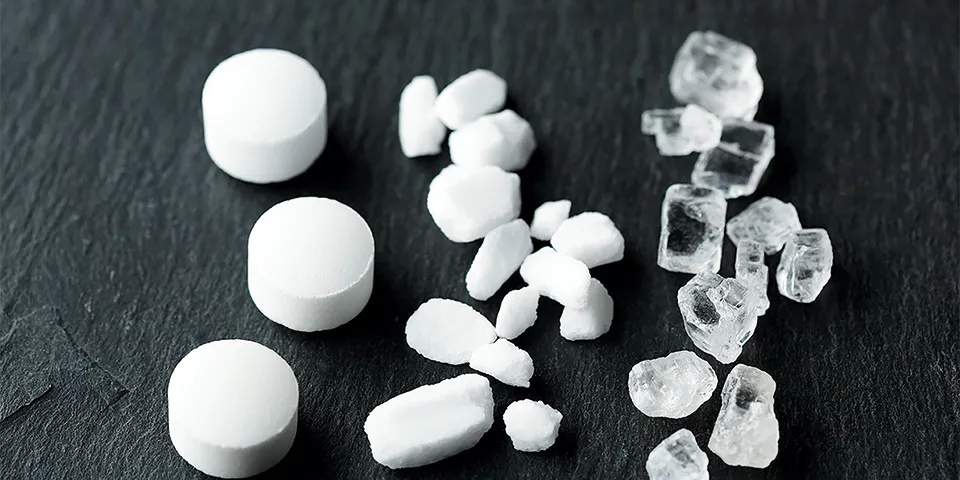
More and more people are now aware of the drawbacks of using water that is too…
often caused by low-quality salt
More and more people are now aware of the drawbacks of using water with excessive hardness. The growing number of water softeners in residential, commercial and industrial settings is the clearest evidence of this. However, the importance of salt quality is often still underestimated. A low-quality, cheap product can lead to increased salt consumption or poor regeneration, making more frequent maintenance of the unit necessary. The resulting economic drawbacks can be avoided by choosing the right raw material.
As the European market leader, esco keeps a close eye on industry trends. Luc Stouten, sales director at esco: “Awareness of the negative effects of excessively hard water is greater today than ever before. We can see this, among other things, from the growing number of enquiries we receive each year from across the market: consumers, architects, the construction and renovation sector, SMEs, industry and trade.”
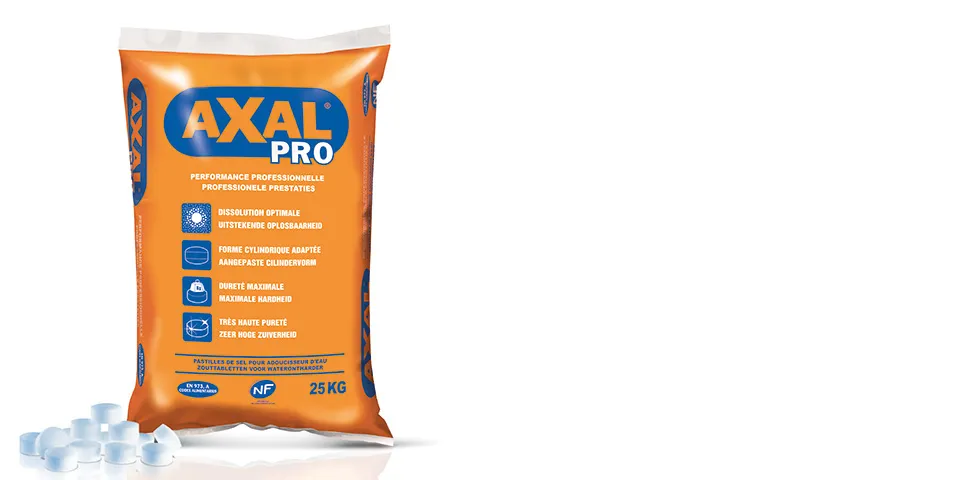
‘The tablets’ high purity and solubility prevent clumping and the formation of salt sludge or crust.’
Extremely pure sodium chloride
According to Stouten, choosing the right salt product is at least as important as choosing the system itself if the water-softening process is to function properly: “It starts with selecting the most suitable product type for the process and system. Options range from tablets or other forms in smaller packs to industrial variants for larger systems, supplied in bulk or otherwise. There is, however, one thing they all have in common: only salt from high-quality sources ensures that the intended results, as defined by experts, are actually achieved. A sodium chloride content of 99.9% is essential.”
Preventing damage
To prevent damage to systems, esco pays close attention to the composition of its products. AXAL® Pro salt tablets therefore clearly exceed the requirements for regeneration salt: “The tablets’ high purity and solubility prevent clumping and the formation of salt sludge or crust. This is the only way to safeguard the resins’ ion-exchange capacity and ensure that every system can operate trouble-free for years,” says Stouten.
Question about this story? Ask your question
Keep following this
Get an email when a new story is published. No account needed.
- ThemeSafe and efficient water use
- SubjectNews







