Save significant amounts of water in public toilets with a flush system without a cistern
Text Wouter PolspoelImage DELABIE
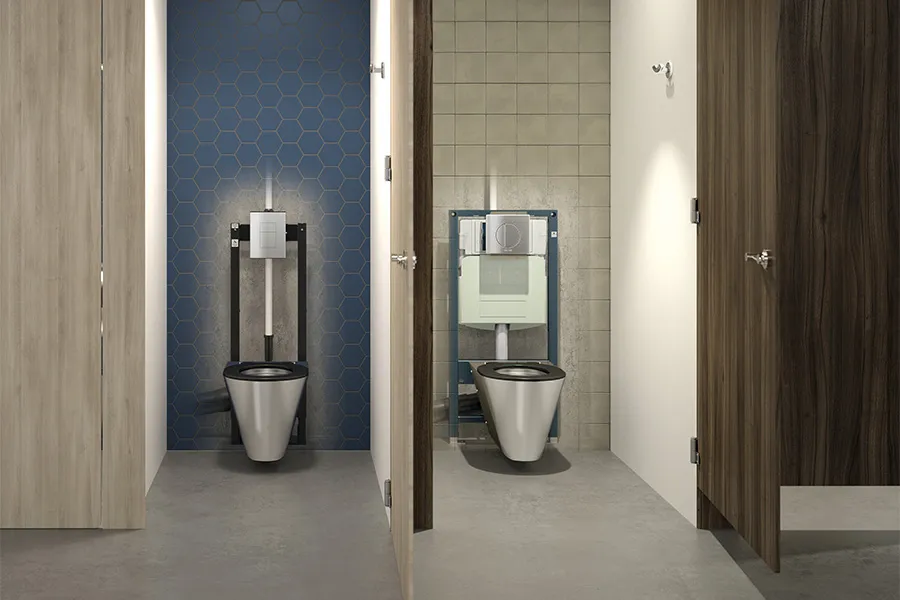
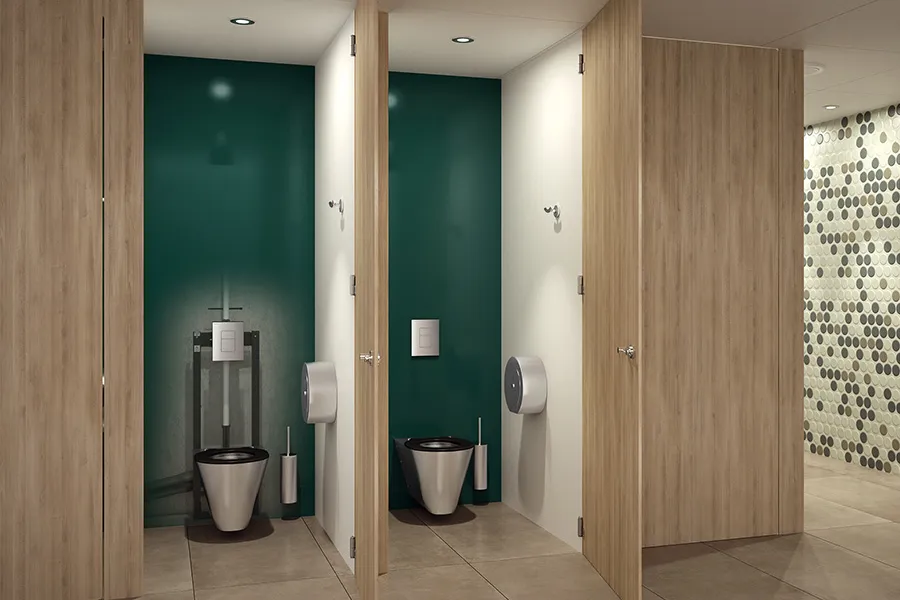
DELABIE’s extensive range also includes several cistern-free toilet flush systems for public buildings. These so-called direct-flush systems use the pressure of the mains water supply to flush the toilet, saving significant amounts of water compared with conventional cistern-based systems. “But these flush systems offer many more benefits,” says Frank Desmet, sales director Benelux at the European market leader in taps and sanitary equipment for public spaces.
“VEKA, the Flemish Energy and Climate Agency, estimates that a leak in a toilet cistern wastes an average of around 600 litres of water a day. Five leaking cisterns in the toilets of, say, a cinema therefore mean that more than a million litres a year go to waste. And there are hundreds of thousands, perhaps even millions, of toilets in Belgium …” Frank Desmet gets straight to the point. “Our direct-flush toilet systems, which work without a cistern, do not leak and therefore help prevent this kind of water loss.”
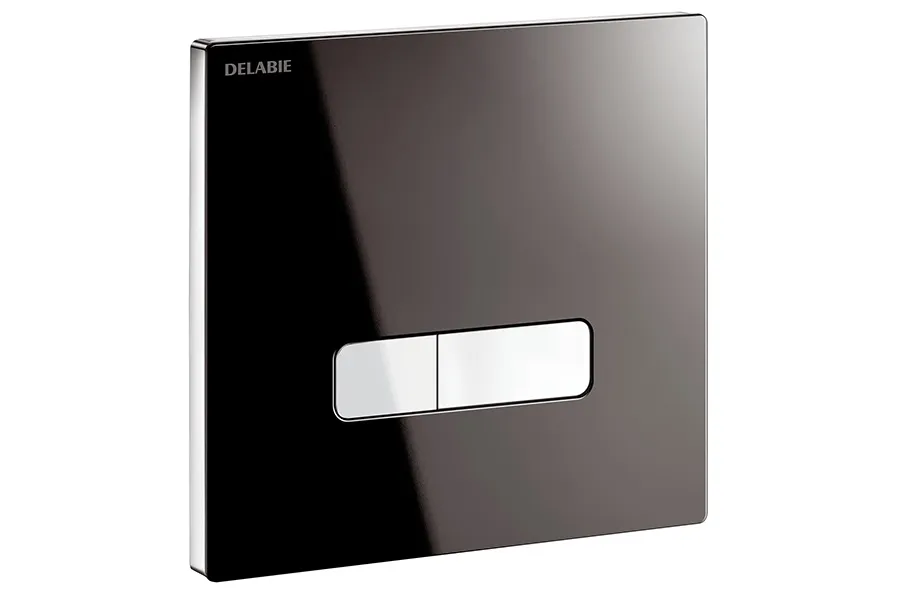
The sales director Benelux explains how DELABIE’s direct-flush toilet systems, called TEMPOMATIC and TEMPOFLUX, work. “When a user flushes a toilet with a cistern, gravity carries water from the cistern into the toilet. In our direct-flush systems, the flushing mechanism is under pressure from the mains water supply. When the user presses the flush button, that pressure forces water into the toilet, much more powerfully than in a cistern-based system.”
No bacterial growth
But saving water and delivering a more powerful flush are not the only unique benefits of direct-flush toilet systems. “They offer many more advantages,” says Frank Desmet. “For instance, flushing is always available. You also do not have to wait before flushing a second time, whereas a conventional toilet cistern takes an average of 45 seconds to refill. In public buildings, water can also sit in a cistern for long periods, for example over weekends or during holiday periods. And we all know that stagnant water is an ideal breeding ground for bacteria.”
With pipes that must have an internal diameter of at least 20 mm, direct-flush systems do require slightly wider supply pipes than cistern-based systems, which use supply pipes of 12 to 15 mm. “But in public buildings, which these systems were designed for, that is not an issue. And contrary to what is often thought, the main supply pipe serving the different direct-flush toilets does not have to be larger than the one for conventional toilets,” stresses Frank Desmet. “Direct-flush systems do require pipes with a dynamic pressure of at least 1 bar, or a flow rate of 1 litre per second. And, as with conventional flush systems in public buildings, when sizing the sanitary pipework, the designer must take the simultaneity factor into account. Since it is unlikely that all sanitary installations, toilets, washbasins, urinals, showers and so on, will be used at the same time, the pipework is sized in relation to an adjusted number of appliances that reflects actual simultaneous use. Designers can use a simple calculation tool on our website for this. In Belgium, a direct-flush system must be installed in accordance with DIN standard 1988-300 and DTU standard 60-11, and in the Netherlands with the so-called Waterwerkbladen.”
Also suitable for renovation projects
Matthias Houwen, an engineer at TUBE Engineering, has plenty of experience with DELABIE’s direct-flush systems. “We use them in office buildings, among other places,” he says. “One major benefit is that the absence of stagnant water prevents not only bacterial growth but also limescale build-up. And we have all experienced a cistern failing to refill. Then there is the greater flushing power, and the fact that no cutting or breaking work is required for repairs or maintenance, which can sometimes be necessary with conventional toilet flush systems. And yes, DELABIE’s direct-flush systems can also be installed in renovation projects where the supply pipework was designed for conventional toilet flush systems. All the projects I have worked on using them have been renovations.”
Finally, what about the cost? “DELABIE’s direct-flush systems are more expensive than conventional flush systems, but the additional cost is quickly recouped, partly through lower maintenance costs, as there are no cistern components to replace,” says Matthias Houwen.
“And, of course, through water savings. The additional cost is paid back within a few months,” adds Frank Desmet.
He concludes: “People deal with leaking taps straight away, but leaking flush systems go unnoticed or, strangely enough, are accepted. That has to change. And there is an alternative, with our direct-flush systems.”
DELABIE devoted a webinar to its cistern-free flush systems.
A business enquiry for Delabie? Get in touch
Companies in this story

Keep following this
Get an email when a new story is published. No account needed.
- ThemeSafe and efficient water use
- SubjectSanitaryware
- CompanyDelabie