











Heat pumps and underfloor heating
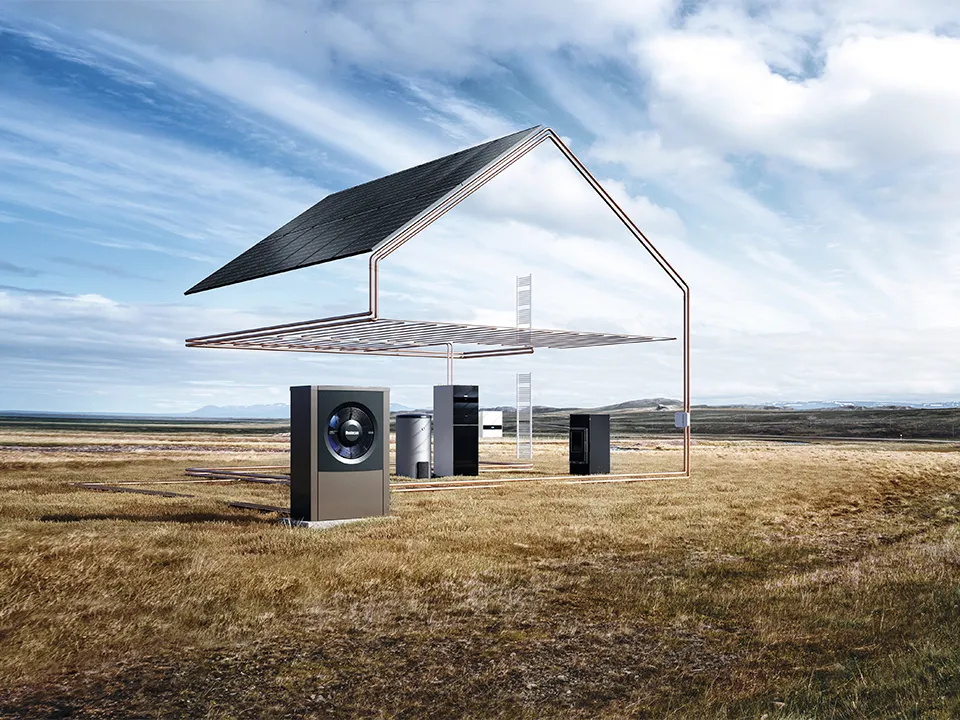
In new-build homes, heat pump systems for heating and domestic hot water production have become standard. Heat pumps, whether ground-to-water or air-to-water systems, work best at the lowest possible design temperature. In most cases, underfloor heating is the ideal solution. Joost Berckx, Product Manager at Bosch Thermotechnology, offers some tips for an efficient and comfortable installation.
A homeowner or installer could opt for a heat pump system with oversized radiators, but to operate them at a low temperature they would need to be three to four times larger than usual. In many cases, that is not feasible. Combining a heat pump with underfloor heating is often an ideal solution. Correctly sized underfloor heating can heat a room at very low design temperatures, usually 35° C or even lower, and can also provide cooling if required.
If you know the heat requirement of a particular room, you can determine exactly how many metres of pipe are needed to meet that demand and what central heating water temperature is required. In most cases, the pipes need to be laid 10cm apart or closer to ensure sufficient heat output. Bosch Thermotechnology has specialists who can carry out these calculations.
Heat demand, flow rate, balancing, floor area
Joost Berckx, Product Manager at Bosch Thermotechnology: “Correct sizing and balancing are essential. The installation plan must ensure a specific central heating water flow rate and heating surface area for each room. Otherwise, the different rooms in the home will be underheated or overheated. To balance the system correctly, we need to take the following parameters into account:
- The heat demand of a particular room
- The circulation pump flow rate
- The correct flow and return temperatures (∆T)
- The available floor area?
Choosing the right flooring material
Berckx continues: “It is essential to combine underfloor heating with a suitable flooring material. Laminate and parquet can act as a form of insulation, restricting heat output. Extra heat must therefore be provided to overcome this barrier. This can be achieved by installing more underfloor heating pipework in the room or by raising the design temperature for that particular room, for example to 45° C instead of 35° C. However, this reduces the heat pump’s efficiency and increases energy bills. Stone, epoxy or concrete floors can also distribute heat very pleasantly when combined with underfloor heating.”

The type of heating depends on the room
People often opt for underfloor heating in bedrooms too. However, Berckx advises caution: “In most cases, bedrooms are not actually heated, and it is more comfortable to sleep in a cool room. Correctly sized underfloor heating acts as a buffer, warming up slowly and cooling down just as slowly. In bedrooms, it may therefore be preferable to opt for underfloor heating without too much thermal mass, so that it can heat up and cool down quickly.”
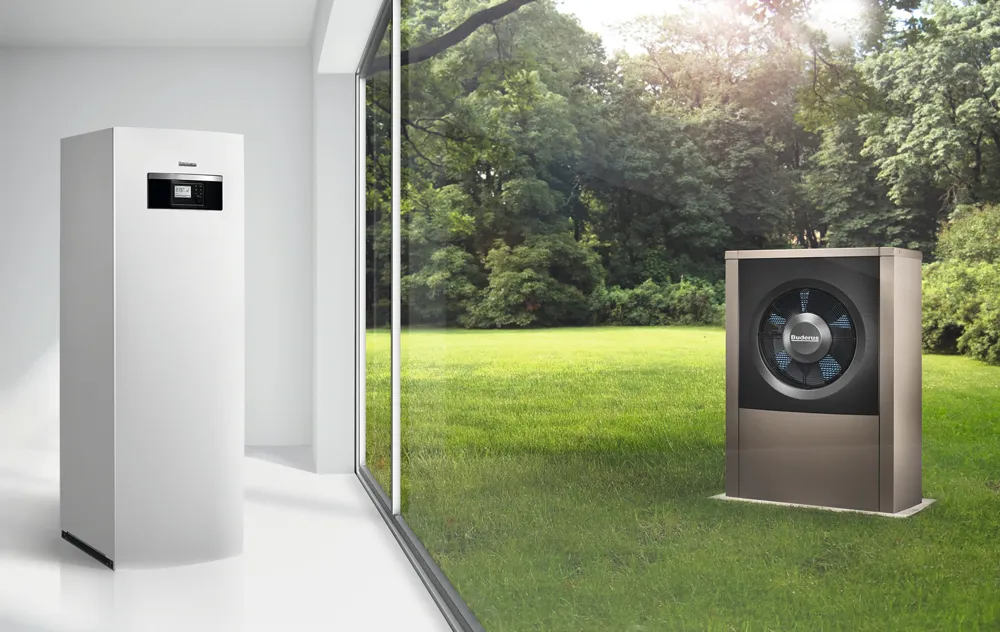
Bosch Thermotechnology offers heat pumps that make it possible to heat a home cost-effectively and cool it if required. “Underfloor heating is the ideal solution for this,” Berckx concludes. “If the underfloor heating covers a sufficiently large area and you take the technical requirements into account, our heat pumps do not need a buffer tank or an additional circulation pump. This has a beneficial effect on installation costs.”
In 2021, Buderus is launching the ‘Don’t be a fossil’ campaign to encourage installers to start investing in heat pumps today.
Question about this story? Ask your question
Companies in this story

Keep following this
Get an email when a new story is published. No account needed.
- ThemeFossil-free heating and cooling
- SubjectHVAC
- CompanyBuderus







