











Demand-controlled HVAC calls for flawless sensor technology
Text Piet AndriesImage Belimo
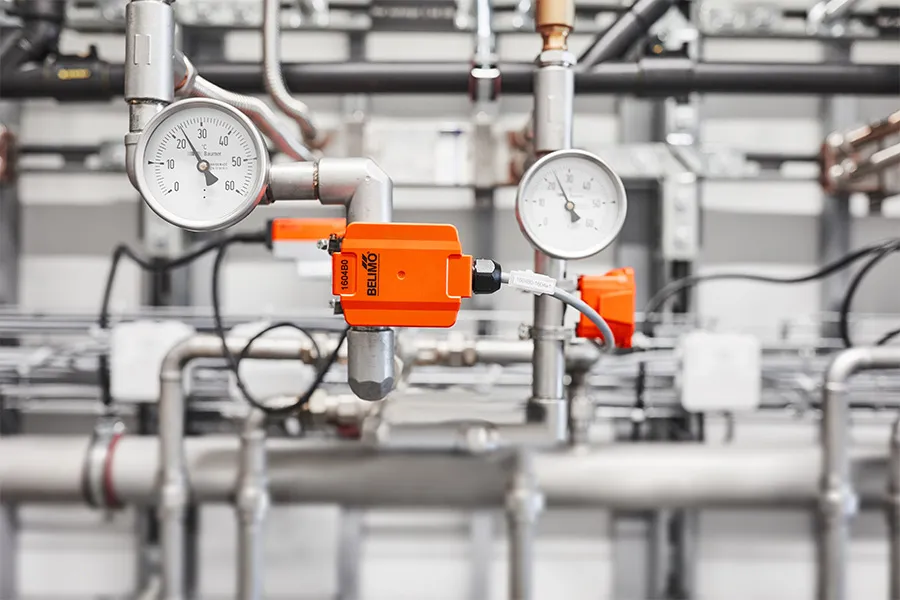
Ever-stricter sustainability requirements and historically high energy prices have made energy efficiency a top priority in building management. But could that come at the expense of comfort at work and at home? “Not if your HVAC system uses highly accurate and reliable sensors,” says Steve Aerts, managing director of Belimo, which develops and manufactures actuators, valves and sensors to efficiently regulate air and water flows in HVAC systems.
Belimo made its name in the construction sector with control technology based on actuators and energy valves. But for the past ten years, the company has also embraced advanced sensor technology, a division that is clearly gaining momentum. Its aim is to give building managers, installers and controls specialists greater control over the real-time monitoring and optimisation of HVAC systems.
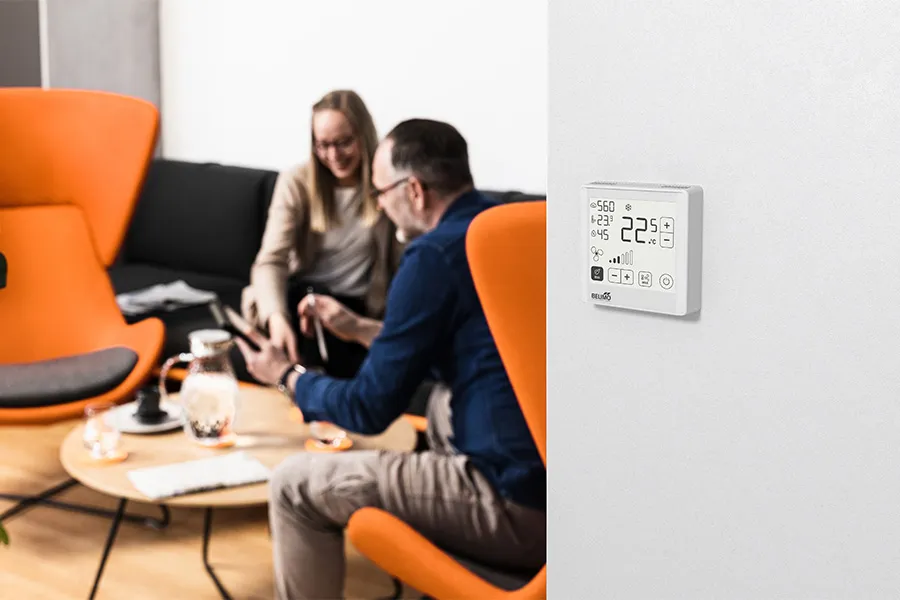
“The growing demand for demand-controlled systems calls for robust data. That requires the best sensors, because the more accurately you measure, the more intelligently you can control,” says Steve Aerts. “Why heat or cool a room that is not in use? Or ventilate it? Sensors provide the data essential for conditioning only the spaces that need it, in other words, those where people are present. A CO₂ sensor, for example, shows in real time how many people are in a room. Needless to say, this high level of accuracy also improves wellbeing at work and at home.”
Six sensor families
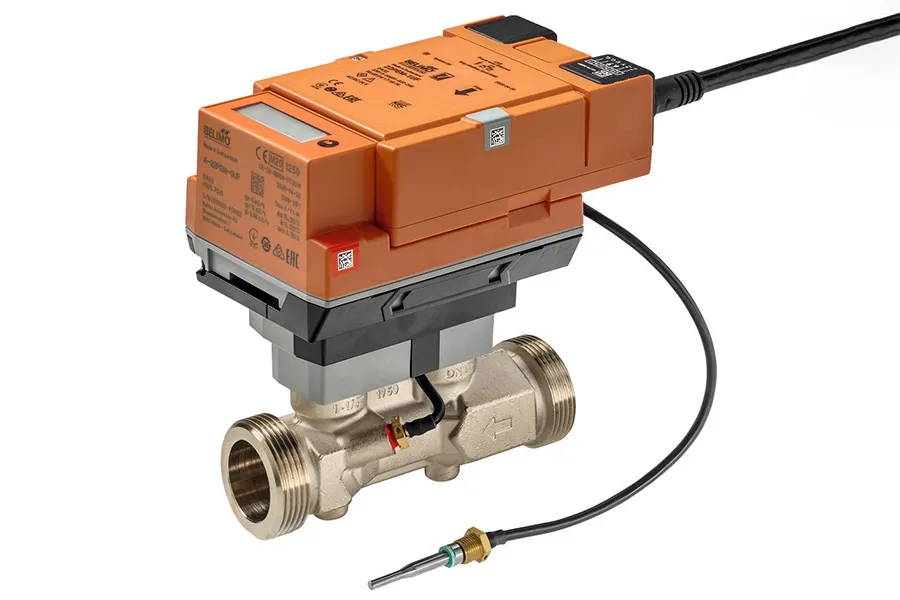
Belimo’s sensors measure six physical parameters: temperature, humidity, pressure, flow, volatile organic compounds and CO₂. Temperature sensors are available in duct, immersion and outdoor versions, and feature stable RTD or NTC elements that maintain their accuracy over time. Humidity sensors often combine temperature and humidity measurement in one housing, making them ideal for monitoring indoor air quality. Pressure sensors help with filter monitoring and pump optimisation by detecting changes in pressure.
For energy management, ultrasonic flow meters and thermal energy meters are of particular technical interest: they measure water flow and energy consumption with great accuracy, without adding pressure loss to the system. Integrated calculators convert the data directly into clear kWh figures for energy audits or billing. “Then there are the CO₂ sensors, which continuously calibrate themselves thanks to our Dual Beam technology,” Steve Aerts continues. “They are ideal for 24/7 applications such as hospitals, where reliability is vital.” As the name suggests, Dual Beam uses two infrared frequencies, one for calibration and one for measurement, so the sensor continually checks itself for deviations.
Straightforward installation
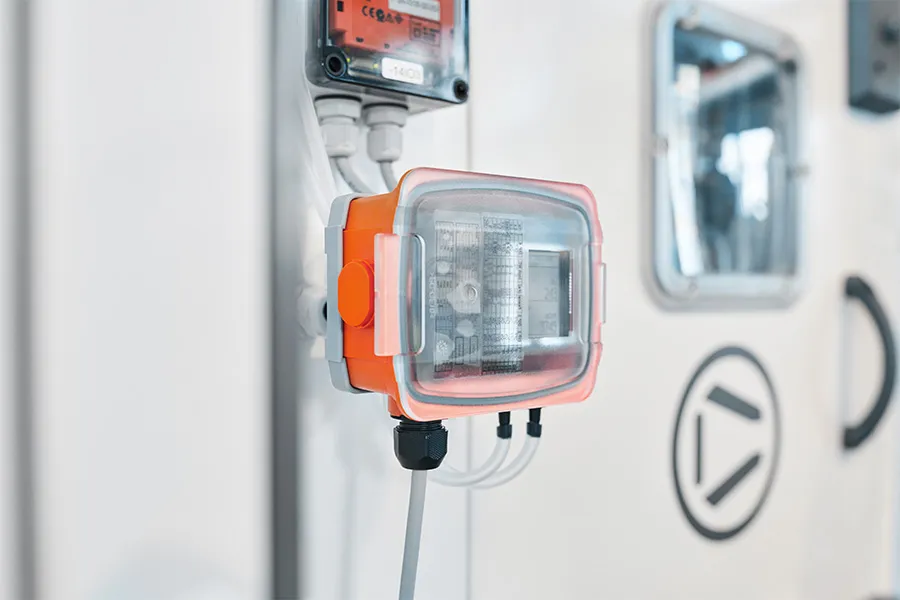
The technical quality of the sensing elements goes hand in hand with straightforward installation. A removable mounting plate that doubles as a drilling template, a snap-on cover and push-in terminals make tools virtually unnecessary. The sensors are also deliberately made slightly larger to make them easier to handle on site. “Belimo tests its sensors in so-called torture rooms as well as at the factory. As well as being UV-resistant, they meet IP65 and NEMA 4X standards, making them suitable for damp environments,” says Steve Aerts. “Add five years’ warranty and you can be confident there won’t be any unpleasant surprises.”
In terms of communication, the sensors are compatible with the main open protocols, such as BACnet MS/TP and Modbus RTU, while traditional analogue outputs are also available. Installers can therefore upgrade both new and older HVAC systems without major work. “That makes the move to a smart building much easier, including for renovation projects,” says Steve Aerts.
A single closed control loop
Finally, Belimo’s extensive ecosystem makes it possible to choose sensors integrated into actuators, which can be monitored and adjusted remotely via the cloud if required. One major advantage is combining measurement and control in a single closed loop. A differential pressure sensor, for example, can directly adjust the flow rate of an energy valve, helping pumps run more efficiently while enabling the system not only to save energy but also to detect faults at an early stage.
Een zakelijke vraag aan BELIMO Belgium bv? Get in touch
Companies in this story

Keep following this
Get an email when a new story is published. No account needed.
- SubjectHVAC
- CompanyBELIMO Belgium bv







