Heat pumps: what are they, what types are there and why use them?
Text Wouter PolspoelImage Pixabay
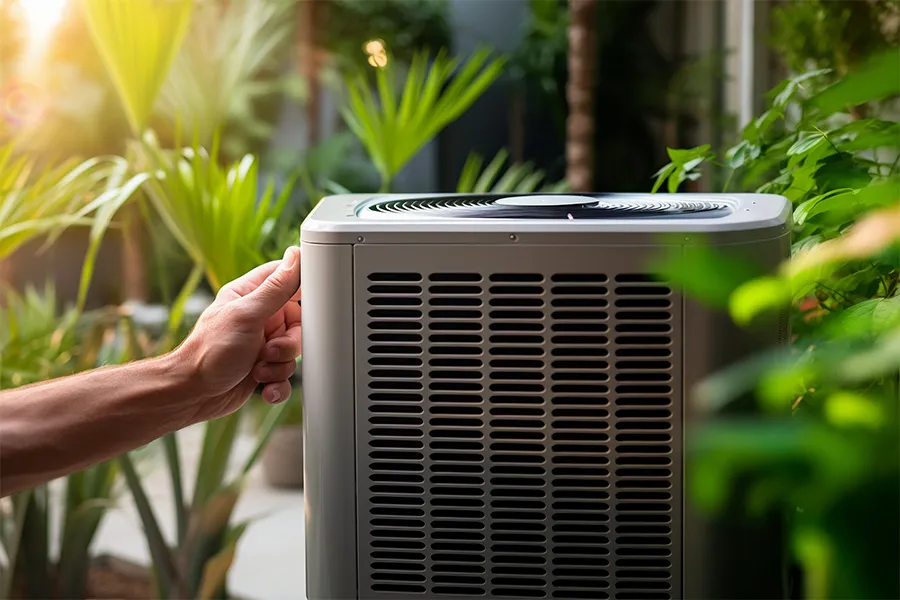
Anyone serious about building without fossil fuels cannot ignore heat pumps. After all, heating and cooling still account for the largest share of energy use in buildings. Yet many construction professionals and end users remain unclear about them. What are the main types used today? Where do the benefits lie? And how does installing a heat pump differ from installing a fossil-fuel heating or cooling system? Time for a clear overview.
Heat pumps, still a niche solution ten years ago, are now firmly established in the construction industry. In new-build projects, choosing a heat pump is now more the rule than the exception, and they are also increasingly used in renovation projects, particularly where buildings are well insulated and suitable for low-temperature heating. The traditional gas boiler is gradually heading for the museum.
The trend is driven by regulation, such as EPB requirements and subsidy schemes, and by societal pressure to become more sustainable. It is also being fuelled by technological advances: today’s heat pumps are more powerful, quieter, smarter and more compact than they were five years ago. They have also become cheaper, although capital costs and payback periods remain considerations.
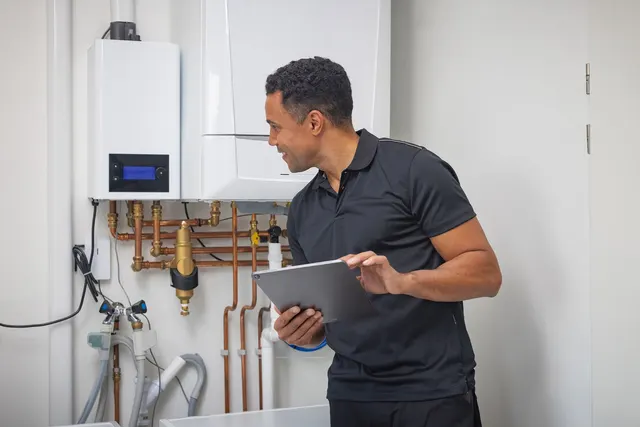
The arrival of heat pumps has required installers to adapt. This is not only because their operation differs from that of fossil-fuel systems, but also because, unlike their fossil-fuel equivalents, heat pumps are not standalone appliances. They are part of an integrated energy system because they run on electricity. This calls for systems thinking: how do the heat source, heat emitters, controls and user behaviour relate to one another?
Three main types
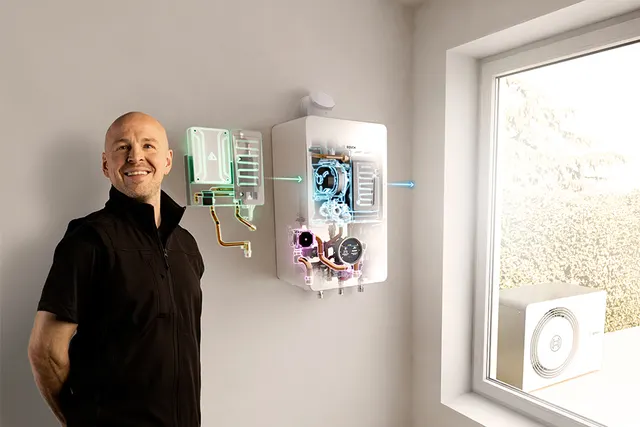
Heat pumps use a compressor and refrigerant to extract heat from a source and use it to heat a building or domestic hot water. The choice of source determines efficiency, installation complexity and potential applications. Three types dominate the market.
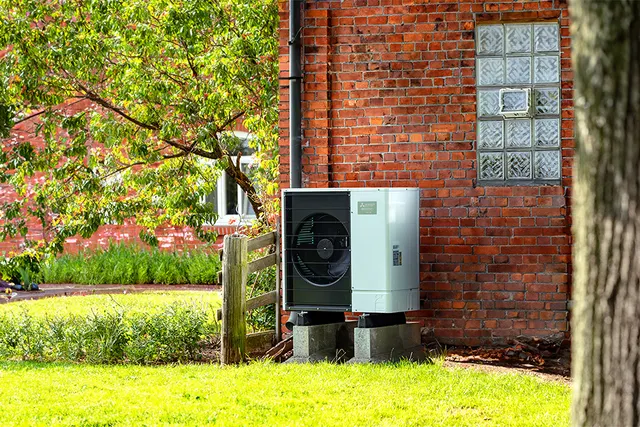
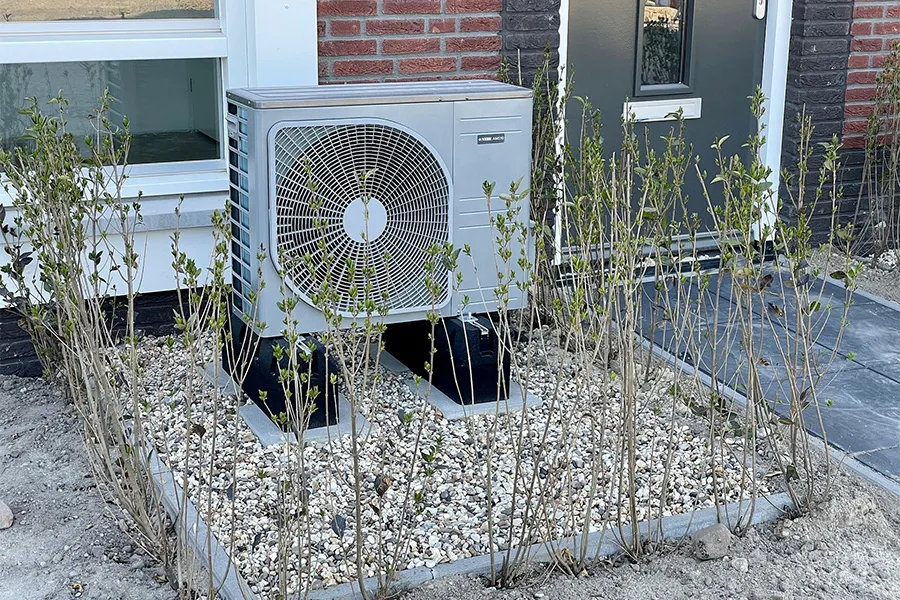
The first is the air-to-water heat pump. It uses electricity to extract heat from the outdoor air and transfer it to heating or domestic hot water. Its relatively low installation cost makes it by far the most popular system in residential applications. The downside is that efficiency falls and electricity consumption rises when outdoor temperatures are low. Some units also become noisier in these conditions. An air-to-water heat pump can also provide active cooling. In this mode, the system reverses its operation: in other words, the heat pump extracts heat from the building and releases it into the outdoor air.
The second type is the geothermal heat pump, which uses the constant temperature of the ground as its heat source. This ensures high seasonal efficiency, measured by the Seasonal Coefficient of Performance (SCOP), and makes the system highly reliable and quiet. The disadvantages are its higher cost, the need for boreholes and technical requirements relating to permits and ground conditions. A geothermal heat pump can also provide what is known as passive cooling, by circulating chilled water through the pipework.
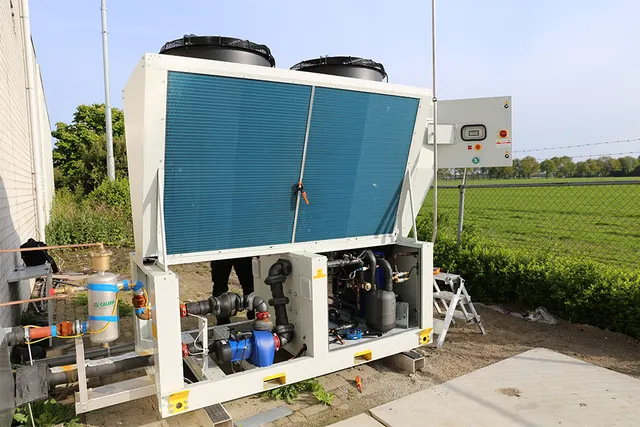
Finally, there is the water-to-water heat pump, which extracts heat from groundwater or surface water. This type of heat pump is highly efficient, but requires careful design and rigorous management of permits. It is therefore mainly found in large projects and non-residential applications. A water-to-water heat pump can also cool a building, both actively and passively.
Hybrid heat pump
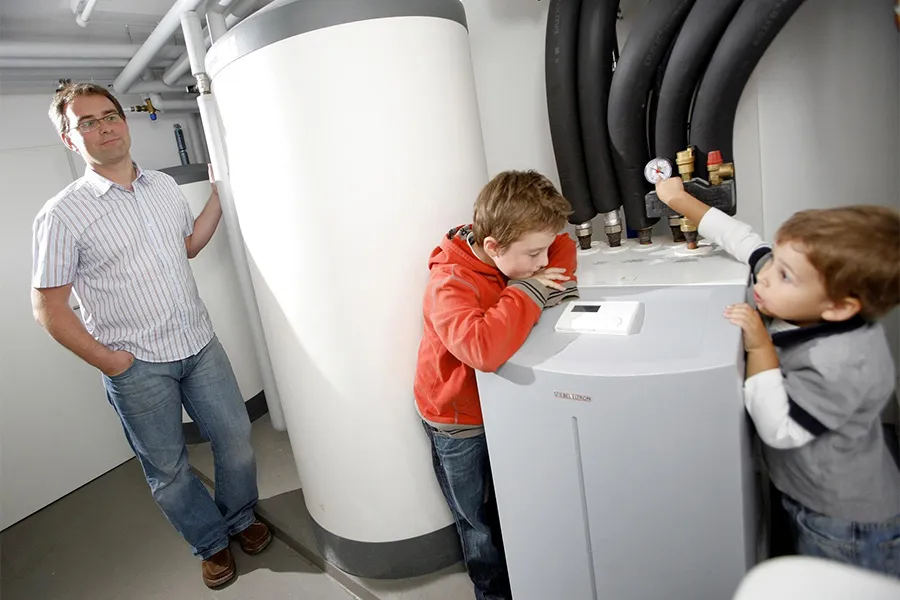
There is also a fourth type, the hybrid heat pump, which is common particularly in the renovation market. However, a hybrid heat pump still runs partly on fossil fuels. It combines an electric heat pump with a gas condensing boiler, which automatically provides additional heat when demand is high, for example on cold days.
Why is this needed? Older buildings are often still fitted with traditional radiators, which require high temperatures. Heat pumps, however, work best with low-temperature heat emitters, such as low-temperature convectors and underfloor heating. The hybrid system therefore allows older buildings to switch partly to a more sustainable heating system without major alterations.
Cooling is not normally available with a hybrid heat pump.
Sizing: easy to get wrong in either direction
A common mistake is to oversize heat pumps. That seems like the safe option: better too big than too small, right? But an oversized heat pump cycles on and off too frequently, making it less efficient and causing it to wear out faster. It also requires unnecessary buffer capacity, and the extra cost cannot be justified.
Conversely, insufficient capacity can lead to comfort problems. Domestic hot water in particular requires careful consideration: how many peaks in demand are there? Are there several bathrooms? Are smart water heaters being used?
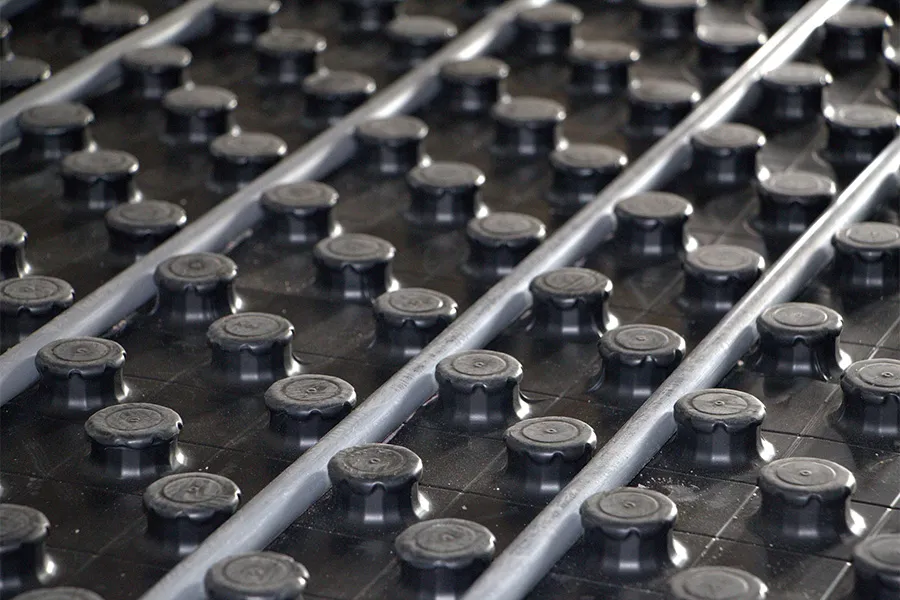
Correct sizing is therefore crucial. This means taking account of the building’s heat loss, the desired heat emitter system, whether underfloor heating, radiators or convectors, the users’ profiles and how the heat pump will work alongside other technologies, such as solar panels or storage systems.
Smart controls: the key to efficiency
A heat pump is truly smart only when it runs at the most suitable time. That is why controls based on weather forecasts, dynamic energy tariffs or grid load are becoming increasingly important. Weather-compensated controls respond to the outdoor temperature, while demand-led controls respond to comfort requirements in each zone. Tariff-based controls run the heat pump when electricity is cheap or renewable, and grid-responsive controls prevent overload, for example by delaying or staggering start-up.
Installers who implement such controls deliver not only energy savings, but also user comfort and a more grid-friendly system.
Impact on the electricity grid
A heat pump is an electrical appliance. Widespread adoption increases the load on the distribution grid, particularly if many units switch on at the same time. Grid operators recognise the risk and are therefore experimenting with measures such as capacity limits, which restrict the amount of electricity consumers can draw at a given time, and off-peak tariffs, which encourage them to use electricity when the grid is under less strain.
This makes combining heat pumps with energy storage systems increasingly relevant. Options include thermal buffers, such as a well-insulated hot water cylinder that can temporarily store surplus solar electricity as hot water, home batteries and demand management to prevent all heat pumps from running at once.
For installers, this means thinking about load shifting, storage strategies and integration with smart grids.
Opportunities for installers
The shift to heat pumps offers opportunities for installers willing to invest in training, consultancy and systems expertise. Those who limit themselves to simply installing an appliance risk becoming irrelevant in a few years. Tomorrow’s customer wants more: a heat pump that adapts to their consumption, a system that communicates with other technologies, and an installation that performs well and saves energy.
Tomorrow’s installer, or indeed today’s, is therefore, to repeat ourselves, less of a product salesperson and more of a systems thinker. They need to develop scenarios, coordinate technologies and understand how heat pumps can be controlled and monitored.
In summary, the heat pump is no miracle cure for the energy transition, but it is a necessary step towards fossil-free heating and cooling. In the right context, with well-insulated buildings, low-temperature heat emitters and smart controls, heat pumps perform extremely well. At the same time, they require designers and installers to adopt a different mindset: think in terms of systems, not appliances. Those who embrace this approach are helping to build a sustainable future while gaining a competitive edge in a rapidly evolving sector.
Question about this story? Ask your question
Keep following this
Get an email when a new story is published. No account needed.
- ThemeFossil-free heating and cooling
- SubjectHeat pumps