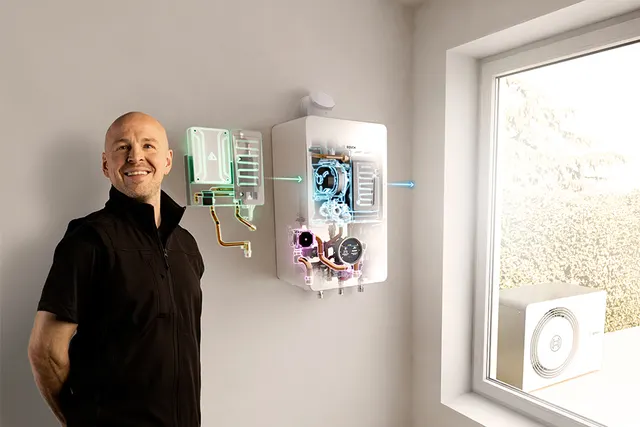
Tim Heymans (Buderus) explores the future of heat pumps in Belgium on Installatie & Bouw De Podcast
Text and images Kris Vandekerckhove
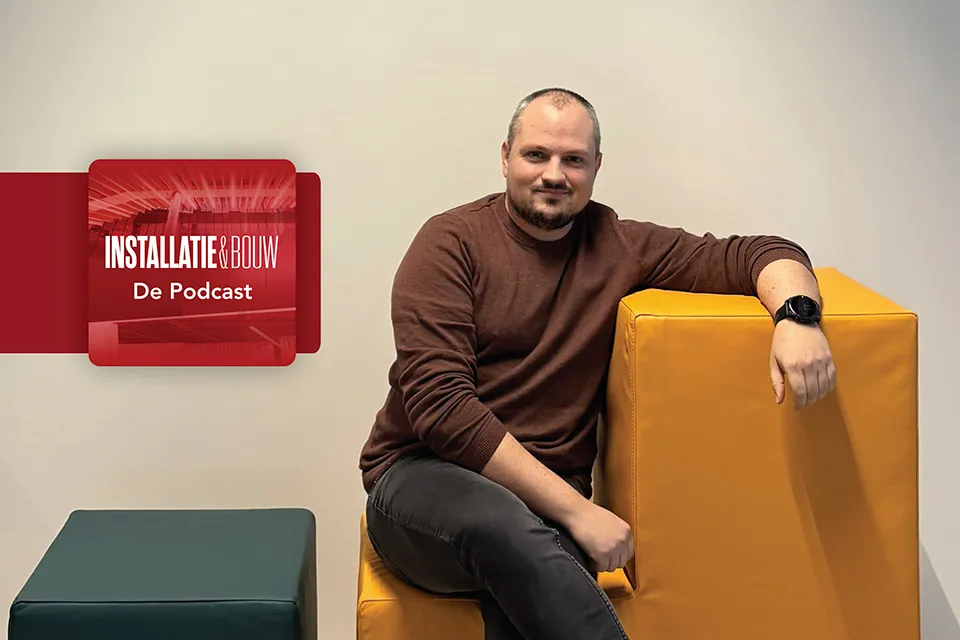
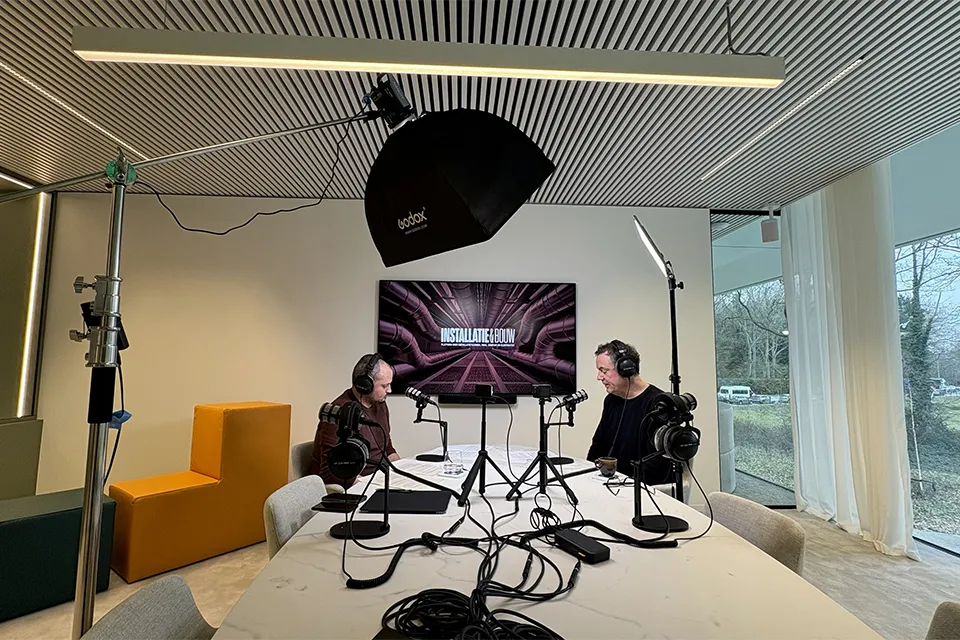
Heat pumps have been technologically mature for years, but are only now getting the right economic framework, with new incentives in Flanders, the introduction of a 6% VAT rate on heat pumps until the end of 2030, and the shift in the price ratio between electricity and gas provided for in the recently proposed federal budget. We discussed this in a recent episode of Installatie & Bouw De Podcast with Tim Heymans, account manager at Buderus, a manufacturer of heat pumps, among other products.
According to Tim Heymans, the impact of the new policy measures (see also article on pages 28-31, ed.) is already visible in the market, although for now this is mainly reflected in interest. It remains to be seen whether this will also lead to actual purchasing decisions. “We are clearly seeing an increase in requests for heat pump quotations, while requests for gas boilers are declining,” he began. “That is a reversal of the trend we saw last year, when many customers still wanted to install a gas boiler quickly before the VAT increase.”
The reduction in VAT to 6% is proving to be a major trigger, but at the same time it is adding complexity. Installers are having to deal with split invoicing, uncertainty about what does and does not qualify for the lower rate, and additional questions from customers. “In practice, we see some installers continuing to invoice everything at 21% as a precaution, because they are unsure of the rules,” said Tim Heymans.
In new-build projects, the situation is clear: fossil fuel heating systems no longer meet the required efficiency standards, making heat pumps the de facto norm. Renovation is more nuanced. Tim Heymans distinguishes between basic and major renovations. “When a boiler suddenly breaks down, people often choose the quickest and cheapest solution. In that case, gas boilers remain attractive. But with major renovations, where insulation, ventilation and heat emitters are also upgraded, we are more often seeing people make the switch to a heat pump.”
Technical feasibility remains key
Although policymakers indicate that a large proportion of the housing stock is technically suitable for heat pumps, in practice a combination of factors often presents obstacles. The level of insulation is crucial: poorly insulated homes require higher-capacity units, which increases the investment cost. Electrical connections are also a factor. “More powerful heat pumps sometimes require a three-phase connection, and upgrading to one is not possible everywhere without reinforcing the supply,” Tim Heymans explained on the podcast.
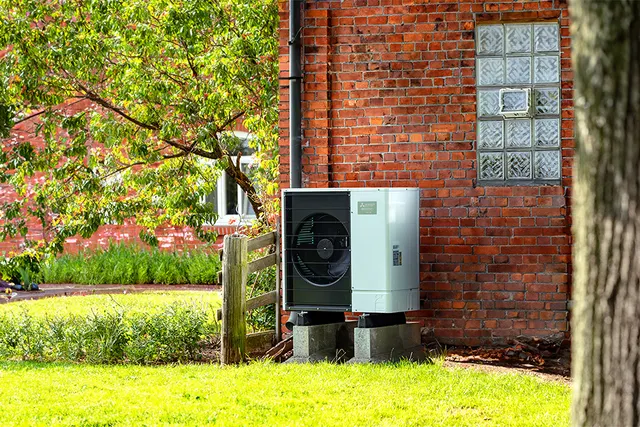
Installation and noise also remain important considerations, especially in urban areas and in terraced houses and apartment buildings. Although modern heat pumps have become significantly quieter, noise regulations and disturbance to neighbours need to be carefully factored into the design.
Flanders leads the way
Buderus sees clear regional differences. Flanders is leading the way, partly thanks to stricter EPB requirements and a better-insulated housing stock. Oil-fired heating remains widespread in Wallonia, where the focus for now is mainly on replacing existing systems rather than electrification. This is also reflected in a different product mix and market dynamic.
The installer's role is becoming more important
As purely economic barriers fall away, the discussion is shifting back from affordability to technology and quality. This is making the installer's role more important again. Buderus is focusing strongly on support, including help with sizing, hydraulic design and pipe diameters, as well as training. Tim Heymans: “Heat pumps operate at lower temperatures and with smaller temperature differences. This calls for different flow rates and adapted pipe diameters. This is often an underestimated risk in renovation projects.”
Misconceptions among end customers
Tim Heymans says installers' knowledge is growing rapidly, but persistent misconceptions remain among end customers, particularly about noise and performance at low outdoor temperatures. “These prejudices come from the past. Modern heat pumps, including the latest models that run on propane, now deliver stable output even at low outdoor temperatures, provided they are correctly sized and commissioned.”
Stability is key on the road to 2030
What will ultimately tip the market? According to Tim Heymans, there is no single factor. “It is the combination of the tax shift, incentives and regulations. Stability is particularly important. Having the VAT reduction confirmed until 2030 finally gives installers and manufacturers a predictable framework to work within.”
The episode of Installatie & Bouw De Podcast featuring Tim Heymans is available on the Installatie & Bouw België website and on the usual streaming platforms, where it can be found under the channel ‘Installatie & Bouw’.
Een zakelijke vraag aan Buderus? Get in touch
Companies in this story

Keep following this
Get an email when a new story is published. No account needed.
- ThemeFossil-free heating and cooling
- SubjectHeat pumps
- CompanyBuderus