The production of a buffer vessel, from start to finish
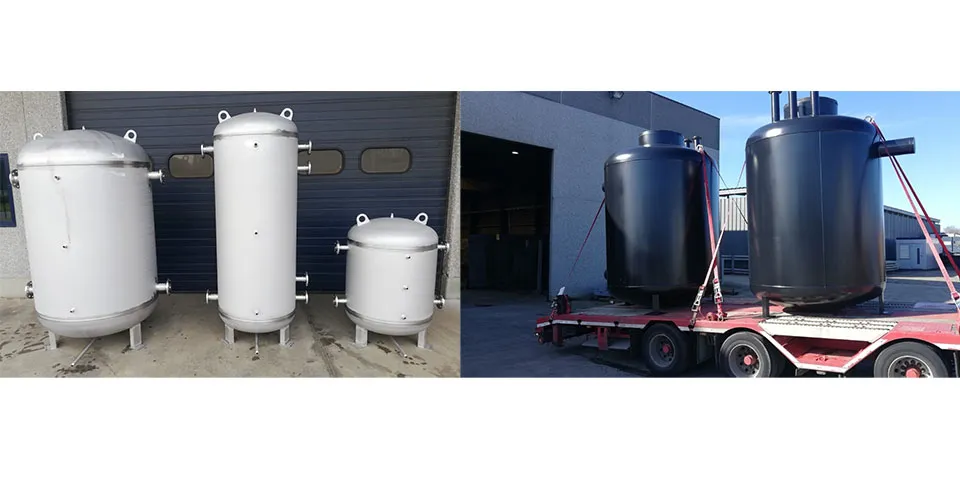
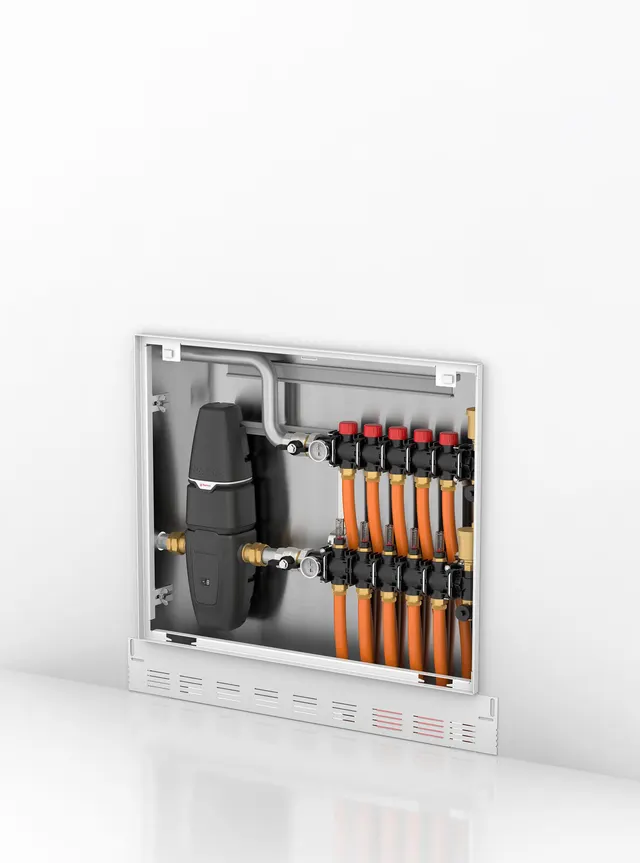
MMT BV manufactures prefabricated HVAC components such as manifolds, low-loss headers and buffer vessels. But how is a buffer vessel made? MMT explains all the steps involved in the process.
Text and images MMT
Most buffer vessels are manufactured in accordance with PED 2014/68/EU, Article 4(3), sound engineering practice. These vessels usually form part of a boiler room, which MMT can also fully prefabricate in its workshop. A skid-mounted assembly for a complete boiler room is also an option.
A wide range of options
MMT BV offers a very wide range of options. Its standard range of buffer vessels has capacities from 25L to 6000L, with diameters ranging from 220mm to 1600mm. MMT stocks all the raw materials needed to manufacture them, including sheet metal, dished ends, flanges, inspection hatches and support feet. This means customers can order a buffer vessel to their requirements, with a relatively short lead time. Outside this standard range, MMT has already manufactured vessels with capacities of up to 100,000L and diameters of up to 3600mm. These are available with longer lead times. But what does the full process involve? First, the customer sends MMT a request for quotation. This can be a complete tender dossier, in which MMT uses the hydraulic schematic and specification to determine what needs to be offered.
The request for quotation may also include a sketch or drawing showing what the customer has in mind. MMT then prepares a quotation based on the requested specifications, with any different options listed separately if required. Once the customer accepts the quotation, MMT prepares a design drawing of the buffer vessel. This is submitted to the customer, who can check that it will fit into their installation and that all the connections will be in the right positions.
Extensive machine park
Once the customer has approved the drawing, MMT can start production. A wide range of machinery is used to manufacture the buffer vessel. Production is followed by a pressure test and visual inspection. The vessel can be finished with a primer or a two-component coating. It can also be galvanised. Stainless steel buffer vessels are pickled and passivated.
The buffer vessel is then ready for delivery to the site. If required, MMT can provide a crane truck to position it.
Question about this story? Ask your question
Keep following this
Get an email when a new story is published. No account needed.
- SubjectProduct information