Aqua-C-Energy makes complex (chemical) water treatment unnecessary
A complete concept creates synergy between water and energy
It is often said that the approach to water quality in a closed heating or cooling system is shifting from curative to proactive. In most cases, that is indeed so. But in its more than 12 years of experience, Aqualisys® has found that this approach is still not being implemented in full too often …
When a consultancy specifies and imposes requirements on the contractor/installer, these are often descriptions of equipment. At best, a procedure is also described, for example how to flush the system or what treatment to use to achieve the required fill-water quality. The link with what needs to happen afterwards, and how this water quality should then be monitored and stabilised, is usually missing. As a result, there is no synergy across the procedure as a whole. This is even more the case when the system is handed over to the end user/building owner, and then to the person responsible for system maintenance.
A systemic and systematic approach
Eric Ladang MSc, Managing Director of Aqualisys®: “It is important, however, to set out procedures for the entire life cycle of the HVAC system right from the start, to ensure the installation’s durability and energy efficiency. Aqualisys® therefore advocates a systemic and systematic approach. This applies to curative treatment, but also to taking a proactive approach to preventing problems and ensuring lifelong monitoring.”
New concept: Aqua-C-Energy
Aqualisys® has long included all these process elements in its work, but is now bringing them together as one coherent whole: a complete concept that creates synergy between the transport medium (water) and what it transports (heat or cooling, in other words energy). The company has named the concept “Aqua-C-Energy”. The logo represents various aspects of both the systems and the concepts applied. The green border signifies an ecologically responsible closed HVAC system, as well as a complete concept covering design, construction, commissioning, maintenance and monitoring throughout the system’s entire service life. At its centre is the prominent “C with the green drop”, representing several aspects of the concept.
Monitoring using a range of sensors
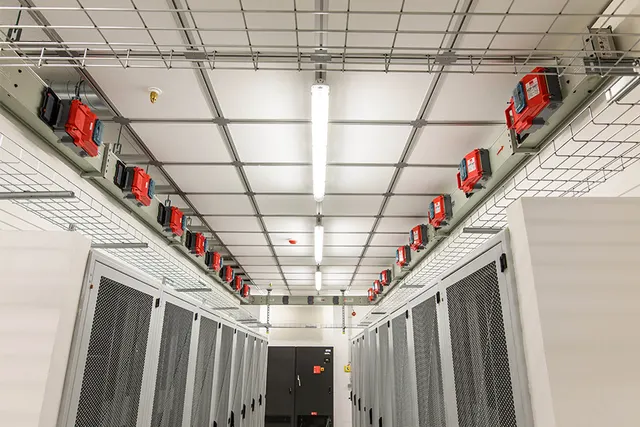
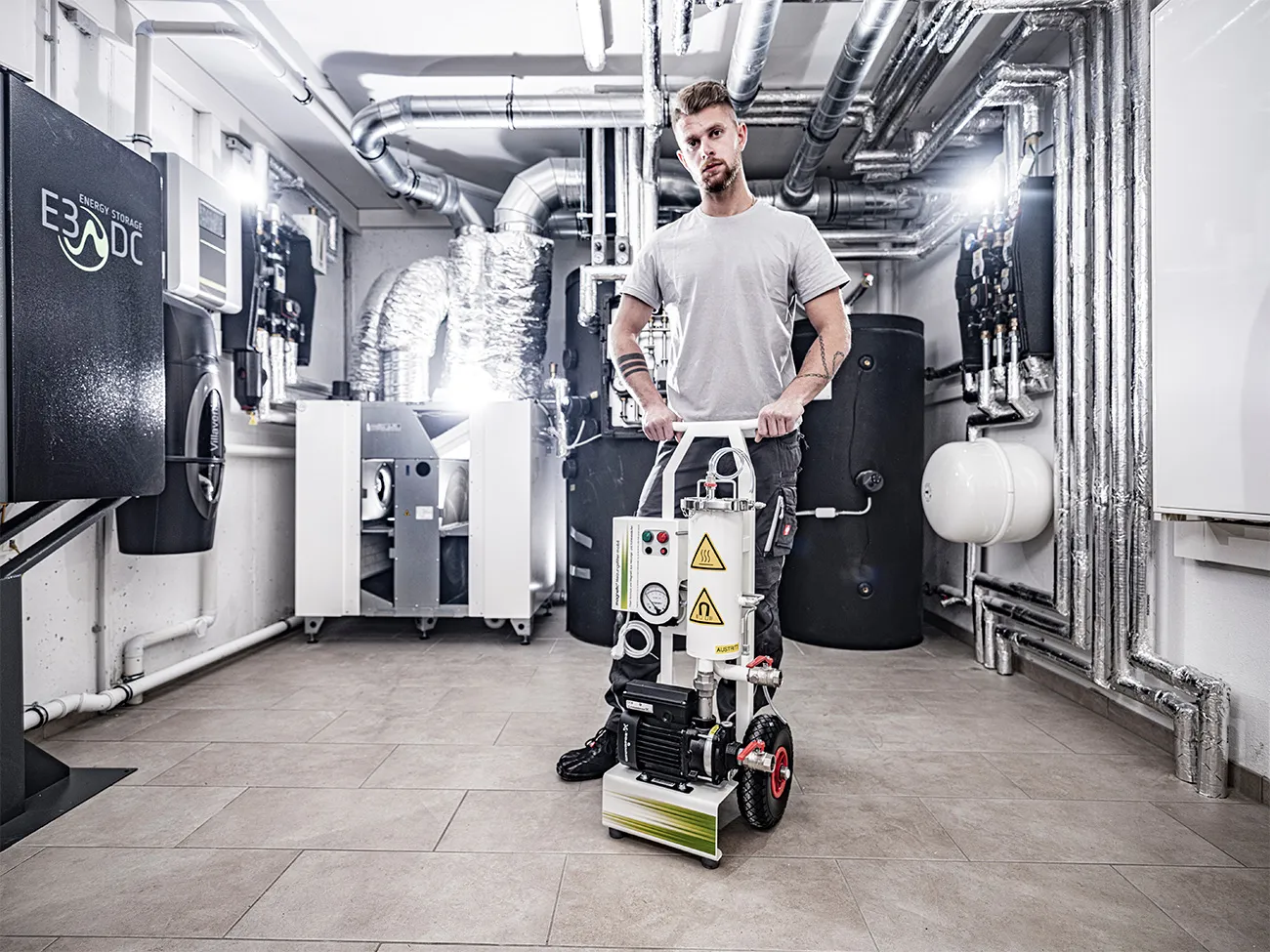
Eric Ladang MSc: “For a new-build project, the designer can use the full procedure, starting with a thorough system flush, filling with demineralised water, interim analyses, further optimisation of system water quality and monitoring through to final commissioning. From then on, an agreement with the end user or maintenance company provides for ongoing monitoring of system performance, which determines the quality of the energy transport medium. This is done using a range of sensors, primarily corrosion sensors, potentially supplemented by pressure, pH, conductivity, anodic current, etc.”
“For existing systems, the procedure usually starts with a monitoring audit, during which system performance is mapped over a period of 2-3 months, supplemented by water sample analyses and a visual system inspection.”
Making the system resilient
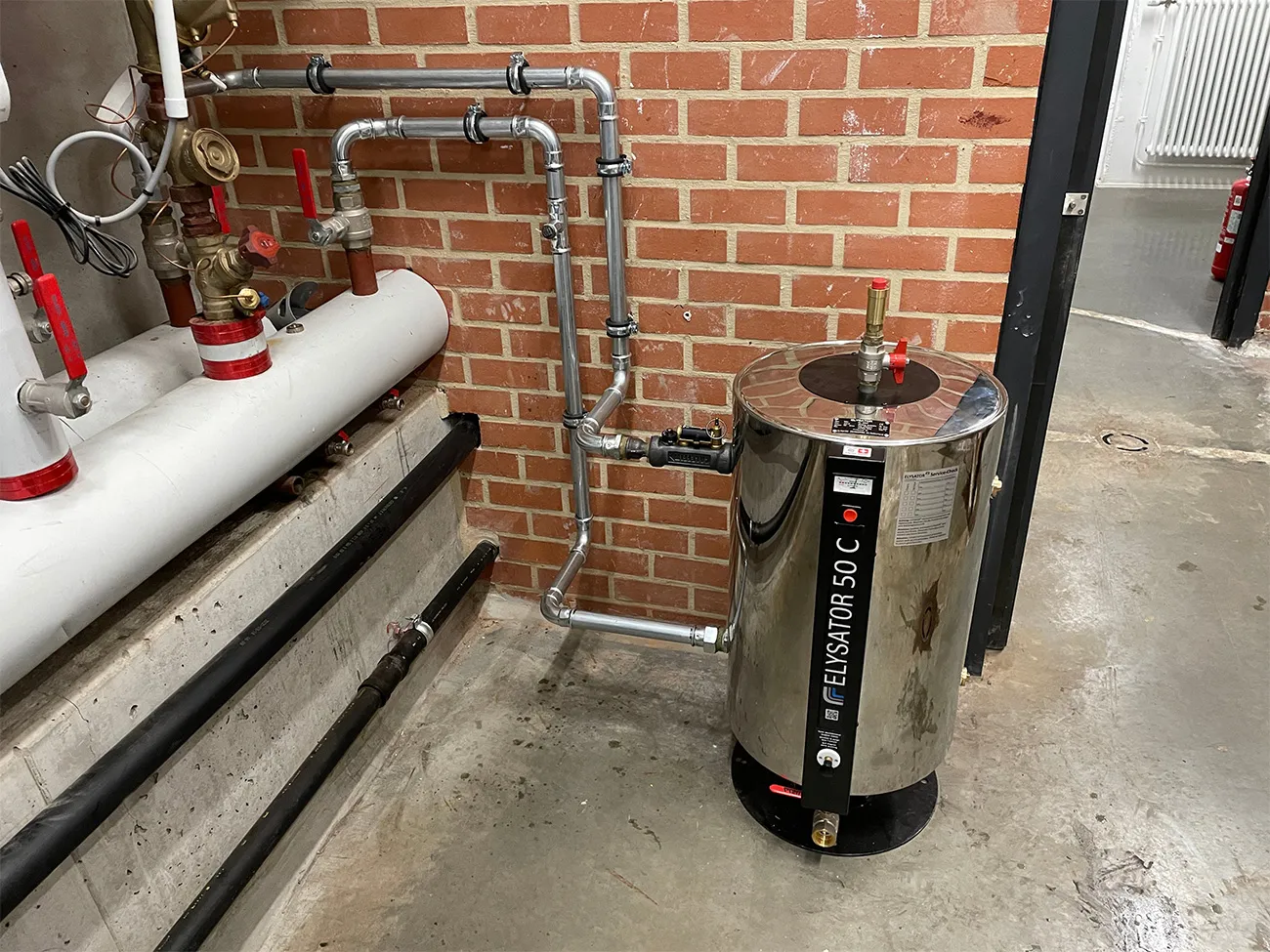
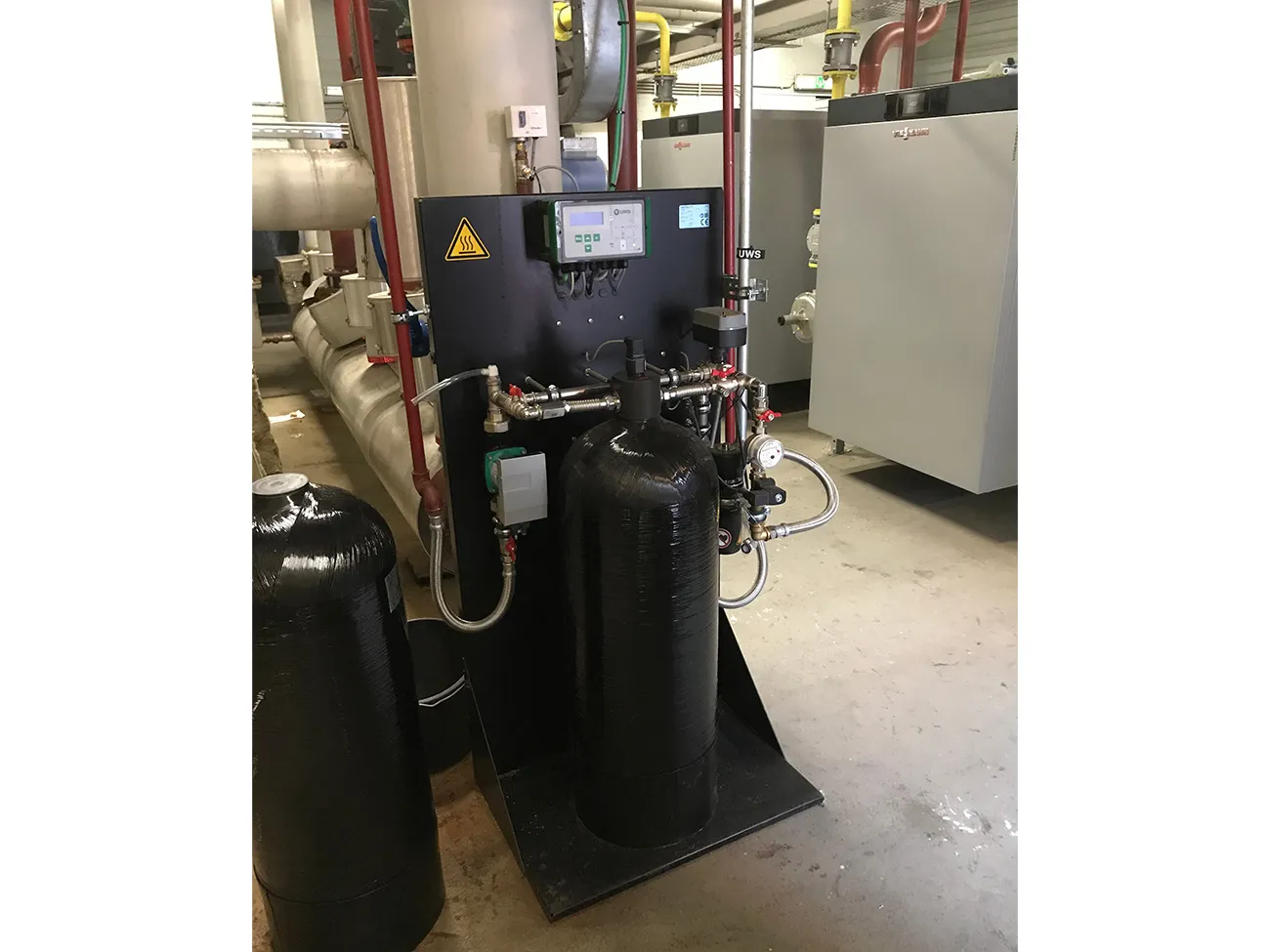
An important part of the Aqua-C-Energy complete concept is also making the system itself resilient to deposits, in other words, building a kind of immunity to these phenomena. This is achieved, on the one hand, by using demineralised water or bypass demineralisation to prevent hardness deposits and biofilm growth and, on the other, by installing anodic protection, which ensures that any corrosion reactions are concentrated in one place while a protective oxide layer forms on the rest of the system.
Eric Ladang MSc: “In other words, we make sure the installation itself maintains the quality of the energy transport medium at a stable level, without the need for complex (chemical) water treatment. Just as a healthy body in humans maintains good blood values.”
Delivering a real return over a period of 20-30 years
With the new Aqua-C-Energy complete concept, Aqualisys® wants to offer a helping hand to every designer, installer, maintenance company and end user who wants to achieve a real return on their investment, whether in an existing or a new-build system, over a period of 20-30 years, without the risk of unexpected premature failure or replacement, or reduced performance due to deteriorating transport-medium quality.
Question about this story? Ask your question
Keep following this
Get an email when a new story is published. No account needed.
- ThemeSafe and efficient water use
- SubjectYearbook