











Voice alarm systems: more than just a fire alarm
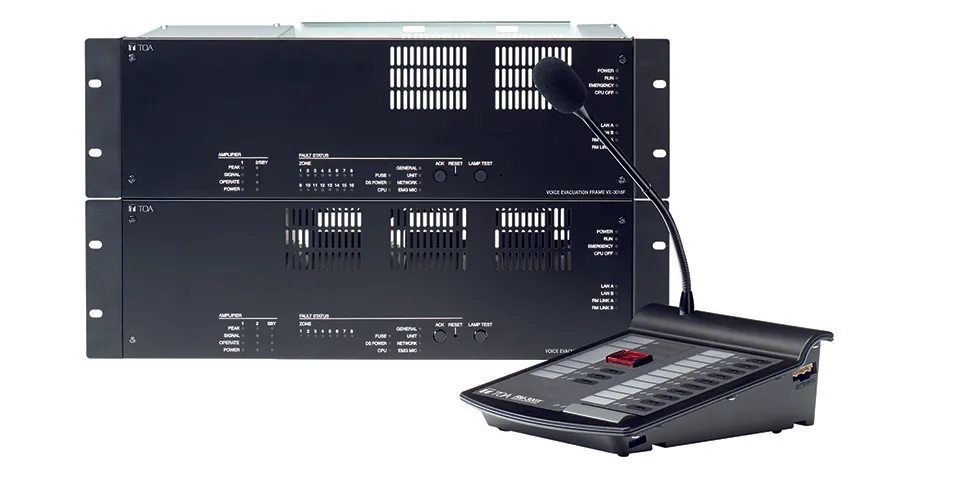
More and more public buildings are switching from evacuation systems based on sirens to so-called ‘voice alarm systems’, or expanding their existing systems to include them. A new series of standards provides guidance on their selection, technical requirements and management.
A voice alarm system is designed to provide building occupants with the best possible information in an emergency. What actions should they take to reach a safe place as quickly as possible? This can be done using pre-recorded messages or messages broadcast live via a paging microphone. These can be operated by emergency services on arrival, or by the building’s in-house security team or authorised personnel.
In other respects, however, a voice alarm system has a similar configuration to any other sound system:
• there are input sources, such as microphones, the digital message player and control contacts from the fire alarm system;
• there is a central section housed in a 19-inch cabinet. The room in which this cabinet is located must be monitored by an automatic fire detection system. This section contains the necessary pre-amplifiers, power amplifiers, backup amplifiers, control units and secondary power supply;
• finally, there are the outputs. These comprise the various circuits with loudspeakers and any control contacts to other equipment, such as fault indication contacts, controls for flashing lights, etc.
Clearly intelligible, easy-to-understand messages prevent confusion and the resulting loss of time, helping to save lives. Numerous scientific studies and practical exercises show that people respond more quickly to spoken messages than to sirens, not least because sirens are still too often assumed to signal a false alarm. Sometimes there are also several different sirens, and people do not immediately know what action each sound calls for.

As they are essentially sound distribution systems, voice alarm systems can also be used in everyday operations.
Not just in the event of fire
Voice alarm systems are useful not only in the event of a fire. They also prove their worth in many other types of emergency, such as bomb threats, gas detection alerts or terrorist threats. As they are essentially sound distribution systems, voice alarm systems can also be used in everyday operations, for example for background music, commercial announcements and staff paging. This avoids the need to purchase several separate systems.
Naturally, the need for a voice alarm system should be established through a risk and needs assessment. The new Belgian standards series NBN S21-111 provides essential guidance and consists of three parts:
prNBN S21-111-2: selection criteria
When is the use of a voice alarm system recommended? The assessment takes account of general factors, such as the expected evacuation time and the building’s capacity, as well as the ‘type of occupants’: whether or not they are able to evacuate without assistance, whether they are awake, whether they know the surroundings, and whether they have reduced mobility or other needs, such as hearing loss. Relevant information about the building itself is also considered, including its layout, escape routes and any other active fire protection measures. Last but not least, operational considerations include the site’s risk profile and any specific risks, such as SEVESO.
As they are essentially sound distribution systems, voice alarm systems can also be used in everyday operations.
prNBN S21-111-2: technical requirements
A voice alarm system must meet three basic requirements: it must always be operational, messages must be clearly intelligible throughout the building (‘audible’ is not enough), and the system must be self-monitoring. A fourth requirement is that the sound system should be user-friendly.
Message intelligibility can be achieved using two methods: the prescriptive method and the detailed design method. The emphasis is on correctly equipping the space in line with the size of the zone concerned and with practical considerations in mind: unnecessary costs and an excessive number of loudspeakers should be avoided.
As the intelligibility of messages can also be compromised by other sound systems in use, this part also addresses interaction with those systems, as well as with existing detection and management systems.
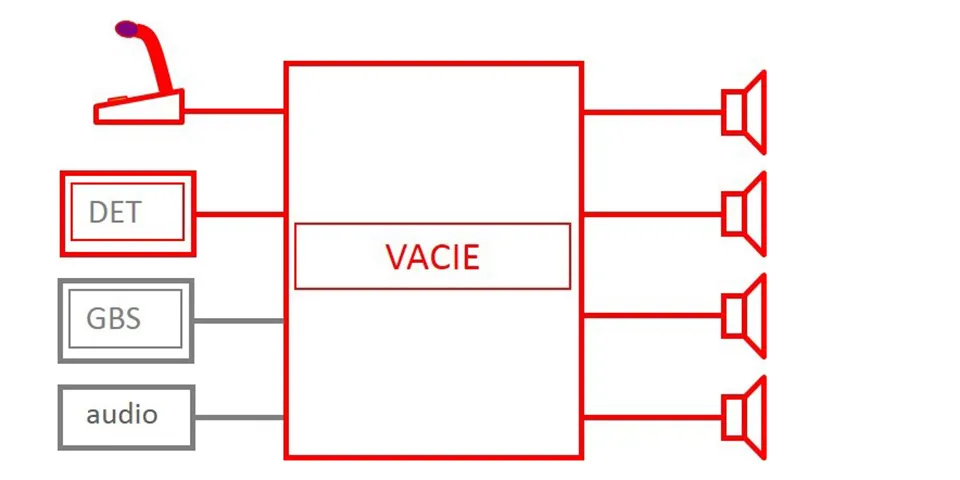
Schematic layout of a voice alarm system.
prNBN S21-111-3: management, qualifications and competences
The final part of the standard describes which parties may and can carry out the various stages of implementing a voice alarm system, what qualifications and competences they must demonstrate, and who is responsible for what. It is important that the system can guarantee the same required level of safety throughout the building’s entire period of operation.
Question about this story? Ask your question
Keep following this
Get an email when a new story is published. No account needed.
- ThemeFire safety in building services
- SubjectNews







