











UGR of non-diffuse luminaires
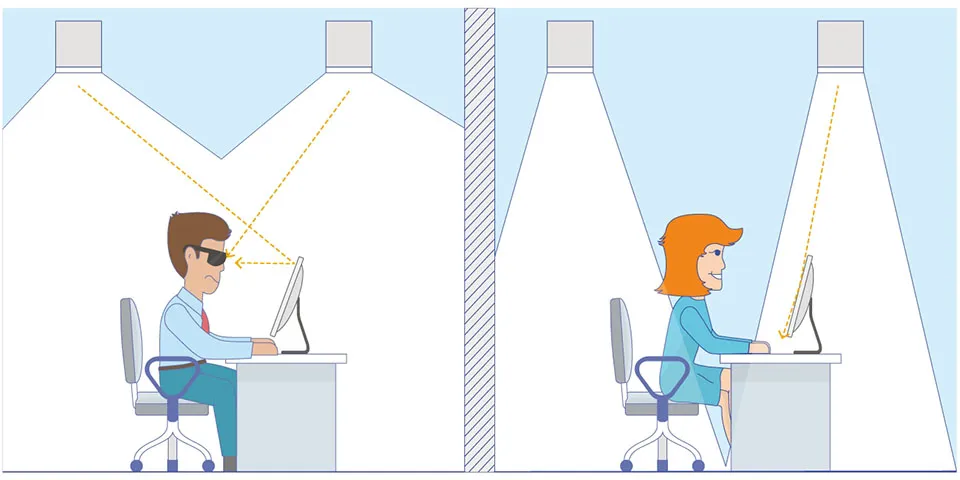
The arrival of LED as a light source led us to think more about lighting comfort, among other things.
One of the most frequently cited comfort parameters is UGR, or Unified Glare Rating. This value indicates the extent to which a luminaire causes visual discomfort or glare.
Text Tom Rampelbergh Images Laser 2000
The UGR value is a parameter assigned to a particular luminaire, usually a figure associated with it. This figure does not come about by itself, but nor is it simply a measured value. UGR is the result of a combination of many factors: the luminaire itself, the height, distance and angle from which the observer looks at it, the reflections from the walls, floor and ceiling, and the average light level in the room.
The results of the goniometric measurement of the luminaire, together with the characteristics of the room standardised for UGR assessments, are compiled in a table. One cell in that table gives the UGR value that appears on the packaging. CIE 117-1995 and CIE 190-2010 provide practical protocols for the measurement equipment and analysis software to be used.
NON-DIFFUSE LUMINAIRES
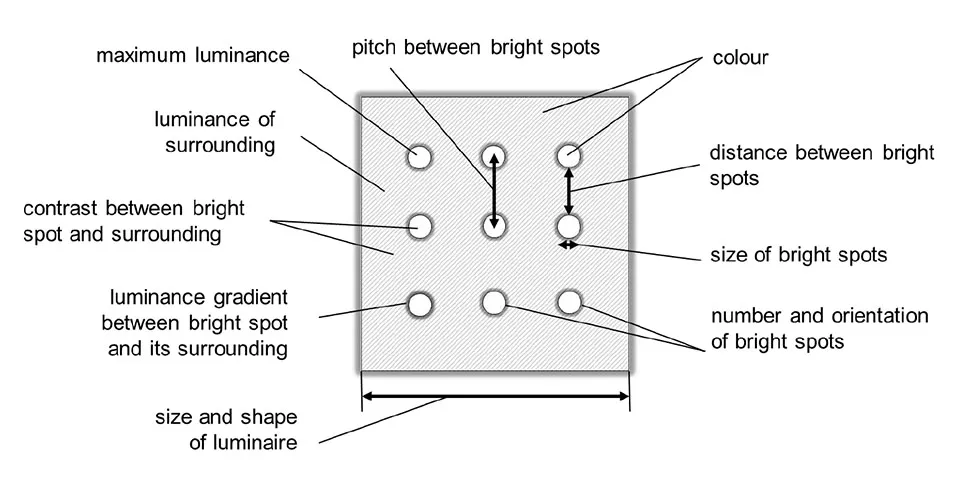
Manufacturers offer their luminaires in different versions. We often see the same luminaires available either with a diffuser, giving a homogeneous luminous surface, or without one, allowing the individual LED points, known as hotspots, to be seen. The latter luminaires risk being rejected for some projects because they may receive a less favourable comfort rating.
The newly published CIE 232-2019 describes in detail how the UGR of these non-diffuse luminaires should be determined. The description is fairly theoretical and offers no practical guidance for the industry to apply it immediately using existing equipment.
OPEN TO INTERPRETATION
Manufacturers of far-field goniometers that capture LDT files and already wish to present non-uniform UGR data saw CIE 232-2019 as a starting point for incorporating hotspots in luminaires into UGR calculations. It is possible to interpret the CIE 232-2019 standard in a rather simplistic way by using an ‘effective’ luminance area. CIE 232-2019 discusses this as an outcome of the luminaire’s near-field luminance plot.
A NOTE OF CAUTION
However, this reasoning does not produce a complete result, since it does not take into account all the characteristics of non-diffuse luminaires. UGR experts question (and rightly so) whether this simplistic interpretation of CIE 232-2019 is a good idea. In their view, it represents a return to the arbitrary choice of surface permitted by the qualitative approach in the old CIE 117-1995. They consider it not only poorly defined, for example, how do you determine the size of a hotspot, but also warn that if the hotspots are small, as they often are, this method risks greatly overestimating UGR, rather than greatly underestimating it as would happen if the entire surface were used. The risk with the simplistic method, then, is that non-diffuse luminaires that do not cause major problems in practice may nevertheless receive a poor UGR value, which is clearly not the intention. CIE 232-2019 describes very clearly how the effective luminance area should be determined, and this involves many more parameters than the calculation trick outlined above. Experts therefore consider that a figure calculated using this method should not appear on a luminaire’s packaging.
WHAT NEXT?
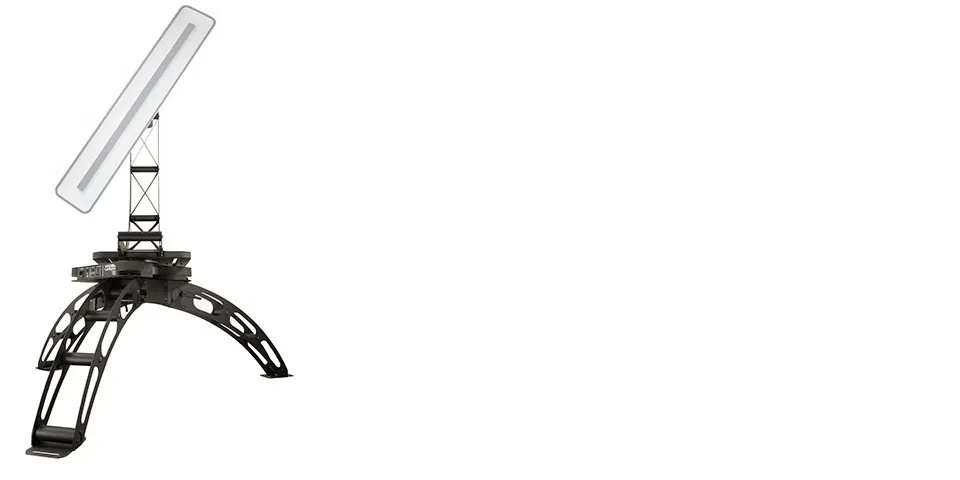
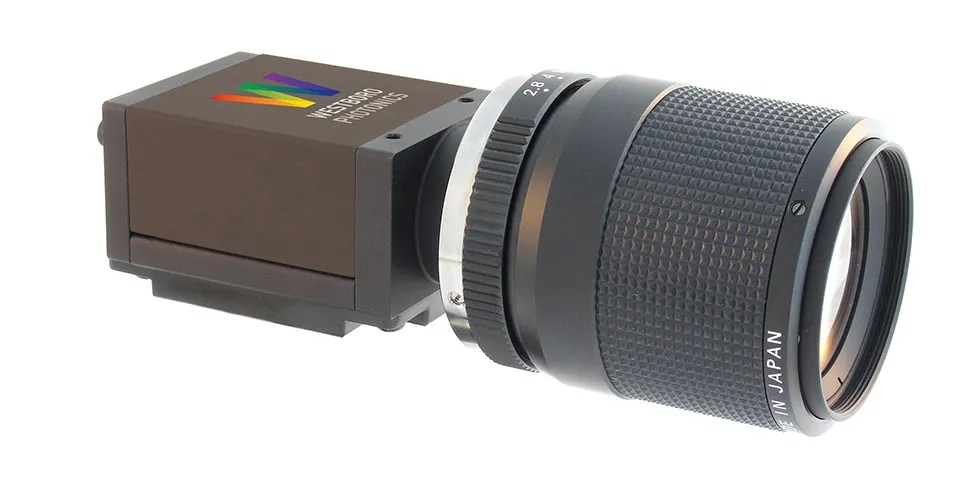
Experts do not yet see any off-the-shelf equipment on the market for carrying out formal CIE-compliant non-uniform UGR measurements. This will require combining angle-dependent measurements in both the near field and the far field. In other words, two existing but completely different techniques will need to be linked in software: near-field photometric cameras and far-field goniometers. The industry is waiting for such ‘all-inclusive’ solutions.
Question about this story? Ask your question
Keep following this
Get an email when a new story is published. No account needed.
- ThemeSmart building integration
- SubjectNews







