











Tips and tricks for rainwater pumps
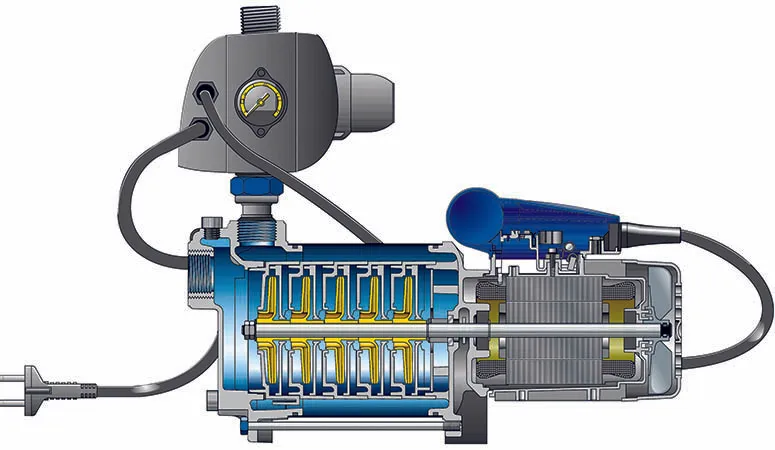
Many people in Belgium have a rainwater pump, a useful appliance that can deliver worthwhile savings on their water bills.
However, proper and efficient use is essential for optimum performance. Correct installation, careful fault-finding when problems arise and thorough maintenance are important steps. KSB BELGIUM, a distributor of products including KSB’s Multi, Eco Pro rainwater pump, offers some tips for making the most of rainwater.
Using a rainwater pump properly starts with installation. First and foremost, the suction connection must be installed correctly. The pump draws water from the rainwater tank through this connection. The nominal diameter of the suction pipe must be at least equal to the nominal diameter of the pump’s suction connection. The maximum length of the suction pipe depends on the total manometric suction head in the installation.
To avoid turbulence, noise and wear, KSB BELGIUM advises against using tight bends upstream of the pump. A distance of five times the nominal diameter of the suction pipe should be maintained between the bend connection and the pump. A foot valve is recommended to prevent the suction pipe from draining.
The pump’s discharge connection is located at the top of the water pump. KSB BELGIUM recommends using pipes with a minimum internal diameter of ¾”, preferably 1”. This ensures higher water pressure at the end of the pipe.
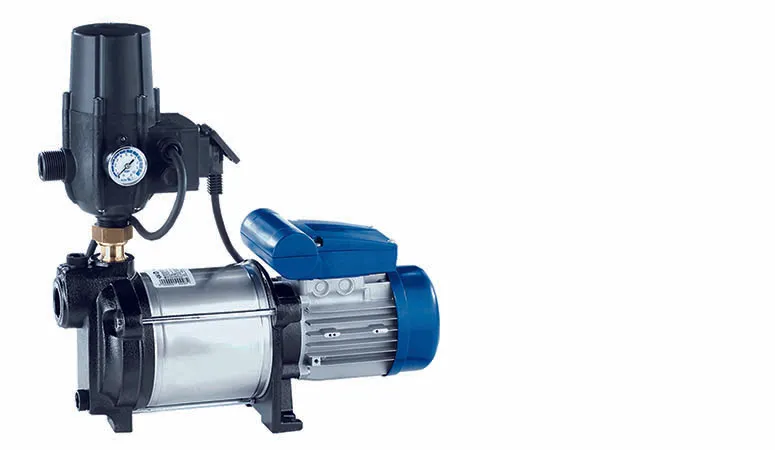
Problems and solutions
With years of experience in the sector, KSB BELGIUM can advise on common problems. In many cases, the solution to rainwater pump problems is straightforward. For instance, a self-priming pump may sometimes have difficulty drawing in water. Although this is often thought to be a mechanical problem, there is usually a simpler cause. In such cases, measuring the maximum suction lift or checking the suction hose for restrictions or holes can often help identify the problem. It may also be useful to check the connection between the suction hose and the pump.
If a rainwater pump does not switch off automatically even though all the draw-off points are closed, this indicates an air leak in the system. As a result, the pump continues to run. In this case, KSB BELGIUM recommends checking all hoses and pipes for holes, as well as the connections on the suction and discharge sides.
Another common problem is debris caught in a valve, allowing water to pass through. The pressure drops and the pump responds by switching on. Removing the debris is enough to solve the problem.
KSB BELGIUM also finds that leaks are particularly common in toilets. This means that water is escaping from the pipe drop by drop. The system registers water use and a resulting drop in pressure. The pump switches on and off again when the cut-in and cut-out pressures are reached, respectively. A sturdier float or valve can help stop the dripping leak, resolving the problem straight away.
Maintaining the rainwater tank
According to KSB BELGIUM, keeping the gutters and downpipes leading to the rainwater tank clear is fundamental to its proper management. This should be done at least once before and once after winter.
KSB BELGIUM also advises filtering out debris before the water enters the tank. This prevents a layer of sludge from forming at the bottom, which would be stirred up again by heavy rainfall. It also means the user will not have to empty the tank regularly and have it cleaned by a specialist company.
Een zakelijke vraag aan KSB Belgium? Get in touch
Companies in this story

Keep following this
Get an email when a new story is published. No account needed.
- ThemeSafe and efficient water use
- SubjectNews
- CompanyKSB Belgium







