Mandatory solar panels for high-energy-use businesses are an opportunity, not a burden

From 30 June 2025, Flemish businesses with annual electricity consumption of more than 1,000 MWh must generate part of their electricity using solar panels. For public buildings, the threshold is 250 MWh per year. It is a far-reaching measure, but one that makes complete economic and environmental sense. Yet some business owners are hesitant. As CCO of Futech, which develops and installs sustainable energy solutions, I would like to convince them that this obligation is not a burden, but a unique opportunity.
Let’s be honest: energy prices are soaring, and businesses that remain dependent on conventional energy sources are feeling the impact on their margins. Solar panels offer a practical way to reduce that dependence dramatically. By investing in their own energy generation today, high-energy-use businesses can protect themselves against future fluctuations in energy prices.
Yet resistance remains. The most common counterargument? “The installation costs are too high.” It is true that solar panels require an upfront investment. But that investment pays for itself faster than ever, especially when the panels are combined with smart controls and battery storage. At Futech, this is a key focus. We help businesses and households install solar panels and optimise their entire energy management system.
The mandatory installation of solar panels will therefore reduce energy bills in the long term, but that is not the only benefit. There is also a commercial interest at stake. However you look at it, the environmental efforts of manufacturers are increasingly influencing people’s purchasing decisions. Sustainable business practices are becoming less of a nice-to-have and more of a basic expectation.
And what is the alternative? Keep putting it off and remain dependent on volatile, often high energy prices, with a lasting competitive disadvantage as a result? What is more, energy and sustainability regulations are certainly not going to become more lenient in the coming years. Those who fail to meet the obligation may face even higher costs later.
I would like to illustrate this with a practical example. Recently, Futech installed 1,890 solar panels at the Hubo branch in Zonhoven, combined with batteries for storage and charging points for electric cars. Without this smart combination, Hubo Zonhoven would have to pay for a grid upgrade to feed surplus electricity back into the grid. The batteries also allow the store to draw electricity from the grid when prices are at their lowest. In addition to significantly lower energy costs, the switch to renewable energy will save Hubo Zonhoven 4,532 tonnes of CO2 a year, equivalent to the CO2 absorption capacity of 14,500 trees.
In conclusion, the obligation for high-energy-use businesses to install solar panels is not a burden, but an opportunity. It gives businesses the chance to protect their margins, strengthen their competitive position and reduce their environmental footprint. The future is sustainable, and high-energy-use businesses have a part to play in making it so.
Finally, I would also like to address the Flemish government. In my view, positive incentives would have worked better than an obligation. The word ‘mandatory’ has negative connotations, which could lead businesses to see installing solar panels purely as a cost, rather than as something that pays for itself. Positive incentives would have encouraged every business with a bit of common sense to make the investment. Because that is what it is: an investment.
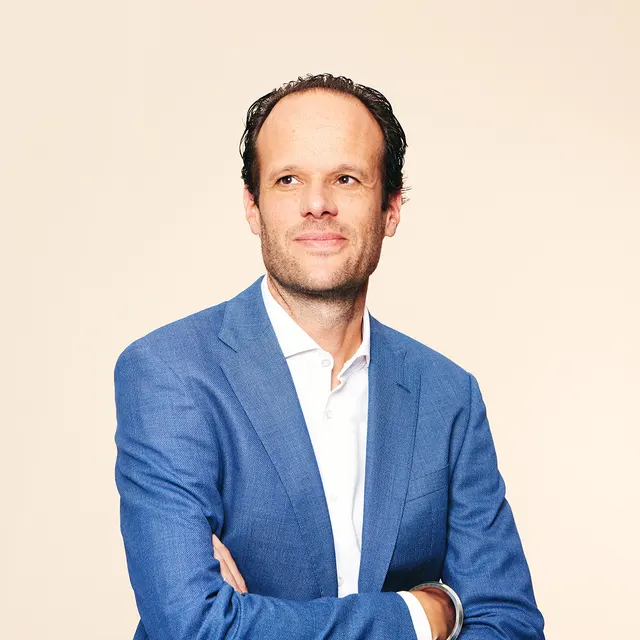
De Pen, Frans-Joseph Joosten, CCO of the U2P Group (Futech and iLumen) and co-chair of PV-Vlaanderen
Question about this story? Ask your question
Keep following this
Get an email when a new story is published. No account needed.
- SubjectThe pen