











Maintenance: the forgotten half of building services engineering
Text Wouter PolspoelImage AI
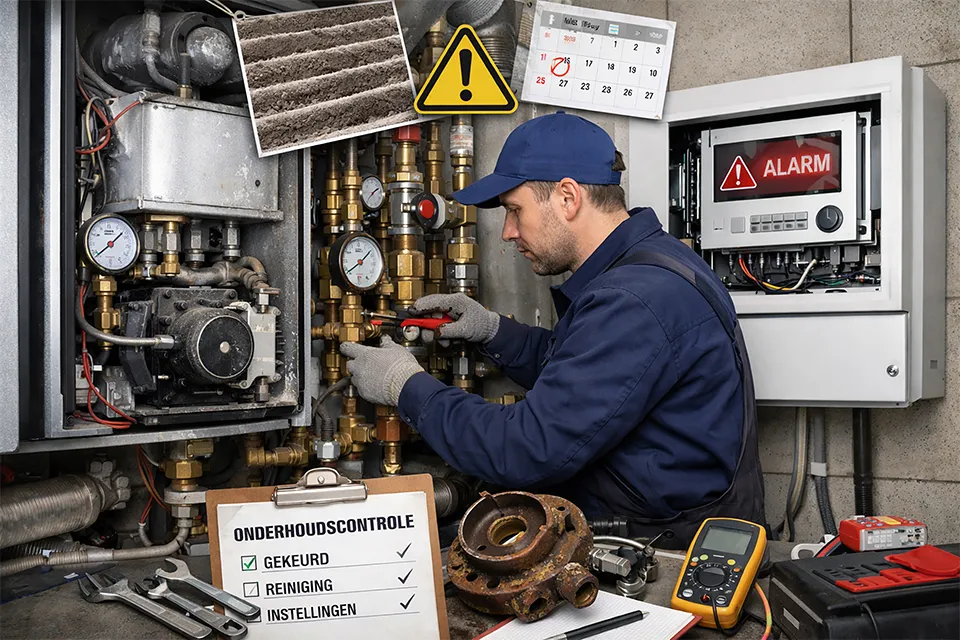
We are designing ever higher-performing systems: heat pumps with impressive so-called COPs, ventilation systems with heat recovery, hydraulically balanced heat emitters, smart building management systems that control everything … These days, systems rarely fail because of fundamental design errors. Problems are often down to a lack of maintenance. That is why it is important to emphasise once again that building services engineering does not stop at commissioning; ongoing monitoring remains essential.
When designing a system, the initial focus is on efficiency, comfort and compliance. Maintenance should always be an explicit design parameter too, but, to put it mildly, that is certainly not always the case. As a result, system components are often hidden behind ceilings or in service risers, accessible only after one or more panels have been removed. Clear labelling, for example on isolation valves, may also be missing. ‘Maintenance is a problem for later,’ sometimes seems to be the credo. That is true, of course, but it must be anticipated during the design and installation of a system, and maintenance must actually be carried out.
These two conditions are not necessarily linked. Even with a specific maintenance plan in place, there is no guarantee that the maintenance will actually be carried out. This may be down to a negligent user: a gas boiler, for example, must be inspected every two years, but, particularly in the domestic market, it is up to the user to make an appointment. Other priorities for the installer may also be a factor. Maintenance is time-consuming and generally brings in far less than installing a new system. It also means systems need replacing less often, but accusing installers of having a hidden agenda in this respect would be going too far.
Maintenance rarely makes itself a priority
What certainly does not help is that systems which receive little or no maintenance do not deteriorate dramatically, and often show no visible signs of decline. Think of heat exchangers gradually becoming fouled, flow rates shifting or sensors losing accuracy. As a result, maintenance often simply does not seem necessary.
And when maintenance is carried out, it is not always clear whether it has been done properly. For example, if a maintenance technician changes control strategies in response to complaints, about energy consumption or comfort, for instance, without recalibrating the system as a whole, the user may think their system is good for another few years. The system works again, but its optimum operating point will have shifted, usually without the user realising.
Regulations set the minimum standard
But surely statutory inspections address all of the above, you may be thinking. In theory, they do guarantee a minimum level of quality. In practice, however, they mainly safeguard safety and basic functionality. They do not ensure optimum performance. A ventilation system can be fully compliant and still underperform because of dirty ducts or poorly balanced flow rates. A heat pump can function correctly from a technical point of view, while its efficiency is compromised by incorrect settings or changes in usage patterns. In other words, regulations define a minimum standard. Keeping a system performing at its best over time requires more.
And what about maintenance contracts? Surely they prevent maintenance from being forgotten or done half-heartedly, you may also be thinking. Unfortunately, that is not always the case either. What they specify is often the absolute minimum.
Maintenance reduced to responding to breakdowns
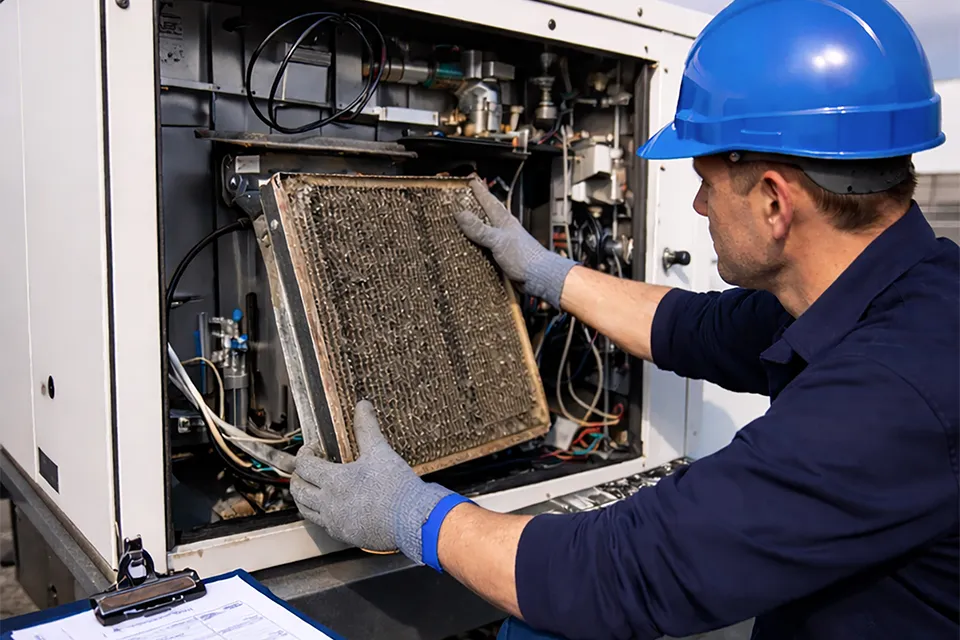
Maintenance is thus reduced to responding to breakdowns: a faulty component is replaced, an alarm is reset … Structural optimisation never happens. Preventive monitoring, readjustment based on actual use, performance reviews against design values … all require a different mindset. ❯
In other words, handover should more clearly mark the start of operation. That moment is still too often treated, as we have said before, as the end of the process: documentation is handed over, settings are explained and a brief walk-through follows. After that, attention shifts to the next project. But without clear performance indicators, agreed review points and technical parameters communicated in a way that building managers can understand, the system is left to fend for itself.
Take a long-term view
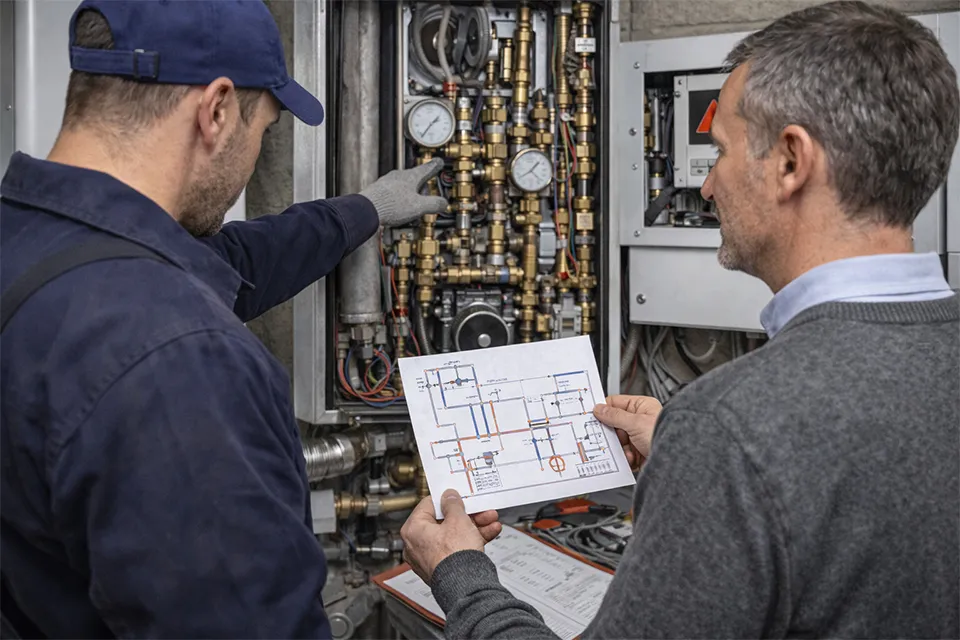
From the project client’s perspective in particular, it is striking that maintenance is rarely treated as an integral part of project planning. Capital costs are calculated down to the last euro and efficiency optimised, yet the question of how a system will perform in ten years’ time is often left implicit. That is precisely where the difference is made.
In summary, building services projects should shift their focus from individual components to long-term performance. The quality of a system is not demonstrated at the point of commissioning, but by how it performs after five or ten years of use. Anyone who recognises this axiom can no longer treat maintenance as an afterthought.
Question about this story? Ask your question
Keep following this
Get an email when a new story is published. No account needed.
- ThemeImproving building services performance
- SubjectNews







