











Impact of lockdown on sanitary installations
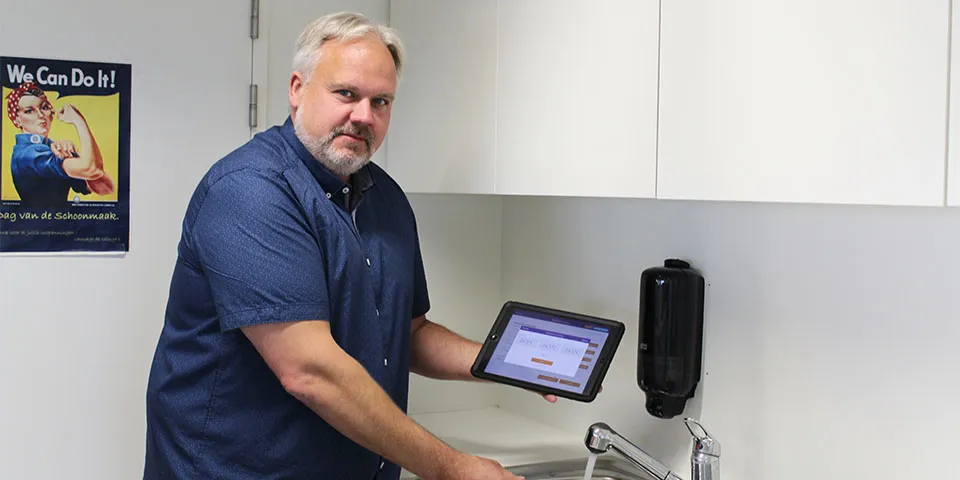
Many professional activities have come to a standstill for a second time since the coronavirus outbreak, leaving many office buildings, swimming pools and sports facilities, and accommodation facilities (almost) empty again.
Legionella prevention and COVID-19
Specialist Aquadomo launched an awareness campaign during the first wave and is now planning to do so again, as vacant buildings pose a risk of Legionella, as was found before facilities reopened after the first wave.
Legionella expert Xavier De Wintere (Aquadomo): “This affects water quality in sanitary installations. Through leaching, water can absorb solids (including lead, copper, iron and zinc) from the pipes, while a biofilm forms on the inside of the pipes, providing a suitable environment for microbes such as Legionella bacteria. It is therefore important to flush the water through the installation to ensure hygienic water quality when it is brought back into use.”
Schedule sampling in good time
Aquadomo has therefore launched an awareness campaign for its clients. Legionella sampling must be scheduled in good time, as results are only available after 14 days. In addition, if contamination is found, there must still be time to disinfect the installation. Aquadomo selects the most suitable treatment method depending on the building’s function or target group, and the design of the installation.
Thermal disinfection (which kills Legionella bacteria) and chemical disinfection (which also removes biofilm) disinfect the water pipes over a very short period, either using a high concentration of chemicals or water at a high temperature.
The water installation cannot be used during shock disinfection. In many cases, it is not desirable for outlets to be taken completely out of service. A temporary or even permanent dosing system can offer a solution, for example by injecting a disinfectant into the sanitary installation.
A less intrusive, but temporary, measure is to fit Legionella filters (membrane filters < 0.1 µm) at terminal outlets (showers). This allows users to continue using aerosol-generating outlets without risk.
“We weigh up the costs and benefits with the client and can offer all the solutions, with the exception of permanent disinfection,” says Xavier De Wintere.
Online Legionella management: all benefits
Xavier De Wintere: “The need to observe social distancing because of COVID-19 also affected how sampling and disinfection are carried out. Both now take place with all the necessary precautions, and Aquadomo has meanwhile also optimised its services with an online platform.”
“We found that carrying out all the management measures was a lot of hassle for our clients: keeping paper logbooks, looking things up, monitoring management… when everything could be much simpler.” Aquadomo now also has a handy online, interactive tool to help users comply correctly and clearly with Legionella legislation. Reports and summaries are available in a central management module, and all tasks and responsibilities can be assigned at each level by role or function and are communicated by email. “This ensures that everyone carries out their tasks effectively and has oversight of their part in the management process,” notes X. De Wintere.
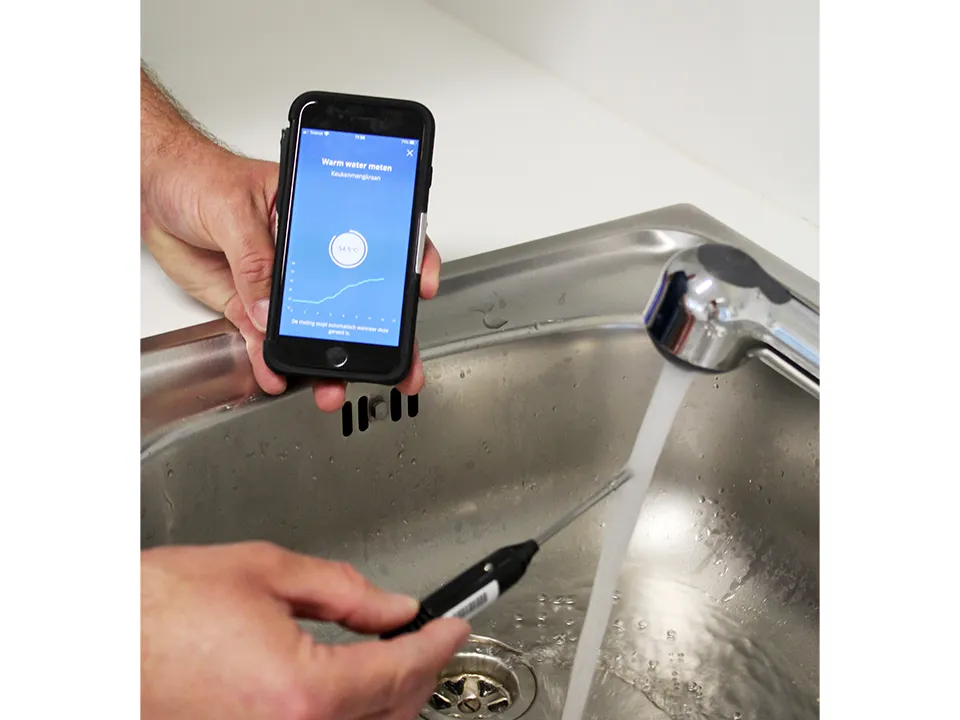
In addition, completed management measures, analysis reports, photos, plans and drawings are stored directly in one place and archived in the cloud. Legionella management has never been so straightforward, efficient and paperless. The app indicates when enough flushing has been carried out and enables fully automated temperature measurements.
Question about this story? Ask your question
Keep following this
Get an email when a new story is published. No account needed.
- ThemeSafe and efficient water use
- SubjectNews







