











Fireforum Congress | Brussels
‘Fire safety regulations should be more outcome-focused’
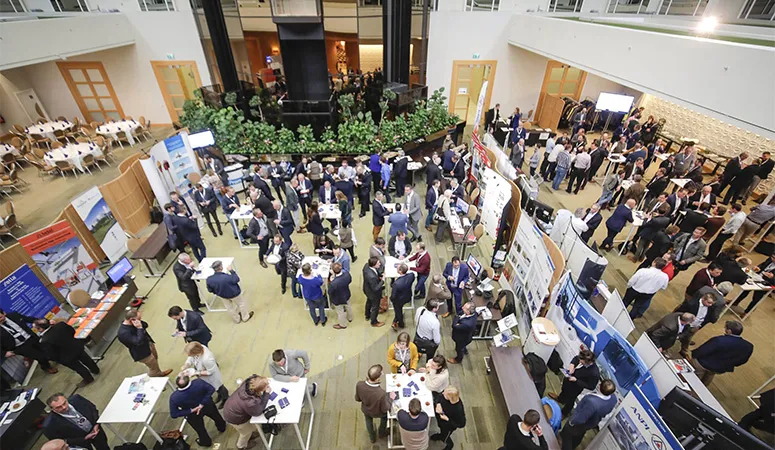
More than 250 fire safety specialists gathered at the Sheraton Brussels Airport Hotel on 20 November for the fifth Fireforum Congress. The programme included 25 presentations by experts from different areas of fire safety and a thought-provoking debate on fire safety in residential buildings.
For the first time, Fireforum held a debate at the congress, focusing on three key areas: (overly complex) regulations, (weak?) enforcement and (unclear?) responsibilities.
During the debate, experts were regularly invited to give their views in quick polls. Most participants felt that prescriptive regulations, which are considered overly complex, are moving in the right direction. However, they said these should evolve to focus more on performance, supported by research and innovation.
Local authorities should enforce fire safety regulations more rigorously and consistently, drawing on greater knowledge and experience. To achieve this, more resources must be used more efficiently. Another key point is the need to develop a safety culture, particularly among owners and operators, who all too often focus only on costs. They should be supported by well-trained architects and specialists. Enforcement does not have to be punitive: it can also be used in a positive way. Finally, it is clear that everyone must take responsibility for a building’s fire safety. This is not the responsibility of one party alone, but a shared responsibility in which knowledge and experience are once again central.
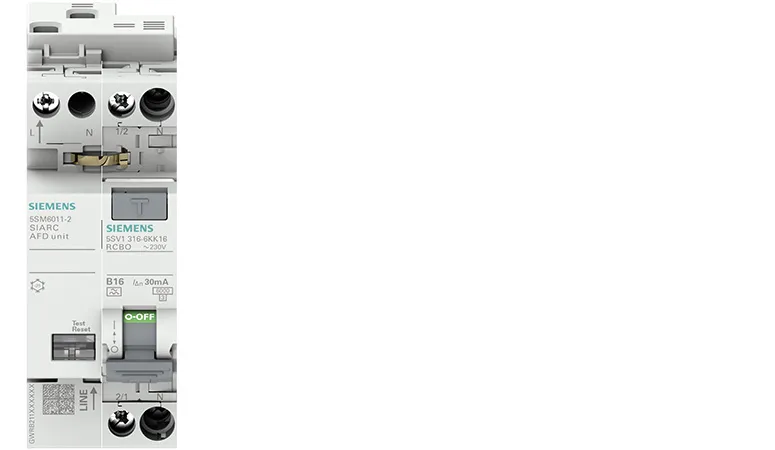
AFD goes beyond the standard miniature circuit-breaker, which is not enough to deal with arc faults. (Image © Siemens AG 2010)
Arc faults
Panel with Eric Wellens (ULiège), Kristof Hendrickx (Chair of Netwerk Brandweer, mayor), Dieter Brants (Fire Brigade), Jan De Saedeleer (FOD-SPF IBZ), Nico Luyten (Architecten NAV), Marc Marichal (insurance sector), Kees Both (Fire Safety Engineers, SFPE Europe)

Fire safety is also a major concern for installers. Electrical installations in particular require vigilance. At the Fireforum Congress, Tom Van Renterghem of Siemens presented a new protection technology for arc fault detection. An arc fault can be caused by a pinched cable or a poorly connected wire in a socket. “A small air gap forms, and an electrical discharge occurs across it. The temperature has already risen to 6,000 °C. This is the stage at which flames develop,” says Tom Van Renterghem. At currents of between 3 and 10A, a stable and dangerous flame can develop in as little as 30 seconds.
Following the example of the United States, this protection technology is now being introduced in Belgium. The major electrical manufacturers already offer this solution. The AFD unit (Arc Fault Detection) is a fire protection switch that can signal the circuit-breaker to interrupt the circuit. AFD goes beyond the standard miniature circuit-breaker, which is not enough to deal with arc faults.
Microcontroller
The unit has an integrated microcontroller that detects and analyses high-frequency noise. Once the AFD unit detects a problem, it will interrupt the circuit via the circuit-breaker. “The circuit is only interrupted when the unit is certain that an arc fault has occurred. The device must only respond to genuine faults,” says Van Renterghem.
Users can choose to install an AFD unit on each appliance, or a single unit downstream of the circuit-breaker. The latter option is cheaper, but does not allow sections of the circuit to be switched off individually. It also makes it harder to identify exactly where the fault occurred.
The technology is already included in IEC 60364-4-42. It is recommended, among other places, in bedrooms, rooms where high-power appliances are connected (the laundry room, or perhaps in future a garage with an electric car), and buildings where a chimney effect may occur, such as high-rise apartment buildings. In Germany, AFD protection is already mandatory in some situations.
Text Fireforum, Filip Van der Elst | Image Fireforum
Question about this story? Ask your question
Keep following this
Get an email when a new story is published. No account needed.
- ThemeFire safety in building services
- SubjectNews







