New standards and legislation for sustainable fire safety
Text Stephanie DemasureImage Pixabay, Pexels en Freepik
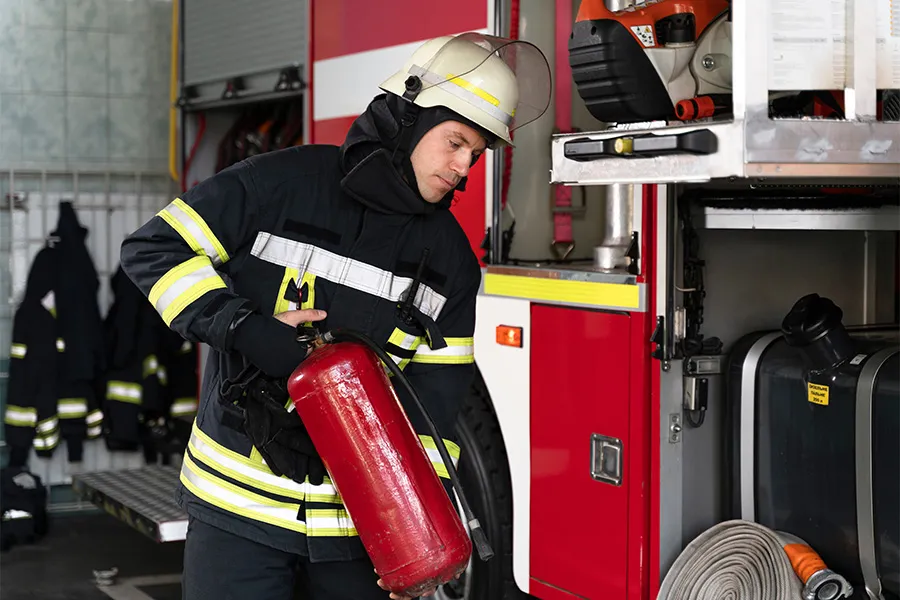
Fire safety requirements in and around buildings are evolving rapidly. New construction techniques and regulations, as well as growing understanding of risks and problem areas, are driving this change. In this article, we focus on one of the most important developments: the phase-out of fluorinated foam extinguishers.
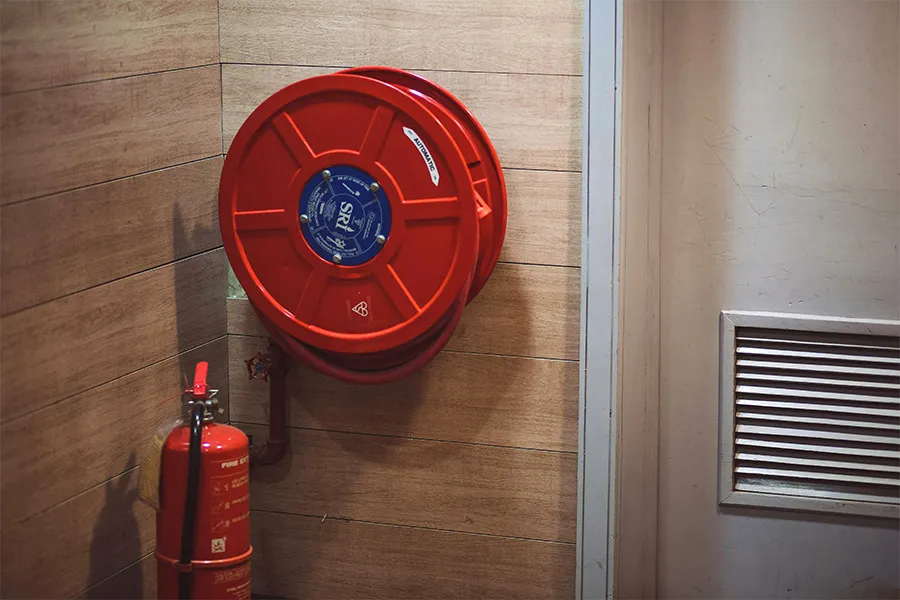
Fluorinated firefighting foams have been the standard in fire suppression since the 1960s. Fluorinated chains offer several important advantages when extinguishing fires. They are strong and stable, allow only limited fuel uptake and help the foam blanket retain its integrity. These technical properties made fluorinated compounds a valuable addition to firefighting foam. Unfortunately, they are also difficult to break down, as has become increasingly clear in recent years, including from the levels measured at and around the 3M site in Zwijndrecht. The so-called PFAS compounds are bioaccumulative, toxic and persist in the environment for a long time. Moreover, prolonged exposure has been found to pose health risks to humans.
Europe has therefore imposed several restrictions in recent years. On 27 June 2011, PFOS was banned under European legislation. In April 2020, PFOA was added to the blacklist, and C9-C14-PFCAs were also listed in legislation as prohibited substances. These are all subcategories within the PFAS group. Firefighting foams containing PFOA are no longer manufactured.
A longer phase-out period
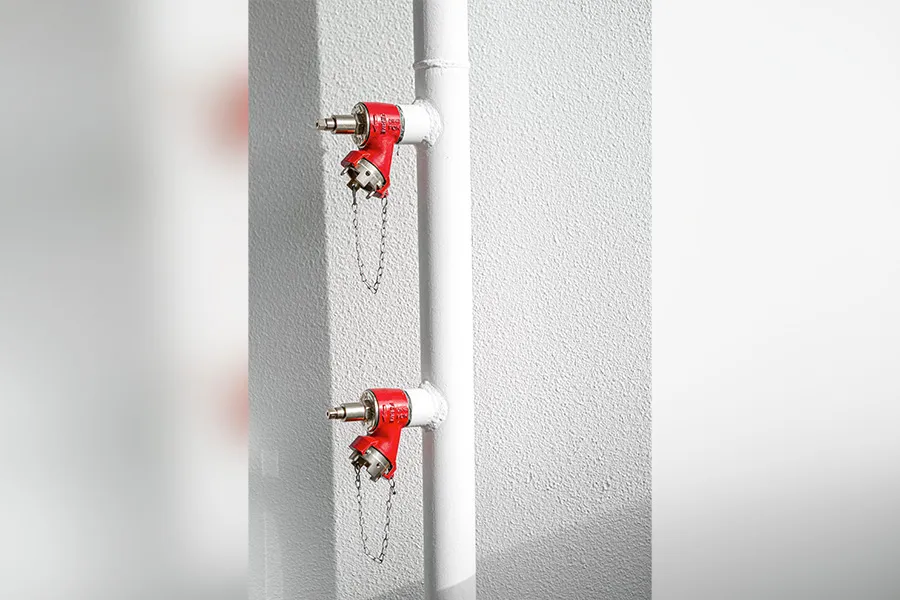
If a site has no firewater containment, the use of PFAS-containing firefighting foam is already prohibited. However, it is still permitted for the time being in existing mobile and fixed foam fire-extinguishing systems. From 4 July 2025, the ban will apply in full to all applications. Once this legislation has been ratified, a phase-out period for fluorinated firefighting foams will begin. Depending on the type of site and application, the phase-out can take up to ten years. The shortest period, eighteen months, applies where firefighting takes place on site, for example with the civil fire brigade and at fire training sites. The longest period is reserved for Seveso establishments, which have their own firewater supplies.
Good alternatives are now available for most applications. Bulk foams for systems and installations are more complex, however. The foam blanket is sensitive to various parameters, such as the properties of the fuel and the method of application. A universal fluorine-free foam is unlikely to be available in the short term. The key is therefore to assess bulk foam for each specific application and select a suitable fluorine-free alternative. The old foam must be removed and disposed of in accordance with specific rules, then destroyed at a high temperature (> 1,100°C). Once the extinguishing system and storage tank have been cleaned, you can add the new foam. This cleaning must be thorough to prevent contamination from residual particles and the associated high remediation costs in the future. Please note: the extinguishing system may need to be modified to work with the new foam.
Portable and mobile fire extinguishers
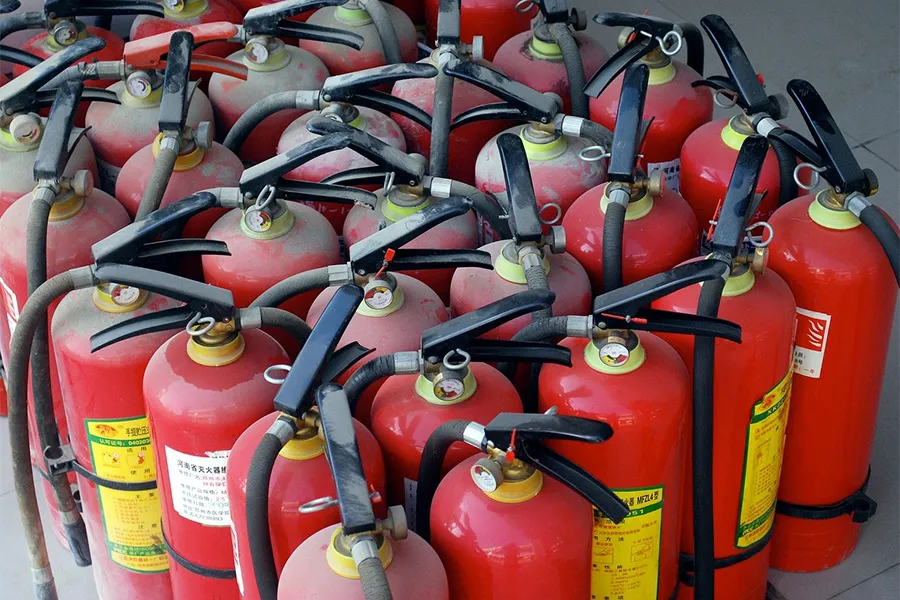
Around 41 million foam extinguishers in buildings still contain fluorinated compounds. They consist of 90% water and 10% foam concentrate. The good news? As long as they are not used, they are not a potential source of pollution. This gives you, as a technical partner to businesses, time to manage the transition gradually. These foam extinguishers can remain in place and simply need to be replaced within five years, by which time they must in any case be inspected or replaced, with an environmentally friendly, PFAS-free unit. Start factoring this change into the service you provide to your customers today. Together, you can spread the costs and reduce the environmental burden now.
Question about this story? Ask your question
Keep following this
Get an email when a new story is published. No account needed.
- ThemeFire safety in building services
- SubjectFire protection