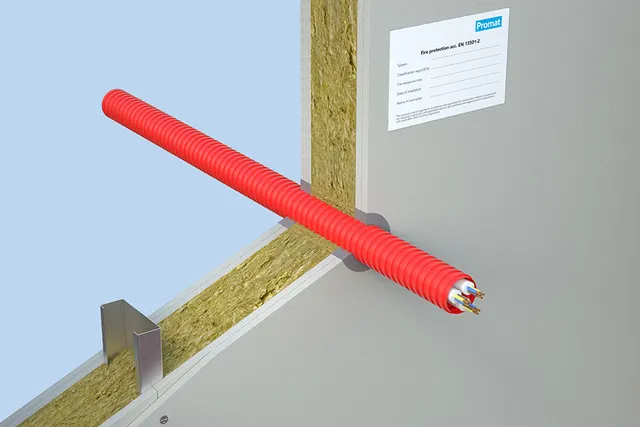
Fire safety guidance for electric vehicles
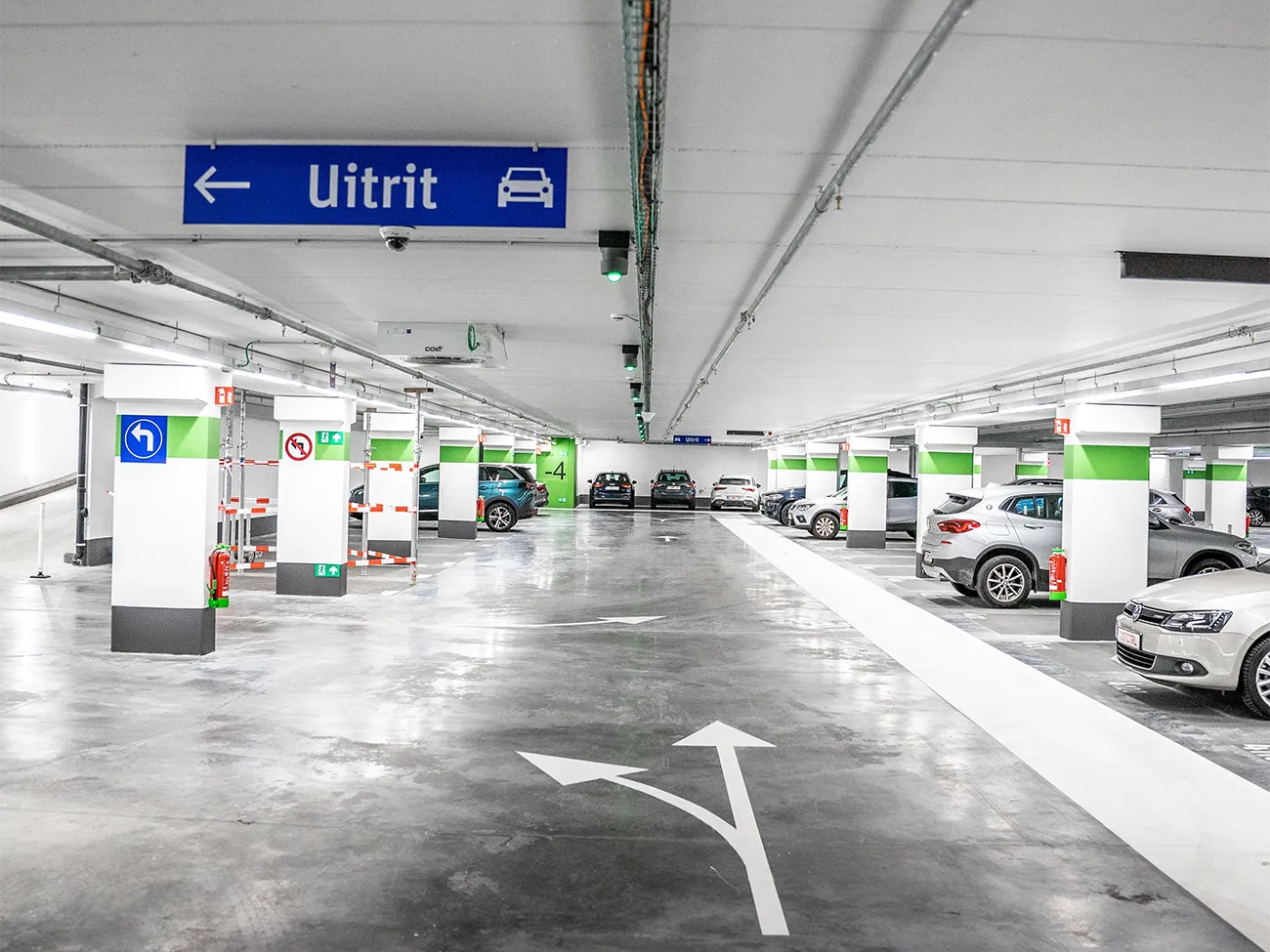
Electric vehicles are becoming increasingly common on our roads, and charging infrastructure, including underground installations, is being provided in various locations. Yet questions are increasingly being raised about the fire safety requirements to be applied, particularly in car parks. There is, after all, no consistent legislation on the subject. Fireforum therefore set up a consultation platform to identify robust ‘best practices’. Its Code of Good Practice (RGV) was published on 16 September 2021. This document is already being used by architects, engineering consultancies and others as a reference for fire safety in relation to electric vehicles in car parks. Since 1 December, fire services in Flanders have included the document in their guidance for implementation. Other fire services are sure to follow.

As a Fire Safety Engineer, Ing. Robby De Roeck of Kingspan Light & Air Belgium is often involved in the most complex fire safety cases for projects, always in close consultation with the FPS Home Affairs (through applications for derogations) and the fire service. He is therefore confronted almost daily with the current gaps in our legislation on this subject. “Let’s get straight to the point: there is currently no (consistent) fire safety legislation covering EVs and charging infrastructure in car parks. Since 2014, a working group set up by the FPS Home Affairs (High Council for Fire Safety) has been drafting the new HR 1632 (future Annex 7 to the Royal Decree on Basic Standards) on fire safety in car parks, but it does not explicitly address solutions for electric cars. This document will become law from 1 July 2022, with the caveat that the solutions described are also considered safe for electric cars,” says Ing. Robby De Roeck. “There was a real need for additional, clear guidance, which is why FireForum initiated a working group involving the FPS Home Affairs and FPS Economy, the fire service, stakeholders and market players. The group was tasked with identifying ‘best practices’ in the short term, taking current knowledge of the subject into account. The result was recently presented as a Code of Good Practice (RGV) on fire safety, specifically for electric vehicles in car parks.”
Assessing the risks
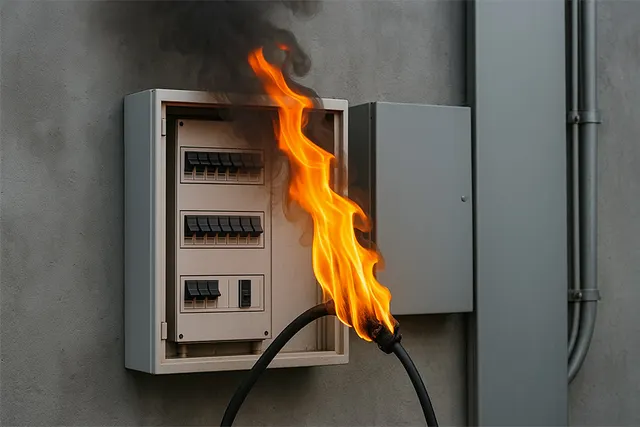
Every project is unique and therefore requires its own approach to fire safety. Alongside developing a compliant solution, the initial inspection at commissioning and subsequent periodic inspections are also important, as are preventive maintenance and repairs, to ensure active fire safety systems work properly. Electric vehicles bring additional considerations. Most electric cars use lithium-ion batteries, which are potential ignition sources and can cause serious problems if they catch fire. They continue to burn, and the temperature can rise exponentially, by 10°C or more per minute (thermal runaway). A battery of between 15 and 25 kWh can produce a vehicle fire of 4 to 6 MW; at 100 kWh, the figure is 8 MW or more. By comparison, a car with a full tank of fossil fuel produces around 6 MW. Flame temperatures reach 800°C or more. What is more, the radiant heat from a burning electric car can set nearby parked cars alight.
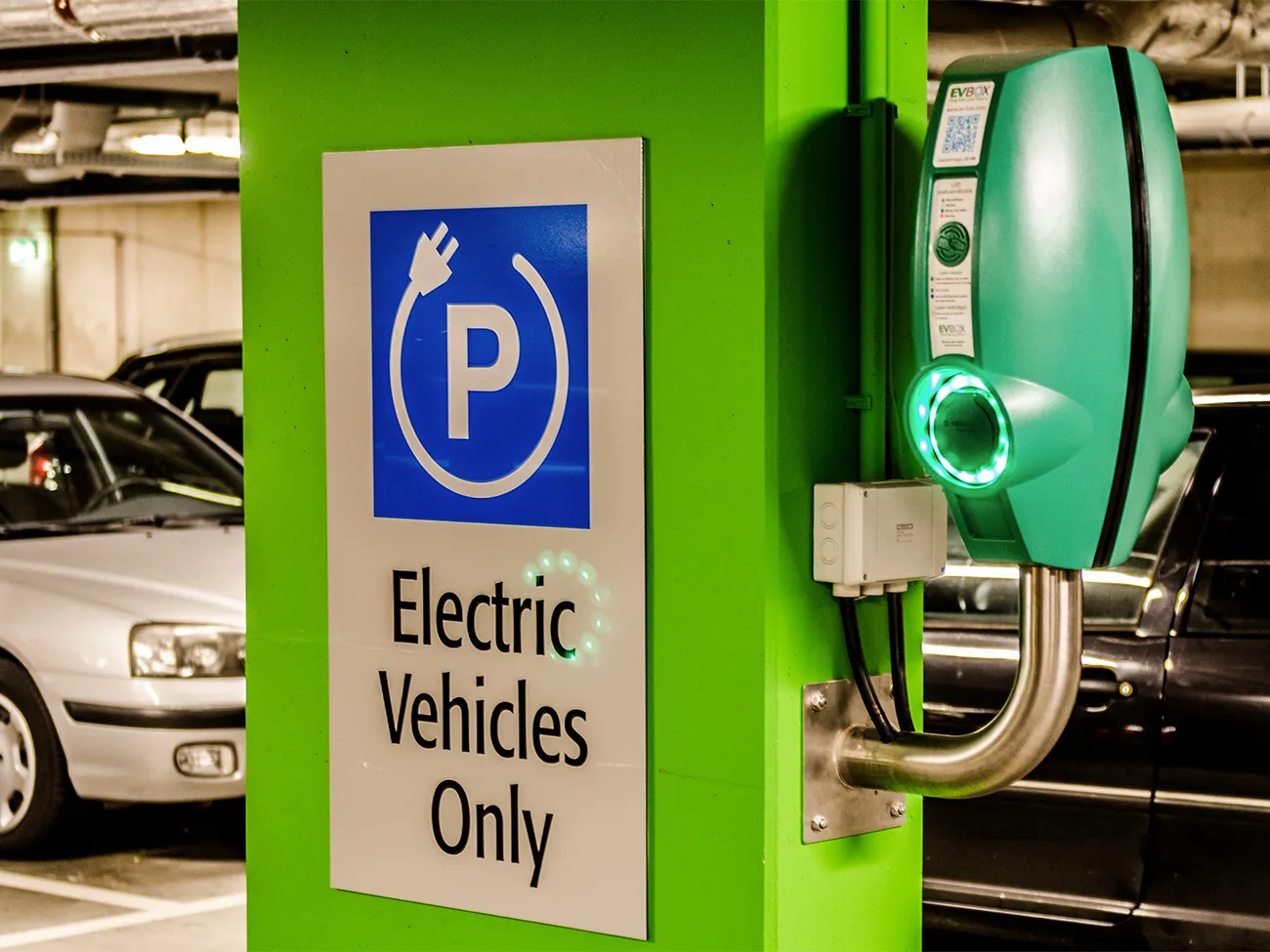
Active and passive fire protection
The priority is therefore to prevent fires from starting and to respond decisively when they do. Every car park must comply with all legal requirements, but the fire risk analysis, as set out in the RGV document, may lead to additional measures. “The RGV document specifies fire detection, active smoke control and compartmentation as minimum requirements. In addition to effective continuous ventilation, car parks must be equipped with an automatic fire detection and alarm system that alerts the fire service promptly and automatically disconnects the charging points. A smoke and heat exhaust ventilation system (SHEVS) is another minimum requirement. Such systems control temperature and toxicity, give the fire service a better view of the fire and make it easier to get close to the seat of the fire without exposure to smoke. Compartmentation between car parks and parts of the building with a different use, as required by law, protects those areas from smoke and fire damage,” explains the Fire Safety Engineer. “The fire risk analysis may also show that additional sub-compartmentation and/or sprinklers are needed. After the initial firefighting operations, the vehicle is towed outside by a recovery service, after which it is recommended that it be submerged in a container of water for an extended period. Before recovery work can be carried out in a smoke-free environment, the underground car park must be ventilated in a controlled manner.”
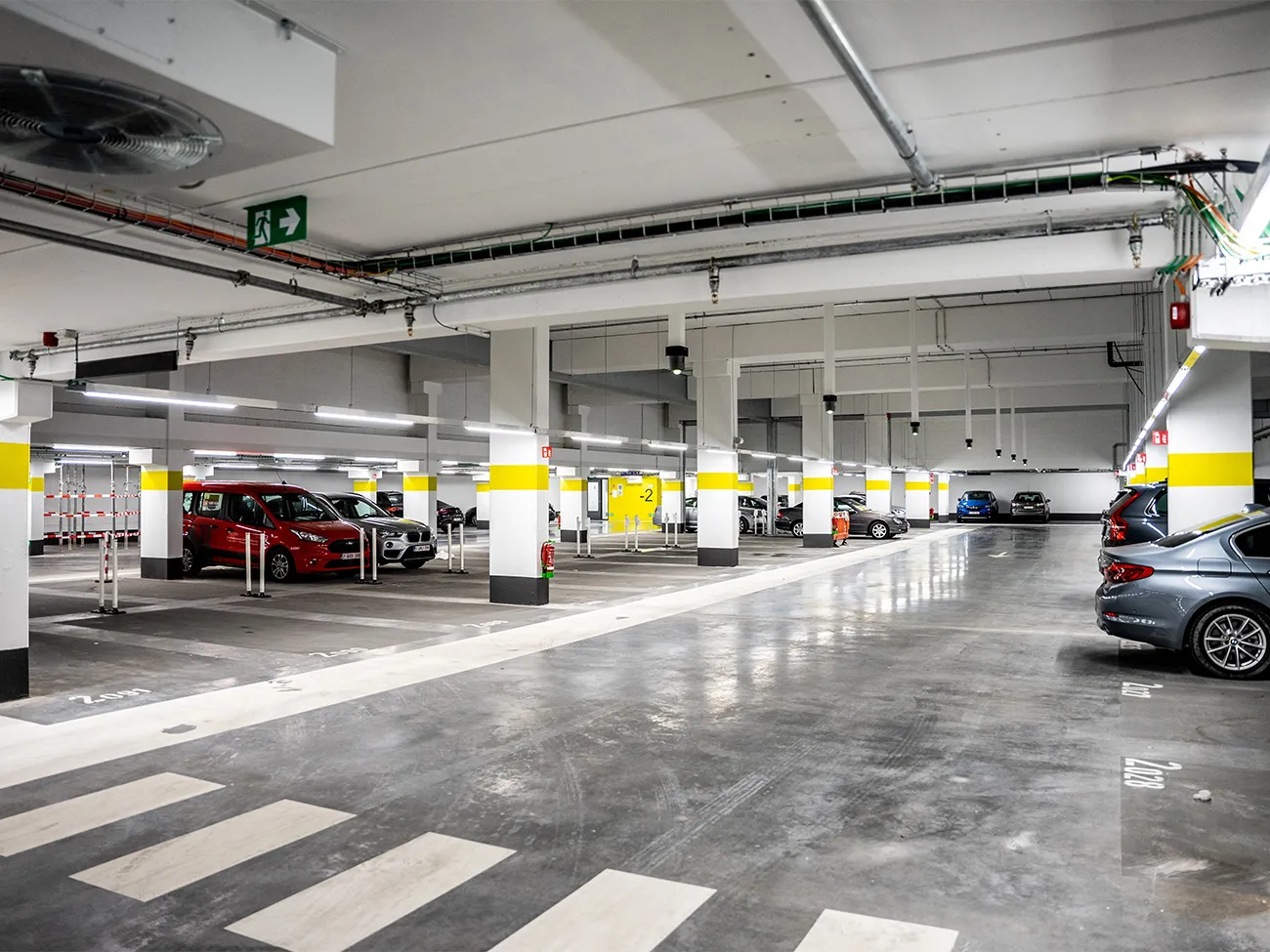
A step closer to consistency, but …
This RGV is, of course, based on today’s knowledge and experience. Technology continues to evolve, which means the requirements will also need to be reviewed. “There is a lot happening in the market. I’m thinking of self-extinguishing/non-combustible batteries, car models with an inlet for injecting extinguishing agent directly into the battery, or a standardised type label for every car, enabling the fire service to respond more effectively,” concludes Ing. Robby De Roeck. “With this RGV, we have also taken another step towards consistency. As mentioned, since early December this document has been used as a reference by the fire service in Flanders, among others, as well as by architects and engineering consultancies. Opinions remain divided in Brussels and Wallonia, however, so there is still work to be done.”
This document can be downloaded free of charge from https://www.fireforum.be/voorschriften
Question about this story? Ask your question
Keep following this
Get an email when a new story is published. No account needed.
- ThemeFire safety in building services
- SubjectFire protection