











Energy Transition & Real Estate: towards a lower-CO2 building stock
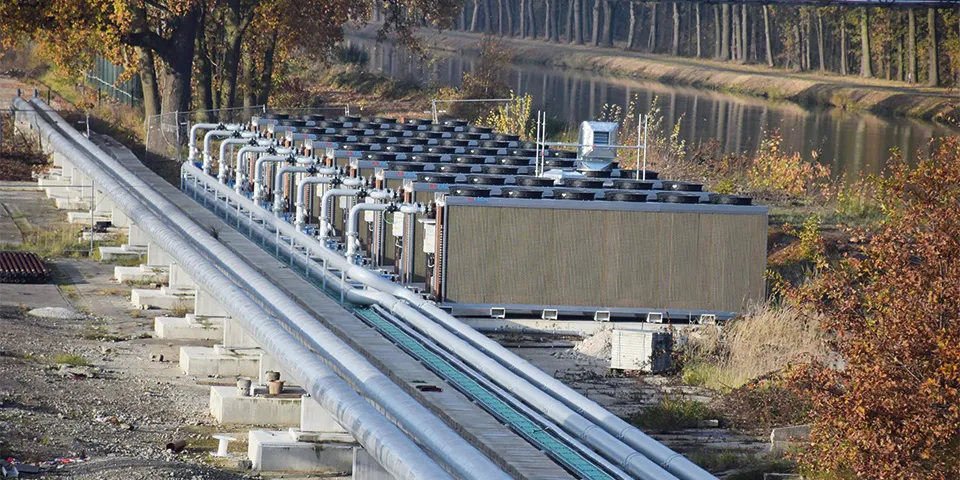
Flanders faces major challenges in the energy field. We need to drastically reduce energy consumption and make maximum use of renewable energy sources. In short, the energy transition. This is no easy task given our energy-intensive industry, ageing building stock and typically Flemish spatial planning. At the ‘Energy Transition & Real Estate’ seminar organised by SPRYG Real Estate Academy, various stakeholders took a look at a lower-CO2 future.
The energy transition is set out as an international policy goal in the Paris Agreement. 195 countries pledged to limit global warming to 2 degrees Celsius by 2100. This ambitious target requires a coordinated approach involving governments, businesses, energy suppliers and citizens.
Green bonds
The Flemish Government is making a strong commitment to improving the energy efficiency of its building stock. In November 2018, the Flemish Community issued a green bond, raising 500 million euros in a single day from 61 institutional investors in 11 different countries. The government raised 750 million through the recent issue of a second green bond. The Flemish Cabinet of Energy, led by Minister Lydia Peeters, will use this funding to improve the energy efficiency of its buildings, build affordable homes and finance passive schools under the ‘Schools of Tomorrow’ programme. In future, Flanders will also use it to fund circular-economy initiatives.
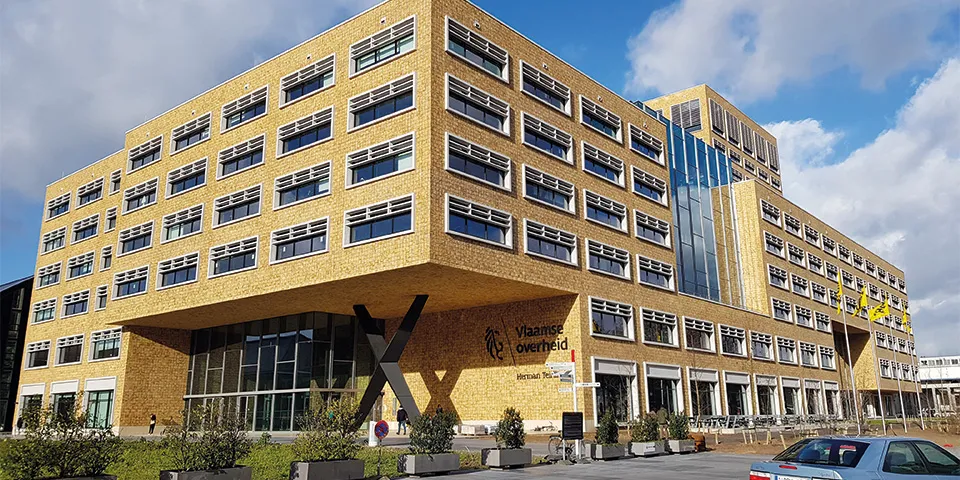
The Hermann Teirlinckgebouw in Brussels, a fine example of the Flemish Government’s efforts to build energy-neutral buildings.
Leading by example with Flemish government buildings
The European Energy Performance of Buildings Directive stipulates that all new buildings must be nearly zero-energy buildings from 2021. This has applied to new government buildings since 2019. Het Facilitair Bedrijf manages more than 180 Flemish Government buildings and has been working to save energy for a decade. These efforts led to the certification of an energy management system to ISO 50001 in early 2017.
Applying the ISO 50001 standard not only saves energy, but also ensures that energy management continues to improve. Compared with 2018, all ISO 50001-certified buildings achieved a 22.5% saving in primary energy consumption per workplace. Het Facilitair Bedrijf has also set three ambitious targets to optimise its property portfolio. First, it aims to save 3% kWhpr/year in ISO 50001-certified buildings up to 2030. Second, it aims to ensure long-term circular sustainability when leasing buildings. Third, it is targeting energy-positive buildings for new-build projects.
Energy alternatives gain ground
Sustainable heat sources such as industrial waste heat, geothermal energy and biomass offer opportunities and are being actively explored. A fine example is the first deep geothermal power plant in Flanders, which VITO is building at the Balmatt site in Mol. Initially, five boreholes will deliver 1.5 megawatts of electrical power, with the aim of increasing this to 5 megawatts over time. The geothermal power plant will be connected to a district heating network serving Mol and Dessel. The result: fully renewable and CO2-neutral geothermal heat.
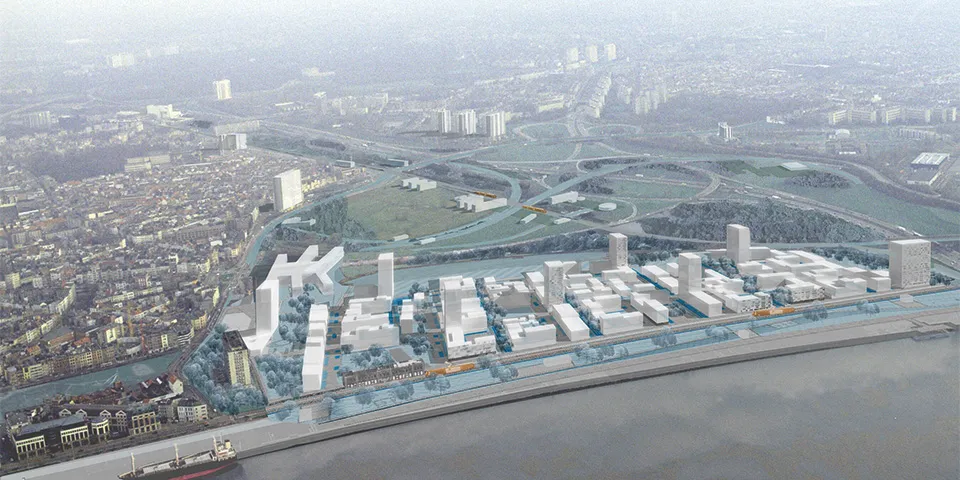
Simulation of Nieuw Zuid in Antwerp. (Image: antwerpen.be)
Sustainable urban development
Ideally, renewable energy production is combined with well-planned spatial strategies. Nieuw Zuid is set to become a prime example and catalyst for sustainable urban development in Antwerp. Developer Triple Living is committed to using energy and raw materials sustainably. The project includes a district heating network, a passive house standard for a CO2-neutral neighbourhood, extensive green space and wadis for a neighbourhood that is self-sufficient in rainwater.
The De Nieuwe Dokken project in Ghent, by Van Roey and CAAAP, is making a full commitment to renewable energy through the innovative ZAWENT concept (Zero Wastewater with Energy and Nutrient Recovery). Wastewater from vacuum toilets is collected separately along with macerated kitchen waste and converted into biogas in a digester. Heat is recovered on site from the grey water. After treatment, the neighbouring soap manufacturer Christeyns will reuse the water. Low-grade waste heat from the company will be returned to the residential neighbourhood.
Question about this story? Ask your question
Keep following this
Get an email when a new story is published. No account needed.
- ThemeEnergy generation and smart use
- SubjectNews







