











Designing new Legionella-safe installations: a challenge!
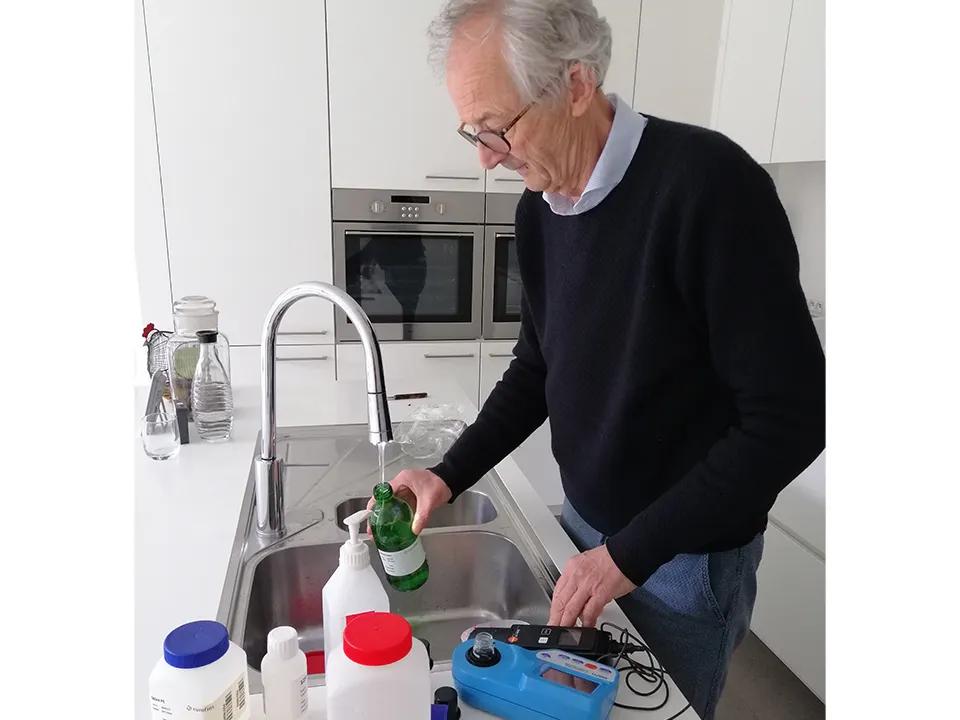
Flemish legislation on Legionella prevention, also known as BAT (Best Available Techniques), is being updated. It is about time: the BAT dates from 2007 and was revised in 2018.
The Ministerial Decree appoints a new Werkgroep Legionellapreventie Vlaanderen to screen new techniques and make proposals for installation designs that meet the BAT. As an expert in Legionella prevention, I am part of this working group. Together with other experts, I can advise on the BAT. I am pleased that we are getting to work on this. Legislation should really be reviewed regularly by independent experts. New techniques bring fresh insights across the broad spectrum of Legionella prevention: from sampling to analysis, and from risk assessment to flushing.
Within the working group, I want to champion the design of sound plumbing plans for new-build projects. In my day-to-day work, I see too many sites where Legionella problems could have been prevented by evaluating and checking plumbing plans before construction. This also saves money. The one-off additional cost upfront is a good investment when compared with the repeated costs and time involved in resolving Legionella problems. The problems keep recurring because the root cause lies in the design of the plumbing installation. For example, a cold-water pipe may inadvertently have been laid alongside a hot-water pipe.
Another issue I want to champion is Legionella prevention in energy-saving systems. Much more attention needs to be paid to balancing energy efficiency with Legionella-safe solar water heating or heat pump installations. Setting the temperature as low as possible saves energy, but can pose a safety risk. During a cloudy week, for example, the water temperature may remain at 45 degrees Celsius, the ideal environment for the growth of dangerous Legionella bacteria in particular. And putting the right control measures in place to prevent the risks is not straightforward. This is true even if you think everything is in order because the system automatically carries out thermal disinfection. Fortunately, we are also seeing new technologies provide a solution in this area. Anyone buying a solar water heater today has the option of avoiding the need to use the water stored in it as shower or drinking water.
I also receive daily customer enquiries about restarting systems after the relaxation of the coronavirus measures. While buildings were closed, the temperature of the hot-water system was lower and the circulation pump was switched off. Control measures, such as flushing and testing drinking-water quality, are needed to restart safely. The good news is that I have found a strong partner, Eurofins C-mark België, for these and other consultancy services relating to water quality and Legionella prevention.
In addition to testing, customers will also be able to turn to Eurofins C-mark België for a wide range of advice and support on drinking water, well water, swimming pool water and cooling tower water. We will now offer a single point of contact for all water quality and water safety issues, including those relating to food. Responsibility for Legionella prevention can also be entrusted to Eurofins, either in full or in part.
I am pleased that my company’s consultancy services are now managed through this one-stop shop by an international partner, which also offers a wider range of analyses and services. In the meantime, I can focus on inspection activities for drinking-water and sewerage systems. My colleagues and I will be glad to keep you updated!
Question about this story? Ask your question
Keep following this
Get an email when a new story is published. No account needed.
- ThemeSafe and efficient water use
- SubjectNews







