3 benefits of energy-efficient ventilation
Text and images DUCO
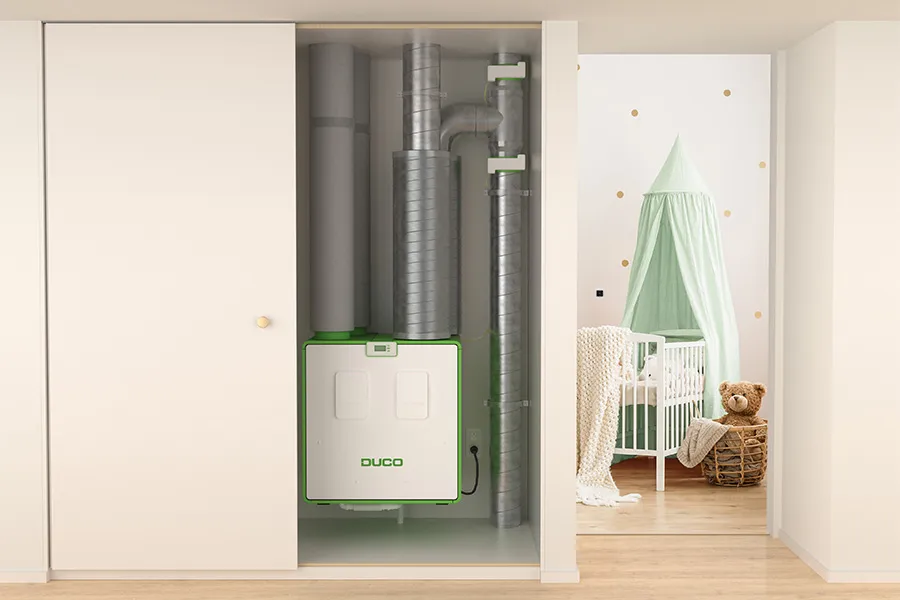
Although all the ventilation solutions available today serve the same purpose, namely keeping pathogens out and maintaining healthy indoor air, they are not all equally energy-efficient. Which ventilation methods use the least energy? And do they offer benefits beyond financial savings?
A person breathes in around 10,000 litres of oxygen and exhales about 1 kg of CO2 per day, and spends 90% of their time indoors. Buildings without ventilation therefore quickly develop excessive CO2 levels or an unhealthy indoor climate. Headaches, nausea, a feeling of lethargy and difficulty concentrating are just some of the effects
on people.
The importance of ventilation is clear. But ventilation uses energy, and we feel that in our wallets. Fortunately, there are plenty of ways to limit energy loss through ventilation.
Self-regulating ventilation grilles in windows, doors or walls, for example, already provide a supply of fresh air indoors and remove polluted, unhealthy air to the outside.
A demand-controlled ventilation system, such as DUCO's DucoBox Focus, applies the principle of zonal ventilation, ventilating only where it is needed, namely where people are present, as detected by sensors that automatically measure CO2 levels and humidity, and only in the right amount.
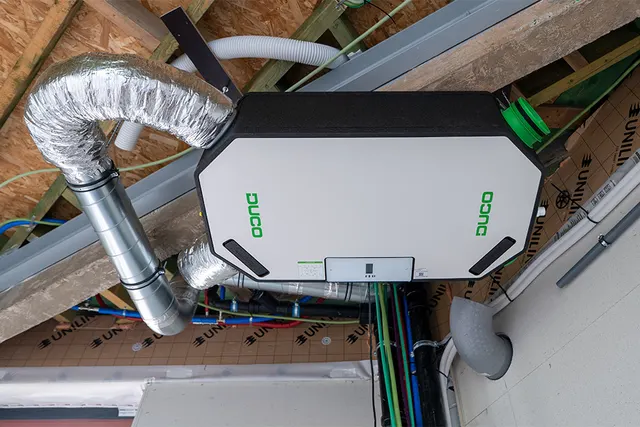
A heat recovery unit, or HRV unit, removes polluted, humid air from the home while allowing clean, fresh air to flow in. The ventilation unit contains a heat exchanger that preheats the clean air, preventing cold bridges and stopping the home from cooling down on colder days, so less heating
is needed.
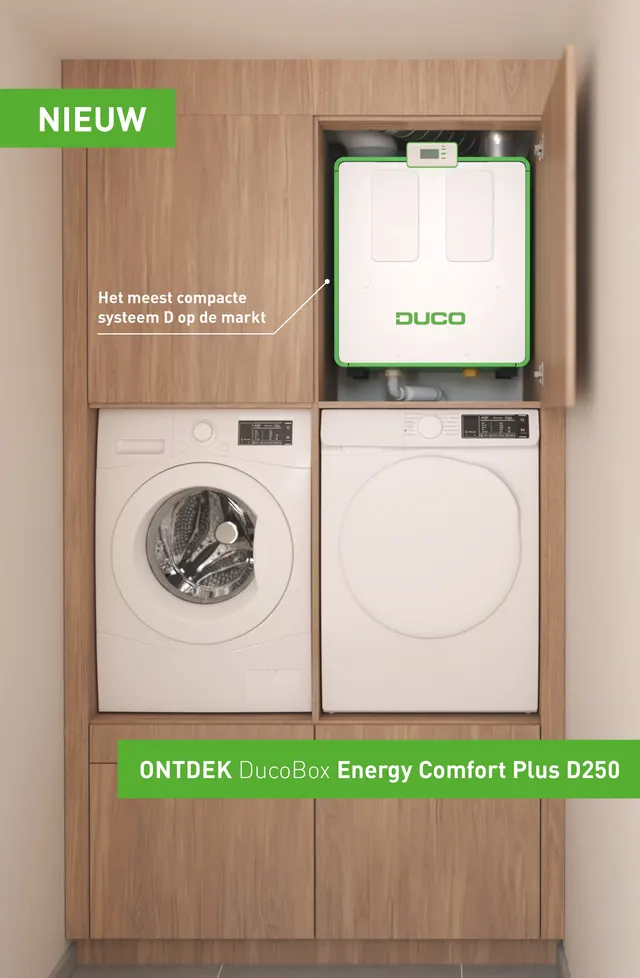
Finally, a demand-controlled HRV unit such as DUCO's DucoBox Energy Premium or DucoBox Energy Comfort (Plus) is an even more energy-efficient solution that also allows ventilation by zone. With these units, DUCO offers the most energy-efficient mechanical ventilation currently available on the market.
What are the benefits of energy-efficient ventilation?
1. The first benefit of energy-efficient ventilation is obvious: lower energy costs for homeowners and businesses.
2. Modern ventilation units not only use much less energy, they also deliver better air quality. A constant supply of fresh air and constant removal of polluted air and/or moisture keep mould and harmful substances such as CO2 out, which is of course healthier for anyone in the space.
3. Energy-efficient ventilation is also sustainable ventilation. Lower energy consumption means lower CO2 emissions. Measures are being taken around the world to drastically reduce our carbon footprint. And rightly so, because it is 5 to 12. We owe it to our children and grandchildren to make an active contribution to a healthier future.
By ventilating efficiently, building owners can therefore play a significant role in reducing CO2 emissions and the resulting climate change. DUCO recognises this and aims to help reduce the environmental footprint of new and renovated buildings with its energy-efficient solutions, which are continually tested and improved where necessary.
Energy-efficient ventilation with DUCO
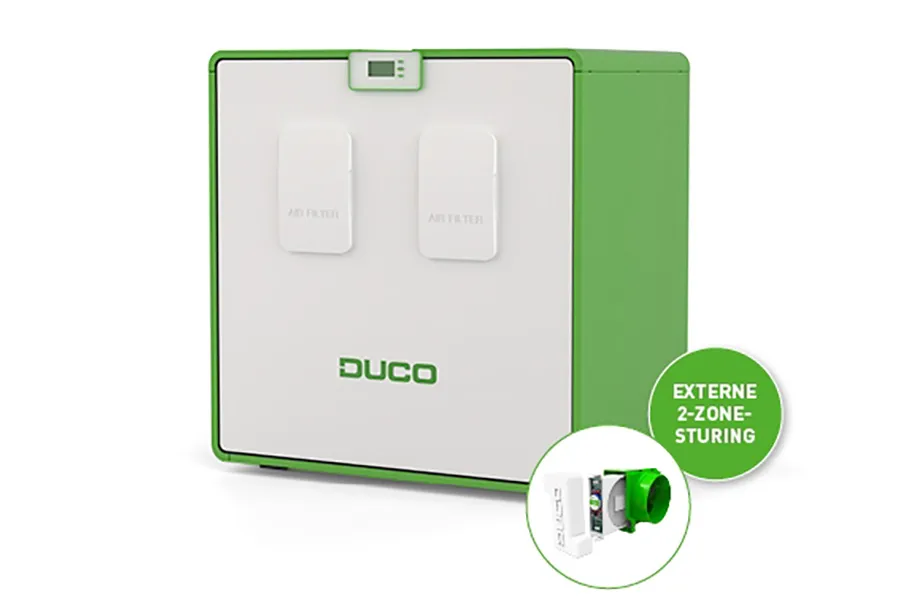
Among DUCO's energy-efficient ventilation solutions, the DucoBox Energy Premium and DucoBox Energy Comfort (Plus), both system D, are the leading models. As balanced ventilation units with heat recovery, both use integrated fans to extract polluted air from the home and supply fresh air, which is heated when necessary using heat recovered from the extracted air. The entire process is fully mechanical and automatic. Users therefore need do nothing to breathe fresh air in any room, at any time.
With integrated 2-zone control and demand control based on CO2 and humidity, both units achieve optimum energy performance. The day and night zones are controlled separately via a built-in damper, resulting in the highest EPB reduction and a green A+ energy label.
The DucoBox Focus, a system C unit, is also highly energy-efficient. Thanks to its patented internal control valves, the DucoBox Focus extracts polluted and/or humid air by zone. A single DucoBox Focus ventilation unit can ventilate as many as eleven rooms. Intelligent measurements based on CO2 and/or humidity ensure that ventilation takes place only where and when needed, and in the right amount.
Building to the Passivhaus standard with DUCO
DUCO supplies products that make it possible to build a Passivhaus. The independent research institute Passive House Institute (PHI), which certifies products as such, has already awarded the DucoBox Energy Premium a Passivhaus certificate. Applications are under way to certify other DUCO products as well.
Have a business enquiry for DUCO? Get in touch
Companies in this story

Keep following this
Get an email when a new story is published. No account needed.
- ThemeHealthy air and summer comfort
- SubjectAir handling
- CompanyDUCO