The importance of hygiene certification for adiabatic humidification
Text Piet AndriesImage Dristeem
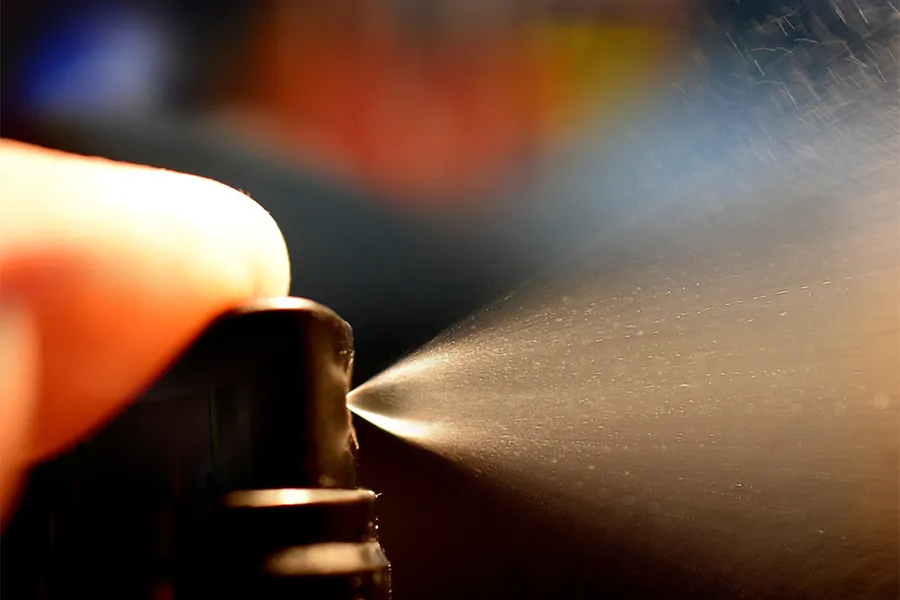
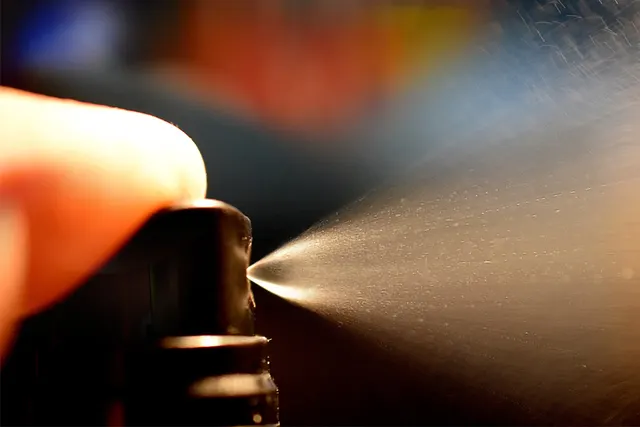
Adiabatic humidification, in which water is atomised into an extremely fine mist directly into the air stream, is gaining ground as a sustainable, CO₂-free way to keep air free of bacteria. It is increasingly clear that it can be used in buildings and infrastructure where healthy, bacteria-free air distribution is essential. DriSteem Belgium, also known as DSH, is committed to ensuring the hygienic safety of adiabatic humidification in accordance with VDI 6022 certification, a highly valuable label.
“VDI 6022 certification is the standard for hygiene in HVAC systems according to REHVA, the European HVAC federation and counterpart to America’s ASHRAE,” explains DriSteem Belgium sales manager Marc Briers. “It guarantees that all components meet strict hygiene standards, preventing irritation, allergies and even infections.”
This is particularly important in public spaces, office buildings and production environments with stringent air quality requirements. Naturally, the certification, developed by German engineers, is therefore crucial for hospitals and the pharmaceutical sector.
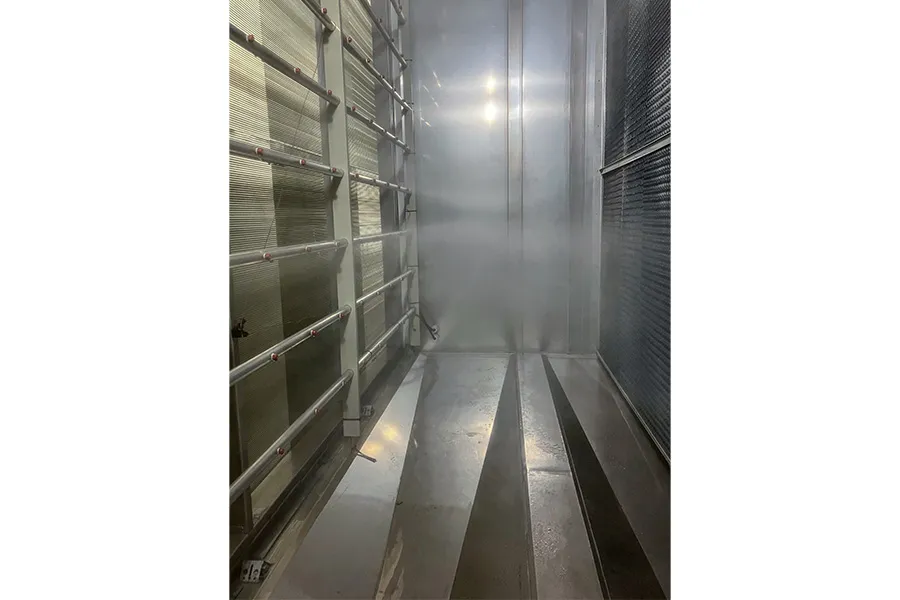
As different as night and day: certification and compliance
Adiabatic humidification, in which sustainable heat from a source such as a heat pump evaporates water, is increasingly seen as the answer to the demand for environmentally responsible, energy-efficient humidification. Unlike steam humidification, a field in which DriSteem has built a reputation since 1965, it does not require a conventional heat source such as gas. Adiabatic humidification therefore has a key role to play in the transition to fully carbon-free operations, but there are some concerns about its health implications. “Steam is always sterile, and because many hospitals still use a gas boiler for heating, it is often the obvious choice for now,” Marc Briers continues. “For now, because these institutions will also have to switch to renewable sources in the long term.”
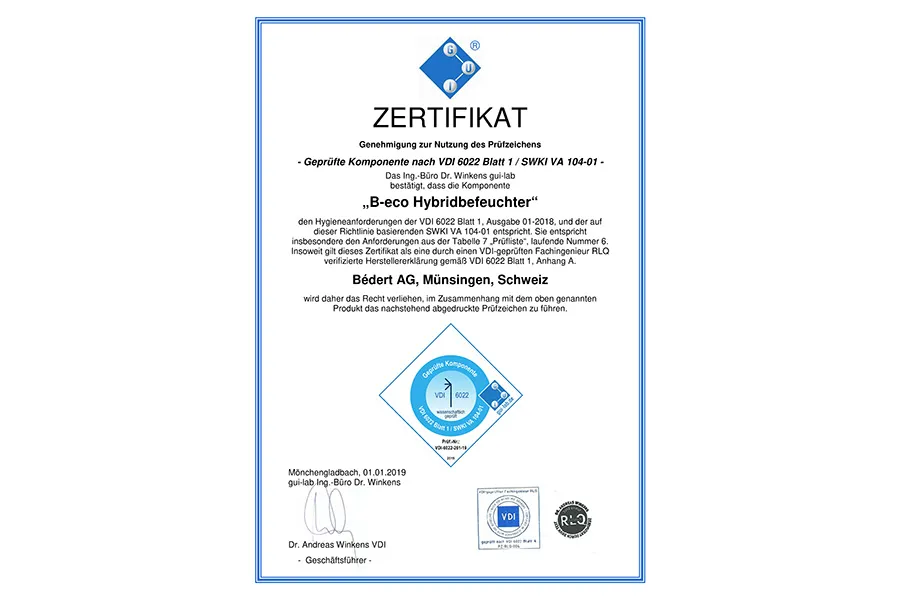
Especially given its efficiency at larger scales and low-maintenance operation, adiabatic humidification offers an attractive way forward. This is all the more true because recent studies show that it is nowhere near as unhygienic as previously thought. Marc Briers says: “As a distributor, we have a responsibility to provide guarantees, particularly for our customers in the healthcare sector. VDI 6022 certification covers around ten aspects, from installation to system maintenance. Crucially, there must be no stagnant water or corrosion, to prevent microbiological growth. The certificate is awarded only when these standards are fully met, indicating a safe and healthy indoor climate. The difference between this recognition and the frequently cited claim of hygiene compliance is night and day. The latter often refers to an external organisation endorsing just one of many guidelines.”
DriSteem Belgium is the only company on the market able to provide VDI 6022 certification for its humidification system without chemical additives or biocides for low-pressure atomisation. Thanks to low air resistance and highly precise control of the amount of water atomised into the air stream, DriSteem units also use very little electricity.
Tailored solutions to suit the budget
The choice between adiabatic humidification and steam, which can also be generated sustainably if required, naturally also depends on the cost, because sustainability does not always go hand in hand with economic viability. A solution tailored to the customer, alongside a fully managed service including water treatment and a maintenance contract, is therefore one of the ways DriSteem sets itself apart. “The upfront costs of adiabatic systems, including investment in water treatment and hygiene certification, are relatively high,” says Marc Briers. “But thanks to the favourable total cost of ownership (the total cost of purchasing and owning a product or service over its entire life or usage cycle, ed.), it is an obvious choice for larger installations. For smaller spaces, steam humidification is more economical.”
As humidification takes on an increasingly important role in workplace wellbeing, DriSteem’s multi-technology approach is certainly an advantage. Marc Briers also points to updated regulations, such as the Codex on Well-being at Work. This legislation sets limits for employers on CO2 concentration and humidity, but the latest revision tightened the humidity requirement from 30 to 70% to 40 to 60%. A healthy indoor climate reduces the risk of bacteria and viruses spreading, as well as the risk of irritation, leading to less sickness absence. Employers therefore have every reason to choose the right system.
Een zakelijke vraag aan Dristeem Belgium? Get in touch
Companies in this story
Keep following this
Get an email when a new story is published. No account needed.
- ThemeHealthy air and summer comfort
- SubjectAir handling
- CompanyDristeem Belgium