











A familiar silicone sealant has been setting the standard for 50 years
Text Wouter PolspoelImage Soudal
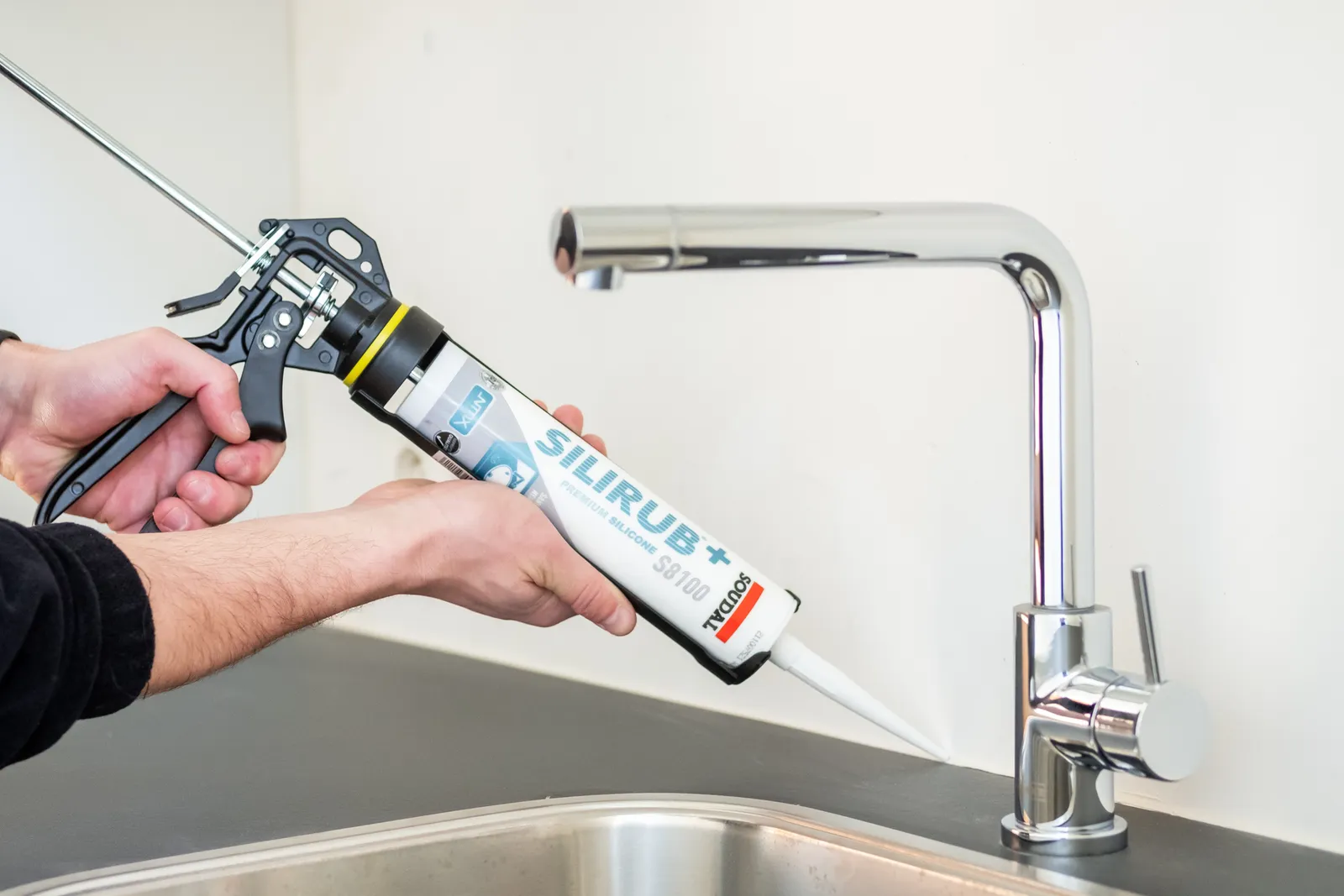
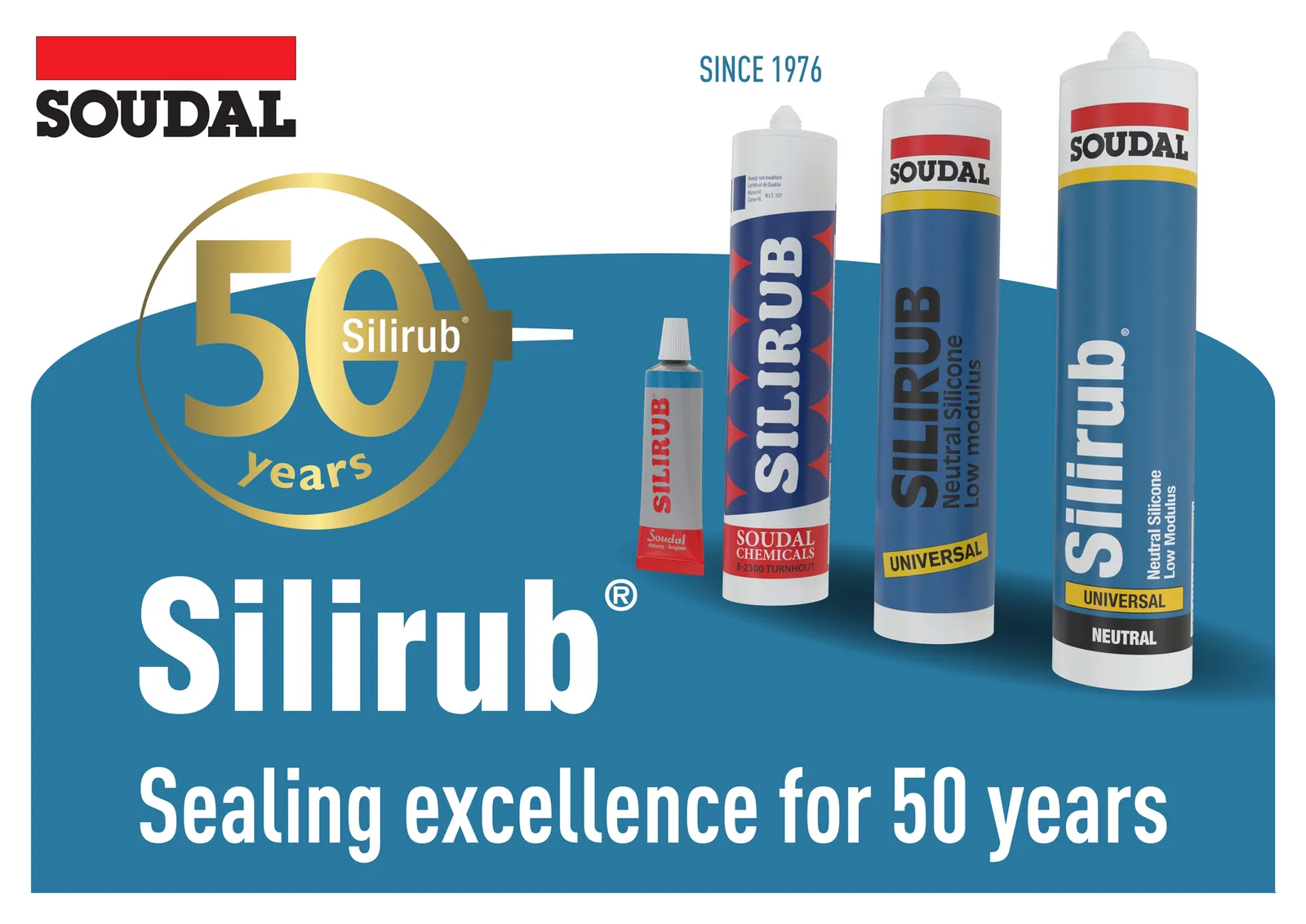
When Soudal launched its silicone sealant in the mid-1970s, it was far from an obvious move. Joints were still sealed with putty, which was the norm. Yet the decision proved visionary: the sealants were easier to apply, more flexible and longer-lasting. Fifty years on, Silirub has become a firm fixture on site, including in sanitary applications.
The first users came from the glazing sector, but other trades soon followed. The turning point came when traditional putty manufacturers also wanted to distribute the product, making it clear that silicone was no longer a niche solution. Since then, Silirub has developed into a versatile range of joint sealants for a wide variety of applications, from glazing and façades to sanitary fittings and interior finishing. Silirub silicone sealants adhere to almost any substrate. They also perform reliably: they accommodate movement, remain stable through temperature fluctuations and retain their performance in damp environments. Their resistance to weathering and UV radiation also makes them suitable for outdoor use.
Continuous optimisation
The formulation of Silirub silicone sealants has evolved over the years, chiefly to make them even easier to apply and reduce their impact on users. Today, Silirub sealants have low odour and lower emissions, helping to improve indoor air quality. Packaging has also been optimised, with some cartridges made from recycled material.
A sealant for every sanitary application
Sanitary applications now occupy a prominent place in Silirub’s broad range of uses. It is easy to see why: joints in bathrooms, kitchens and other damp areas are exposed to demanding conditions. They must withstand water, humidity and temperature fluctuations. Conditions also vary from room to room: kitchen joints come into contact with water only occasionally, while bathroom joints do so every day. Temperatures in kitchens are often more stable than in bathrooms, too. For residential applications, the Silirub range includes easy-to-apply sealants that protect against mould growth. For professional settings, where long-term performance is even more critical, the range offers more specialised solutions.
Silirub 2S is a sanitary sealant that adheres to a wide range of materials and is frequently used in bathrooms where both technical and aesthetic requirements need to be met. Where stronger adhesion to aluminium or painted surfaces is required, Silirub+ S8100 offers an alternative with a slightly firmer consistency. Silirub+ S8100 is suitable for joints between walls and baths or shower units, as well as for kitchen applications and damp floor finishes. For projects involving natural stone, such as marble or bluestone, Silirub MA is the ideal choice. This sealant prevents discolouration of the stone while ensuring a neat finish. Silirub MA is also suitable for non-sanitary applications.
Silirub+ S8800 is used for applications similar to those of Silirub MA, but feels slightly firmer when applied. Silirub+ S8800 also meets demand for matt finishes.
From alternative to benchmark
The message is clear: fifty years after its launch, Silirub is above all a symbol of in-depth specialisation in a product category that was long taken for granted. What began as an innovative alternative to putty has developed into a technically advanced, differentiated range designed for a wide variety of on-site requirements. This continuous refinement of its formulation, ease of application and suitability for specific uses means that Silirub now helps shape the way joints are sealed on site.
Een zakelijke vraag aan Soudal? Get in touch
Companies in this story

Keep following this
Get an email when a new story is published. No account needed.
- ThemeSafe and efficient water use
- SubjectNews
- CompanySoudal







