Specialist angle valves ensure high-quality drinking water and your safety
Text Insticom / Maxime BervoetsImage Insticom
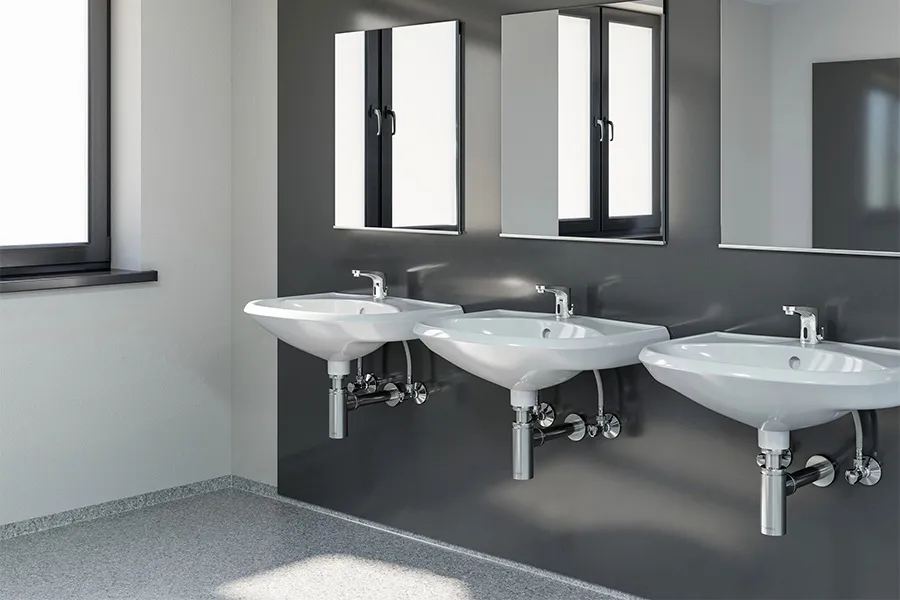
While most taps in the kitchen, toilet or bathroom stand out for their design, the angle valve is usually hidden beneath the basin and is valued above all for its functionality. German sanitaryware specialist Schell, known for its angle valves, has also included several special angle valves with unique features in its extensive range. For example, they protect against scalding and damage caused by dirt particles, and help safeguard drinking water quality. Regardless of the type, they help reduce water consumption.
Save up to 40% water
As well as Schell’s durable quality and the use of materials suitable for drinking water, all Schell angle valves have one thing in common, unlike angle stop valves: they save water. A correctly adjusted angle valve can reduce water consumption by up to 40% without compromising comfort. Schell’s special angle valves also offer a number of other interesting features:
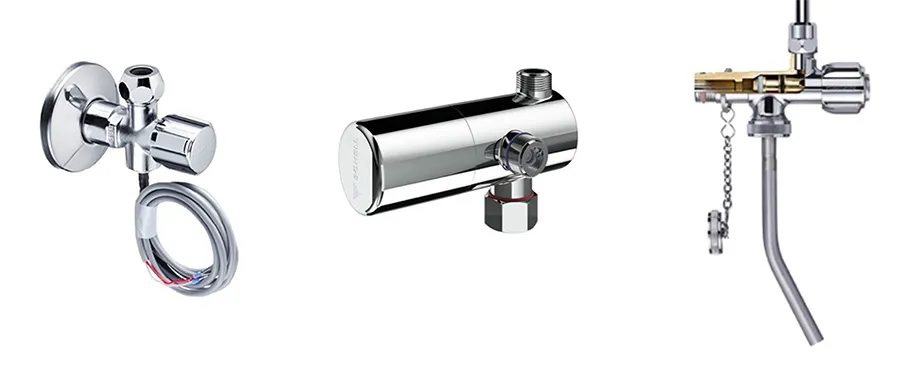
Angle valve with temperature sensor
With its built-in temperature sensor, the classic angle valve is ready for the future. The Schell COMFORT PT angle valve can continuously measure the water temperature and transmit it to the Schell SWS water management system. This is extremely useful for maintaining drinking water quality in buildings. If temperatures exceed or fail to reach the specified limits, measures such as flushing stagnant water can be initiated via Schell SWS. Monitoring the water temperature prevents bacterial growth.
Thermostatic angle valve
The new Schell thermostatic angle valve protects against scalding in particularly sensitive applications. This is essential, for example, in nurseries, care homes and hospitals. Its practical design also makes the valve easy to install where mounting space is limited. The thermostatic angle valve ensures that the water temperature at the outlet is kept constant at the set temperature, and guarantees protection against scalding, even if the cold water supply fails. The thermostat is available as a set with a fixed or flexible connection.
Sampling angle valve
Premises at increased risk of Legionella contamination are required to have their drinking water systems tested microbiologically twice a year. Schell has developed a special angle valve to help operators meet this testing requirement. It comprises a double connection valve with a secure connection to the stainless steel sampling tube, and an angle valve for connecting basin taps. Schell’s new sampling angle valve meets the requirements for a system analysis in accordance with NEN-EN-ISO 19458:2007 in sanitary areas. Water flows through the angle valve to the outlet fitting without any dead spaces, making it possible to assess the water quality in the drinking water system objectively. Samples are taken via the supplied stainless steel tube, which can be fitted temporarily. The connection is then securely closed with the accompanying safety cap to prevent incorrect operation. The sampling tube can also be thermally disinfected thanks to its heat-resistant seals, ensuring that samples are not contaminated by residue in the tube.
Angle valves with filters
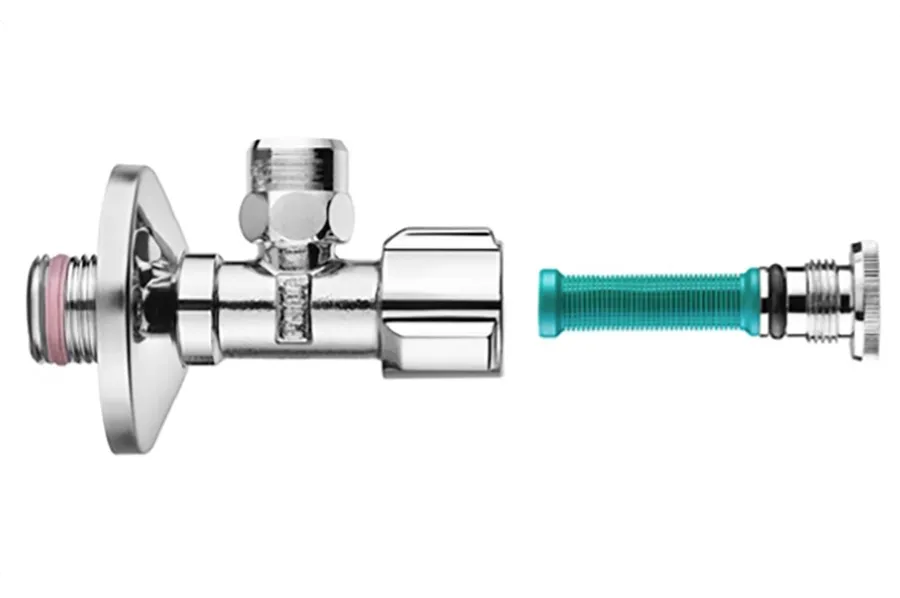
Dirt particles and limescale residue are repeatedly flushed through the pipework with the drinking water. Over time, they can cause significant damage to taps. Schell filter angle valves can help prevent this. The filter in the angle valve traps harmful particles and can easily be removed and cleaned under running water. Schell’s filter angle valves therefore make an important contribution to protecting taps and extending their service life and durability.
Even more options
Whether you need to protect taps, safeguard water quality, take samples, measure temperature or prevent scalding, Schell’s special angle valves are always a good choice. You can find many more special versions on the Schell website.
Question about this story? Ask your question
Keep following this
Get an email when a new story is published. No account needed.
- ThemeSafe and efficient water use
- SubjectSanitaryware