Office washrooms: a new reality
As we enter a new phase in the coronavirus exit strategy, employees are returning to the office full-time or part-time. Do office washrooms still meet their expectations? New habits have emerged, mindsets have changed and new rules are being introduced. More than ever, installing washroom facilities with a range of features suited to shared spaces is essential.
In the current pandemic, the highest standards of hygiene have become an absolute requirement. In washrooms, for example, extra attention must be paid to door handles, washbasin taps, shower taps, contact points on shower doors, individual toilet door handles and toilet flush buttons. Cleaning frequency should take into account how many people use the facilities.
Water companies also recommend continuing to follow legionella prevention plans carefully. Businesses without a legionella prevention plan, whether mandatory or not, are also advised to flush their pipework thoroughly before putting it back into use. This can be done by opening all the taps briefly and letting the water run gently for one minute.
Above all, the key advice is to enter and use the workplace only after washing or disinfecting your hands thoroughly.
Self-closing mechanical or electronic basin taps improve hygiene by eliminating the need to touch the tap after washing your hands. Any bacteria or viruses on the handles are therefore not transferred back onto your hands.
Manually flushing the system is labour-intensive and costly, especially in larger installations. Electronic taps offer a significant advantage here too: their automatic periodic anti-bacterial flush makes manual flushing unnecessary. This anti-bacterial flush is activated if the tap has not been used for 24 hours, preventing water from stagnating in the tap and pipework.

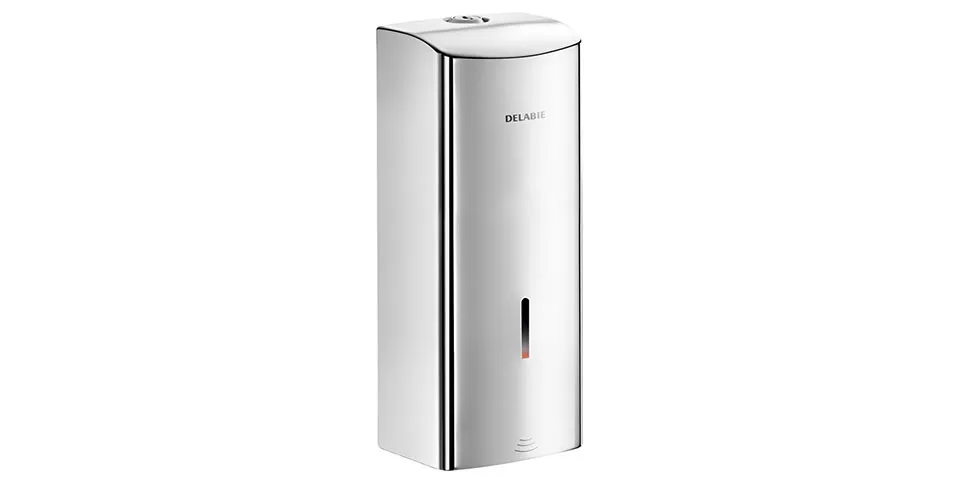
Touch-free operation improves hygiene.
New habits
With the importance of hand hygiene being emphasised so strongly, we now wash our hands an average of 12 times a day. Traditional basin taps use 9 litres per minute. If washing your hands takes 32 seconds, including wetting, lathering and rinsing, and the tap is left running throughout, total consumption is 4.8 litres per use*. The impact of more frequent handwashing on water consumption is significant… rising from 24 litres to 57.6 litres per person per day.
For environmental reasons, we need to reduce this increased water consumption. Compared with a traditional basin tap, DELABIE’s self-closing mechanical or electronic taps maximise water savings. They help building owners reduce water bills without compromising user comfort. The tap closes automatically after 7 seconds (mechanical models) or when hands are removed from the detection zone (sensor-operated models), and has a limited flow rate of 3 litres per minute at 3 bar. Users can wet their hands, apply soap and rinse without the tap running continuously. With a DELABIE electronic tap, water consumption falls to 0.6 litres per use, a reduction of almost 90%.
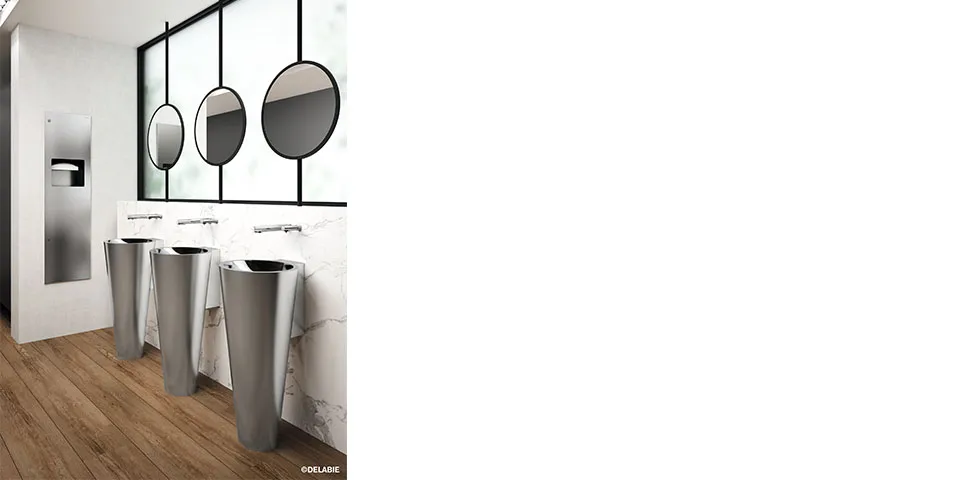
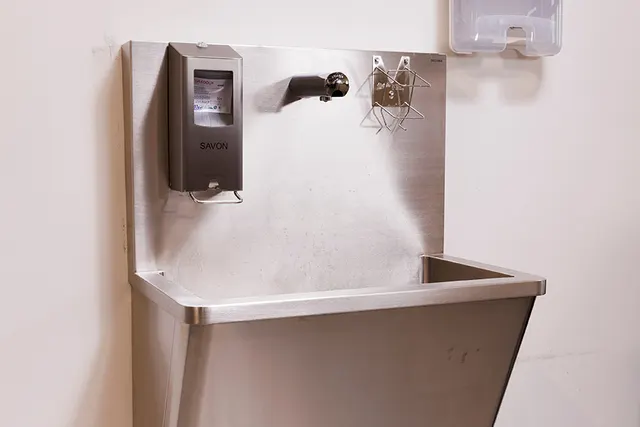
Stainless steel improves hygiene in washrooms.
A new mindset
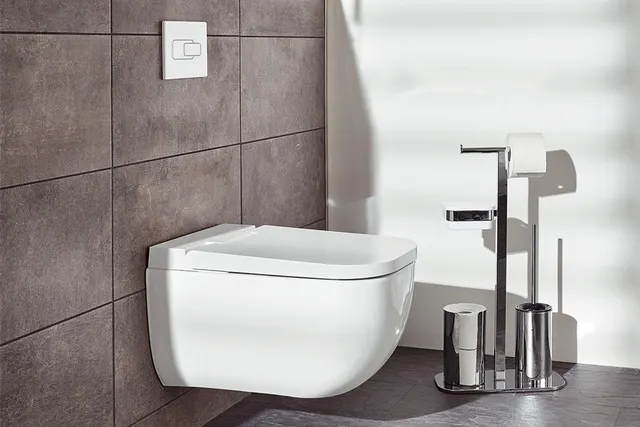
Many employees are still working from home part-time or full-time. After weeks away, some may find it daunting to return to the office. They hope to catch up with colleagues, develop their skills, express their creativity and, above all, feel comfortable and safe at work. It may sound strange, but washroom facilities also play an important role in this sense of comfort and safety. Users expect washrooms to be not only clean and accessible, but also a place where they can relax and feel comfortable.
Choosing the right products can help: taps and accessories should have a clean design with as few joints as possible, so that dirt and bacteria cannot build up. Simple, one-piece models offer a clear hygiene advantage over complex designs.
Workplace washrooms need accessories that can withstand frequent cleaning and are durable and reliable. Stainless steel is the ideal material for washroom facilities thanks to its non-porous, smooth surface and bacteriostatic properties. It is easy to clean using less cleaning product, and after cleaning, bacteria, germs and dirt are retained at rates up to 20 times lower than with other materials such as glass or plastic.
Hygiene is likely to remain high on the public health agenda. Handwashing and disinfection are essential weapons in the fight against the spread of germs and bacteria. Employers need solutions that provide their employees with comfortable, hygienic, water-efficient and reliable washroom facilities. The Delabie website offers a wide range of targeted solutions.
A business enquiry for Delabie? Get in touch
Companies in this story
Keep following this
Get an email when a new story is published. No account needed.
- ThemeSafe and efficient water use
- SubjectSanitaryware
- CompanyDelabie