Measure the quality of system water
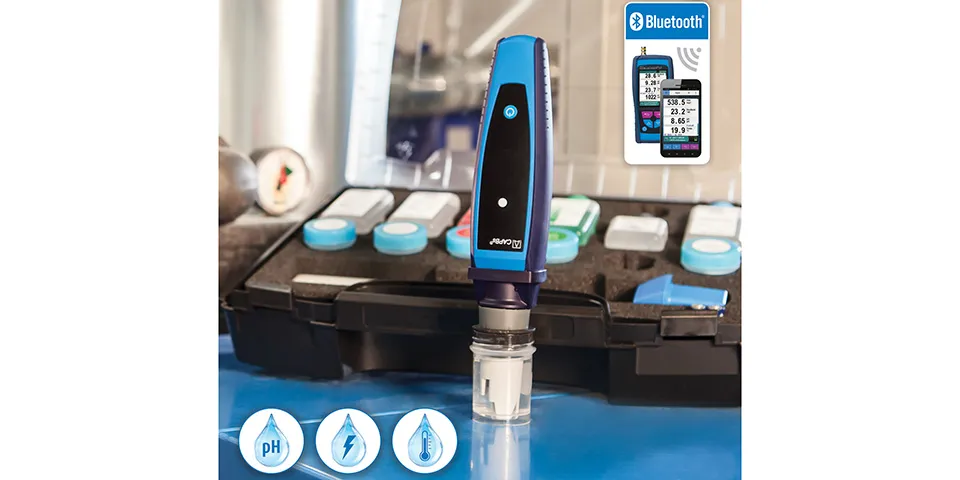
In a central heating system, the water circulating through the system plays an important role. The quality of this system water has a major influence on the installation’s service life, efficiency and operation. One important factor is acidity, or pH. A pH that is too low corrodes the installation’s steel components and pipes, while a value that is too high damages its aluminium parts. Another factor is rust and metal particles that enter the water as a result of corrosion and wear. These particles can cause faults and blockages. The final factor is water hardness. Even when relatively soft water is used, limescale will build up on various components, such as the heat exchanger. Just 1 mm of limescale can increase energy consumption by 10%.
The new Blauwe Lijn CAPBs Sens WQ10 provides a solution for assessing water quality. Take a sample of the system water and test it by immersing the probe. The instrument measures pH, conductivity and temperature. The water’s salt content, total dissolved solids (TDS) and hardness are calculated from these readings. As with all CAPBs, you can view the readings on a Blauwe Lijn measuring instrument or in the free EuroSoft live app on your smartphone or tablet.
If readings indicate that the acidity is outside the acceptable range or that contamination is excessive, corrective measures can be taken. Follow the manufacturer’s guidelines or VDI2035. Checking the system water should form part of the regular maintenance of the entire installation. Stored measurement reports allow you to monitor water quality and take action in good time.
Question about this story? Ask your question
Keep following this
Get an email when a new story is published. No account needed.
- ThemeSafe and efficient water use
- SubjectSanitaryware