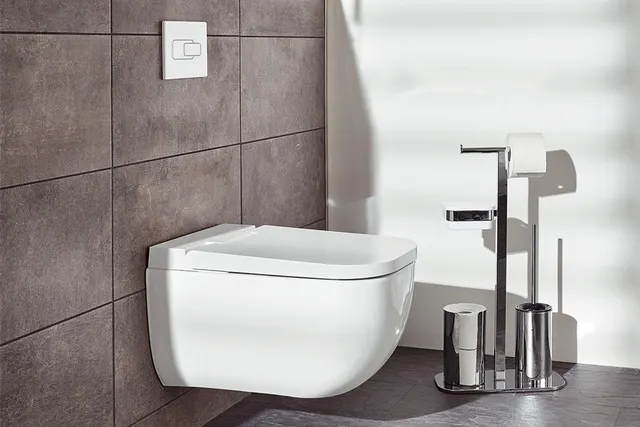
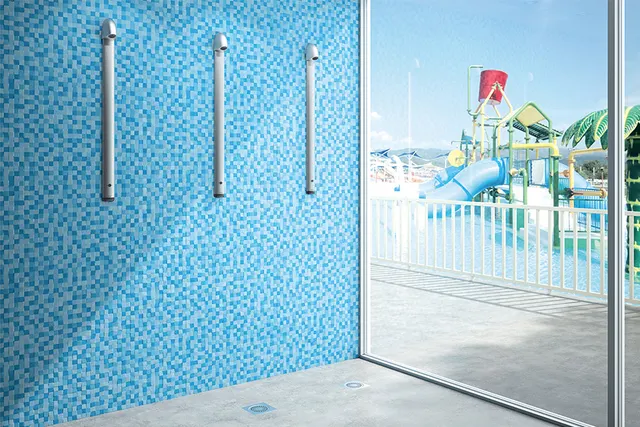
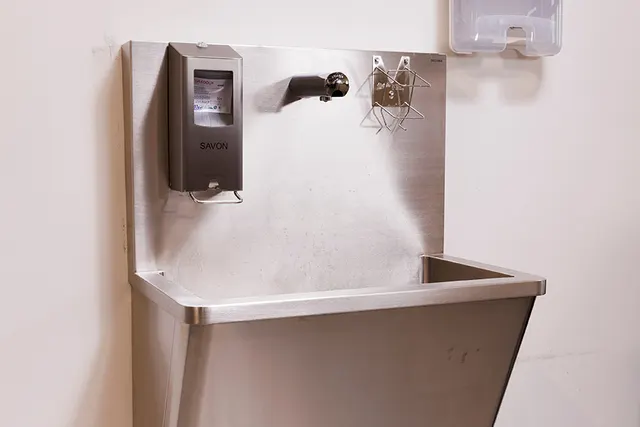
Direct flush: the solution for public toilets
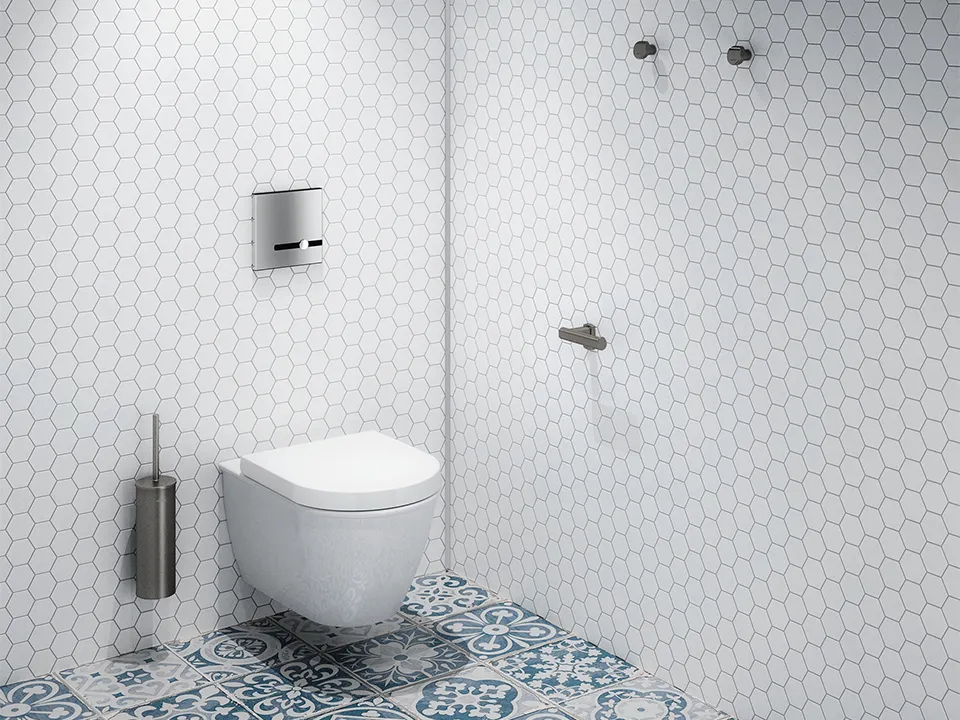
The many advantages of direct flushing make it an ideal system for fitting toilets in public buildings.
Direct flushing is widely perceived to require a significantly larger diameter for the supply pipes. As this is not the case, we are pleased to explain its benefits, which are still less widely known…
In Eastern European countries and Japan, direct-flush toilet systems are well established. However, there is still considerable potential for growth in the Benelux market. The perception that direct flushing requires a significantly larger diameter for the supply pipes is unfounded. The larger the direct-flush toilet installation, the smaller the difference in pipe diameter compared with the supply pipes for cisterns.
Points to consider with cisterns
The main concern with toilets fitted with cisterns is their susceptibility to limescale and impurities, which can build up and damage the flush system’s seal. Depending on the quality and hardness of the water, a leak may occur just a few months, or even weeks, after the toilet is installed. Water trickling down the porcelain is very difficult to detect. As a result, toilets with cisterns are often the first sanitary fixtures where water is wasted: an undetected flow can lead to a loss of up to 220 m³ per year, or €946 per toilet per year (source: Water Information Centre).
Cistern toilets that go unused for several days pose a risk. Stagnant water at room temperature, where limescale and impurities can form, encourages bacterial growth. Cisterns also struggle to withstand the intensive use typical of public facilities. Last but not least, maintaining a large number of installed cisterns can prove difficult.
The advantages of direct flushing
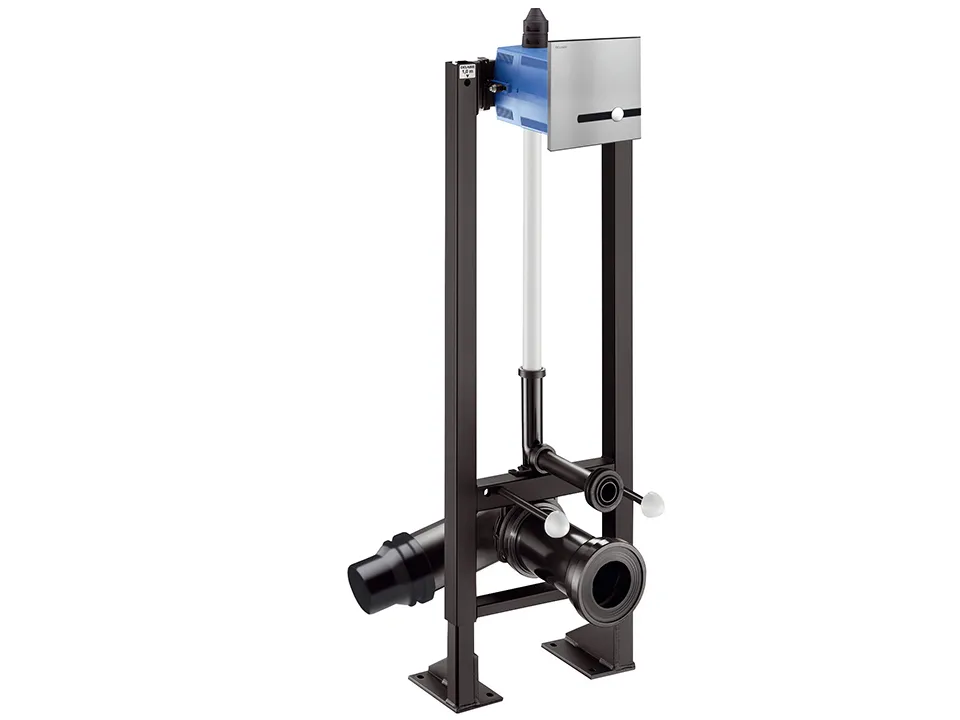
The direct-flush valve is specifically designed to meet the high demands of public washrooms with heavy footfall. Its hygienic, robust and efficient design greatly reduces the risk of leaks. With a direct-flush system, there is no stagnant water, limescale or build-up of dirt, so bacteria cannot grow. Another key consideration is the flushing power. A cistern toilet relies on gravity, which results in a less powerful flush. A direct-flush system uses the pressure of the water supply network. Its flushing power ensures efficient operation, so a single flush is enough. This system also allows consecutive flushes when needed, for several users in a row. There is no need to wait for the cistern to refill. A short 7-second flush, with no waiting time, gives users a more comfortable acoustic experience. Architects value the compactness of a direct-flush system, as no space needs to be set aside for a cistern. Every centimetre of space is precious, especially in public facilities and healthcare settings.
What about the diameter?
Contrary to popular belief, a cistern toilet can be replaced with a direct-flush system during renovation. Where a technical room is accessible and a water riser is nearby, for example in a hospital or office building, in most cases only the final branch connections need to be replaced. As for the supply pipes, the technical specifications for direct flushing use a different calculation from those for cistern toilets. They show that the diameter of the pipes in question is close to that used for cistern toilets. This is because a cistern flush lasts much longer than a direct flush, which takes only a few seconds. For calculating the design flow rates, it is advisable to consult the manufacturer’s recommendations. For DELABIE direct-flush toilets, this is 1 l/sec. When calculated in this way, the pipe diameter for a direct flush system is not, contrary to common concerns, far removed from that for cistern systems.
Products designed for the job
The mechanism and operation of DELABIE’s direct-flush toilet valves, with no vulnerable plastic components, are impact-resistant and vandal-proof. They have a service life of at least 500,000 operations. With a front-wall system fitted with a DELABIE toilet valve, maintenance is limited to cleaning or replacing the standard mechanism. The mechanism and system are immediately accessible without removing the valve.
DELABIE now offers an extensive range of direct-flush toilet valves, including both self-closing and electronic models. Choose the product that best suits your design and optimise your BREEAM or LEED score.
A business enquiry for Delabie? Get in touch
Companies in this story

Keep following this
Get an email when a new story is published. No account needed.
- ThemeSafe and efficient water use
- SubjectSanitaryware
- CompanyDelabie