Choosing the right sealant for sanitary joints
Text Trees AccouImage Soudal
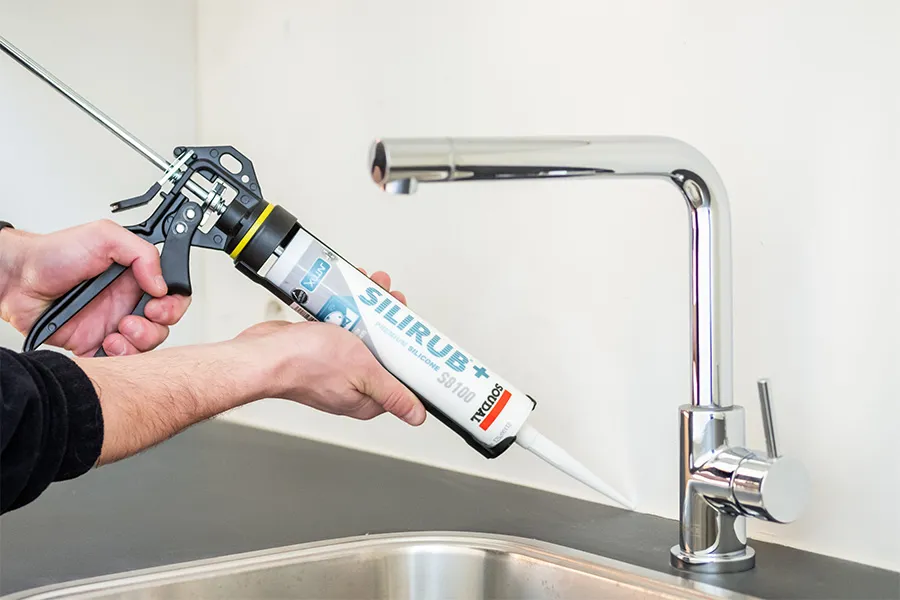
Kempen-based Soudal is best known for its PU foam, adhesives and sealants. Professional plumbers are particularly keen on the latter. Whether a joint needs to resist mould or be paintable, Soudal has the right sealant for every application in its range. Its sealants also work perfectly with the latest bathroom trends.
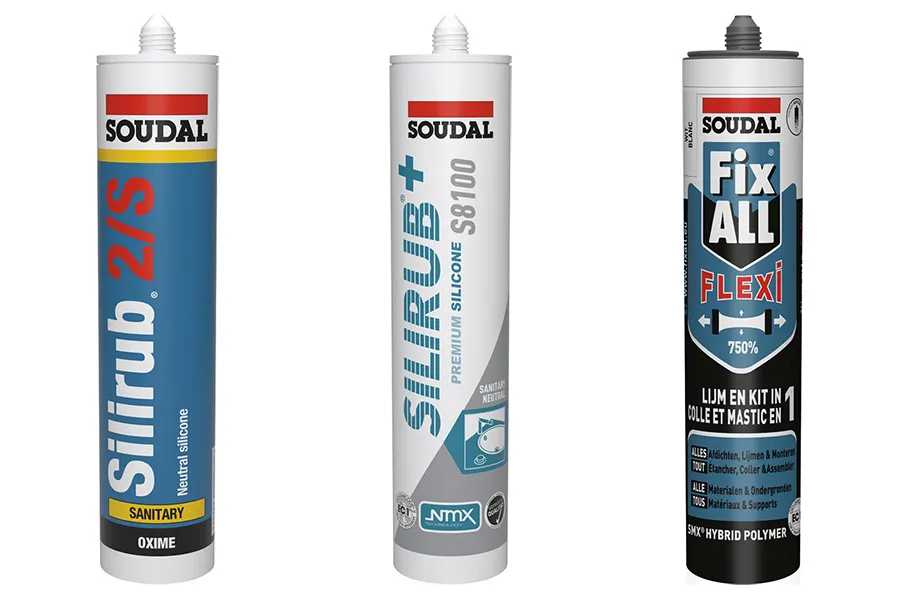
Sanitary joints must withstand high levels of humidity, whether in a bathroom, kitchen or utility room. High or low temperatures can make a joint vulnerable to bacteria and mould. A smooth, properly applied sealant makes it harder for mould to take hold. That is why a good sanitary sealant also contains a fungicide, which slows mould growth. “For example, choose Silirub 2/S, a neutral sanitary silicone with excellent mould-resistant properties, available in around ten colours,” recommends Soudal product manager Laurent Van Tendeloo. “If you want a sealant that feels slightly firmer during application, Silirub+ S8100 is also a good choice. It is available in 25 colours. You can also use other types of sealant, such as certain hybrid sealants, for example Fix All Flexi. Bear in mind, though, that the joint between the bath and the wall requires a sealant with a high movement capability.”
Sealants suitable for sanitary applications must carry the CE mark and comply with EN 15651-3:2012. In addition to standards and tests that apply to other sealants, this specifically means that the sealant must be tested in accordance with ISO 846, Plastics (Evaluation of the action of microorganisms). Put simply, the sealant must resist mould growth. To prevent mould from taking hold altogether, it is important to clean the sealant regularly, removing the soap residue and dead skin cells that provide a breeding ground. Recommend neutral or alkaline cleaning products to your customer. A smooth, properly applied sealant is easier to clean.
Bathroom trends
Bathrooms are taking on a new role in our homes. This also means new materials are making their way into them, such as acrylic baths and luxury vinyl tiles. “One important thing to keep in mind with these innovations is how well your sealant will adhere,” notes Laurent Van Tendeloo. “A sealant is elastic and accommodates movement, for example between the bath and the wall. To stop water getting between the wall and your sanitaryware, the joint must move with it and remain well bonded. Our sanitary sealants have been tested to ensure optimum adhesion to a wide range of materials. For a good bond, fill the bath halfway before applying the sealant. This puts the joint at half-height and helps prevent the maximum stress caused by the joint’s greatest and least expansion.”
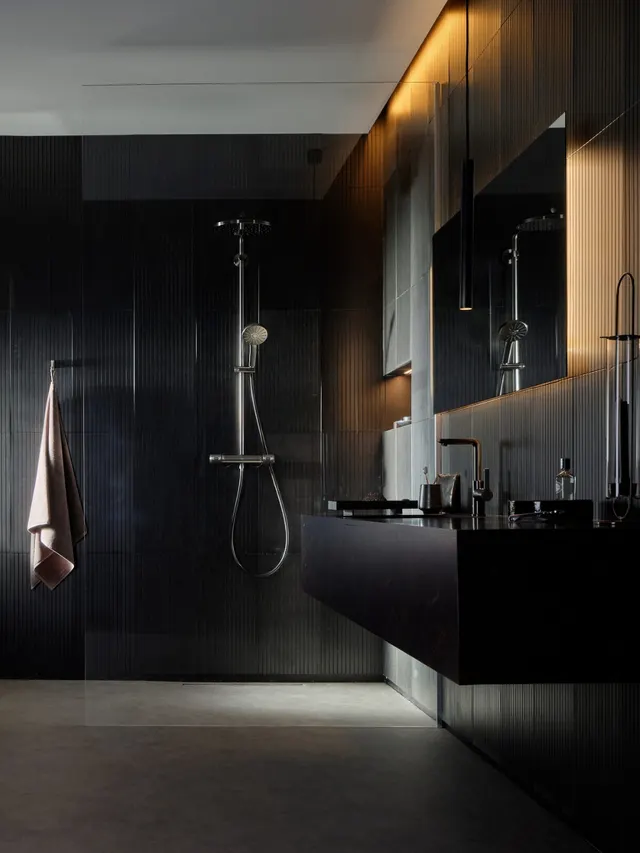
Another bathroom trend is the use of matt and dark colours. “Until a few years ago, everything had to be glossy and bling. Today, customers are opting for matt finishes. It looks good when your sealant matches, for example by using black or anthracite. We keep a close eye on current trends and add new colours to our range as needed.”
Work with confidence
Alongside visible trends, Soudal’s range is also seeing other innovations. Safety and sustainability are now essential when launching new products. For your work as an installer, the emissions of products such as sealants, and their packaging, are particularly important. Laurent Van Tendeloo says: “Soudal is at the forefront of developing safe, sustainable products. We want to offer low-emission products that installers can use with confidence. The same applies to the environment: sausage packs drastically reduce waste and let you seal more metres with a single pack. Many customers are already using the sausages with a new gun, so they have less waste to deal with.”
Een zakelijke vraag aan Soudal? Get in touch
Companies in this story
Keep following this
Get an email when a new story is published. No account needed.
- ThemeSafe and efficient water use
- SubjectSanitaryware
- CompanySoudal