What’s changing in industrial ventilation?
Text Trees AccouImage Pexels, Freepik
Ventilate, ventilate, ventilate: in recent years, it has been the top priority not only in schools and the hospitality sector. Industry, too, is seeing a breath of fresh air in ventilation systems that remove gases, vapours and (fine) dust. Find out which systems are available today, what the legislation says and which challenges lie ahead.
Since 2006, a ventilation system has been compulsory in every new-build project, including industrial buildings. The raw materials used, the number of people working in a limited area and, in some cases, the heat generated by production all call for intensive air purification. This not only creates a healthy working environment with less staff sickness absence, but also boosts employee productivity and provides better protection for materials.
Ventilation to suit your needs
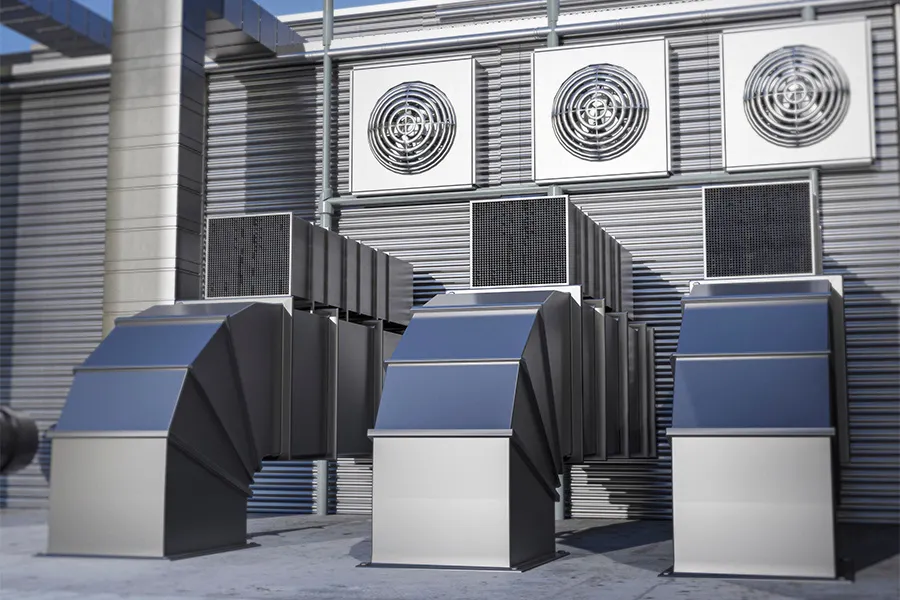
Ventilating large, and particularly high, factory halls is a challenge that has prompted innovative approaches in recent years. In many factories, roof vents remove the warm air rising from the production floor. Alongside this type of natural ventilation, fans or air handling units regulate the supply and extraction of air in mechanical ventilation systems. Mechanical ventilation is part of your building’s overall climate control. This includes heat recovery and humidification or dehumidification.
If you use fans, the model you choose will depend on the size of your space and how contaminated the air is. Air handling units draw in outdoor air, clean it with a filter and supply it indoors. The filter class is determined by the level of air pollution and the size of the dust particles released by your activities.
A system that never stands still
Ventilation is, quite literally, always evolving. As in every sector of industry and construction, sustainability and energy efficiency are also of paramount importance here. A ventilation and climate control system can be an energy guzzler, but when designed well, it can be highly efficient. One example is heat recovery, where stale, contaminated air is used to warm incoming fresh air. Integrating smart systems also helps. These allow you to monitor and analyse system performance closely, and adjust it where necessary. Using sensors to determine when and where ventilation is needed reduces energy waste.
There is no doubt that legislation will become even stricter and more detailed. Good air quality is becoming increasingly important, while the growth of sectors such as chemicals and pharmaceuticals is driving strong demand for new, innovative systems. Smart, efficient ventilation is here to stay.
Challenges for the future
One major challenge with industrial ventilation is the cost of such a solution. A good ventilation system is always tailored to your space and the activities carried out in it. Bespoke solutions naturally come at a price, but because they are precisely matched to your needs, they can significantly improve your efficiency. Ventilation makes the air you breathe healthier, but it can cause noise pollution inside and outside your building. Bear this in mind when choosing your system, and ask about ways to reduce noise. Your employees and neighbours will thank you.
Finally, consider the maintenance of your fans and air handling unit. Under current legislation, such maintenance is not compulsory, but it is recommended for your building’s safety and efficiency. Discuss with your installer how often inspections should be carried out, helping to ensure better fire safety and air quality.
Question about this story? Ask your question
Keep following this
Get an email when a new story is published. No account needed.
- ThemeHealthy air and summer comfort
- SubjectHVAC