The importance of clean water in heating systems
Text Sara DekeselImage Caleffi
Water quality has always been important in heating systems. Dirt particles and oxygen corrosion in the system water can cause blockages and wear. This is true not only of heat pumps, as is often claimed, but also of central heating systems with a boiler. Blockages and wear increase the system’s energy consumption and shorten its service life. Floris van ’t Verlaat, technical manager & OEM manager at Caleffi, which designs and manufactures technical components for hydraulic and sanitary installations, takes a closer look at the problem and explains how to prevent it.
“Clean system water is even more important than it used to be because we are heating more at low temperatures. This is not due to the rise of heat pumps, but is a general trend,” says Floris Van ’t Verlaat. “Homes are better insulated, which reduces heating demand. As a result, the flow rate of the heating water is lower, allowing for smaller-diameter pipes. This makes the pipes more susceptible to dirt, as are the narrow inserts in underfloor heating manifolds. Radiator valves and control valves also become blocked more quickly at lower flow rates.”
Contaminated system water can therefore cause problems in high-temperature systems too, but they only emerge much later. These problems are not just technical, Floris Van ’t Verlaat emphasises: “Dirt particles do more than damage components. They also reduce heat transfer from the heat generator to the heat emitters, and from the heat emitters to the room, whether the system uses a boiler or a heat pump. Contaminated system water can reduce efficiency by as much as 10 to 15%.”
Oxygen causes damage, even when there is little steel
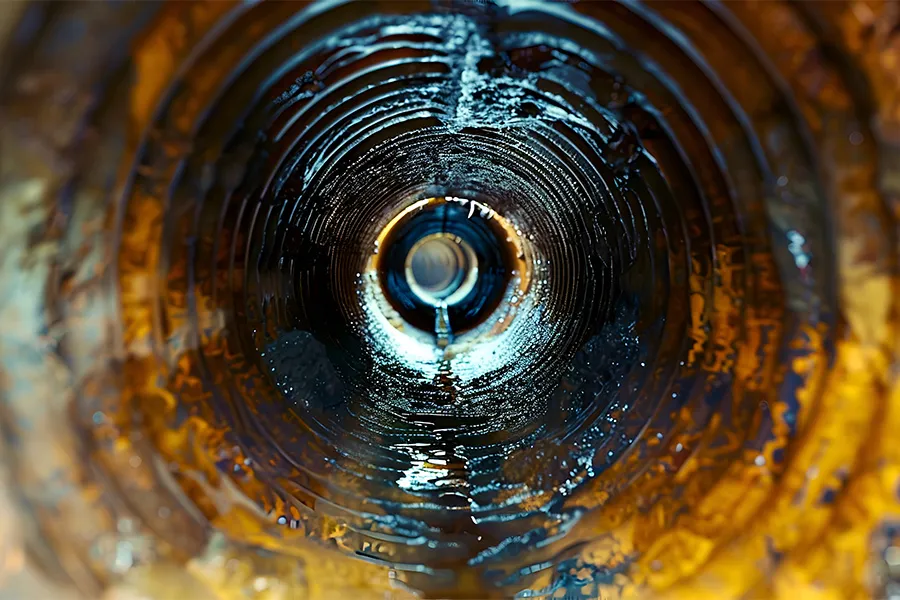
While dirt separators are often installed, air removal is not always given much thought. Yet Floris Van ’t Verlaat describes oxygen as one of the biggest causes of water contamination: “At low temperatures, oxygen leads to microbiological growth. If we do not heat to high temperatures, bacteria thrive. And they have the same effect as other dirt.”
It is better known that oxygen causes corrosion, introducing rust particles into the system water at both high and low temperatures. Is this still a problem in systems with plastic components? “Yes,” replies Floris Van ’t Verlaat. “There is always at least one steel component, and that is where the corrosion becomes concentrated. In that case, problems arise even sooner.”

Air removal for low-temperature systems
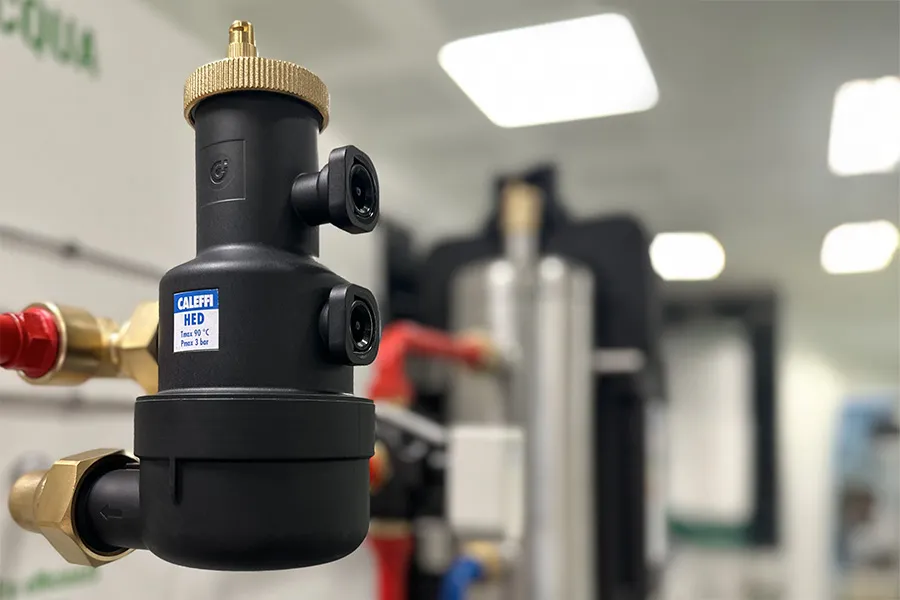
Traditional air separators remove oxygen in the form of microbubbles. At low temperatures, oxygen is dissolved in the water, so there are no microbubbles. That is why Caleffi developed the HED® air separator, with HED standing for high-efficiency deaerator. “It removes oxygen from the water using a vortex that creates negative pressure. This removes almost 100% of the oxygen on the first pass,” explains the technical manager.
Additional filtering dirt separator prevents start-up problems
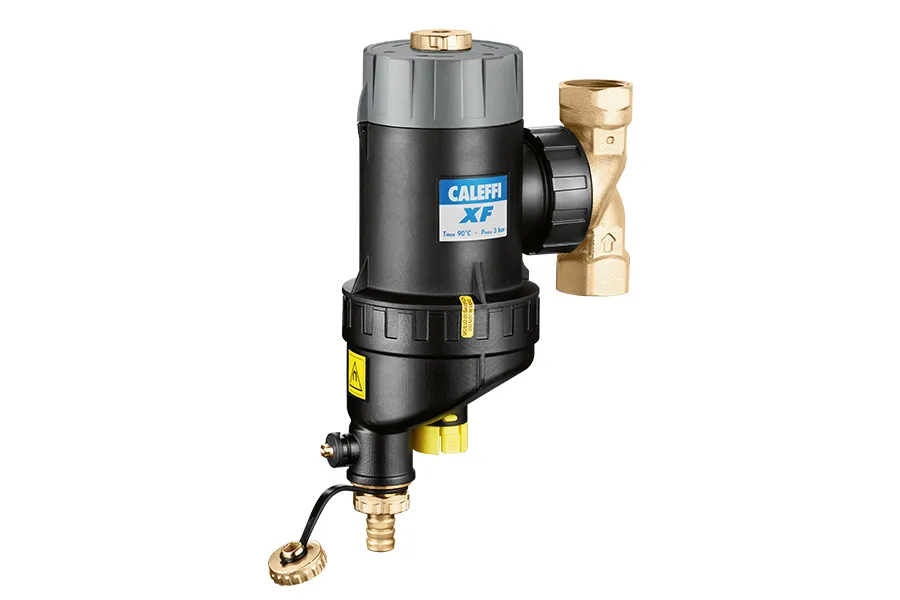
Even if you make the system water low in oxygen, there is still a risk of corrosion and rust particles, for example from make-up water added later. Dirt can also enter the system, especially during commissioning, in the form of sand, packaging material, burrs and other site debris. “These often cause problems when starting up low-temperature systems. The CALEFFI XF can prevent this. This special dirt separator removes even the smallest particles from the water on the very first pass: dirt particles are caught by an extra-fine filter, while magnetite is captured by a magnet in the core,” concludes Floris Van ’t Verlaat.
Een zakelijke vraag aan Caleffi International N.V.? Get in touch
Companies in this story
Keep following this
Get an email when a new story is published. No account needed.
- ThemeFossil-free heating and cooling
- SubjectHVAC
- CompanyCaleffi International N.V.